




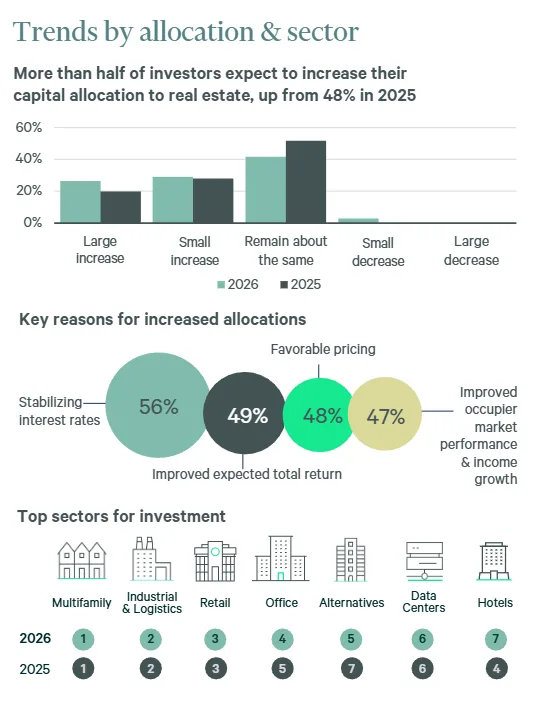
- Multifamily and industrial & logistics are the top targeted sectors for US investors in 2026.
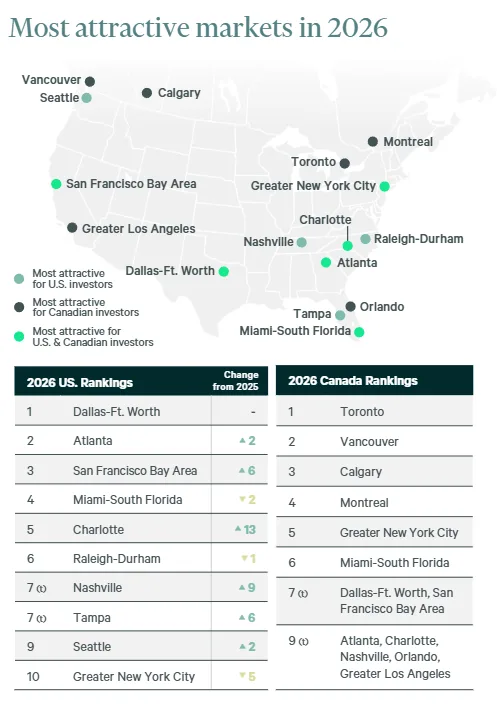
- Dallas continues as the most attractive investment market, with Sun Belt and key gateway cities also in demand.
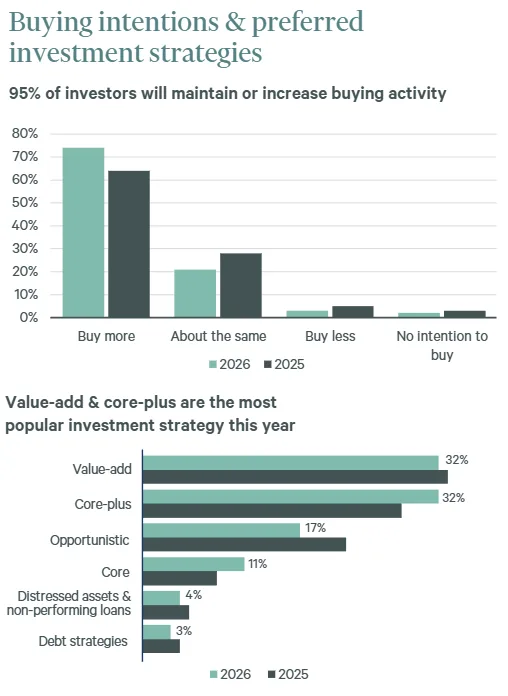
- Value-add and core-plus are the most favored investment strategies; riskier and debt-focused approaches are declining.
- Most investors plan to maintain or increase buying, with stabilized debt-to-equity ratios and short-term tolerance for negative leverage.
Multifamily Investment Holds Strong
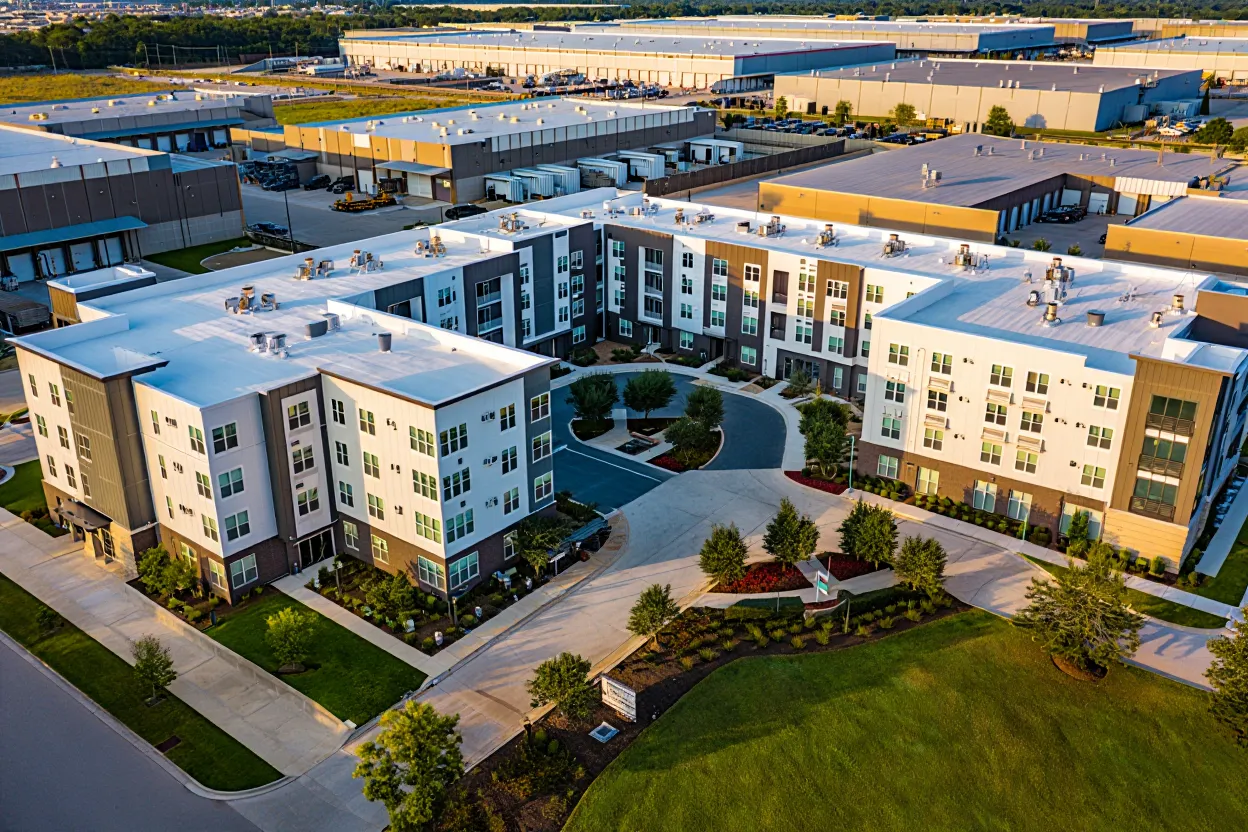
Multifamily investment remains the leading preference among US investors, with 74% targeting this property type in 2026, according to CBRE. Industrial & logistics follow at 37%, while retail (27%) and office (16%) trail behind. Demand for high-quality and well-located assets continues to drive decision-making in all favored sectors.
Alternative assets, such as self-storage and land, registered limited interest, with only 11% of investors indicating plans for allocations outside traditional sectors. The focus is expected to stay on multifamily investment and repriced opportunities within core property types as the market shifts.
Top Markets: Dallas, Sun Belt, and Select Gateways
According to CBRE’s 2026 North American Investor Intentions Survey, Dallas retains its position as the top US market for investment for the fifth consecutive year. Atlanta and San Francisco follow, with Charlotte, Nashville, Tampa, and Seattle entering the top ten. Sun Belt markets remain highly attractive due to steady job and population growth, while investors also seek discounts in major gateway cities like New York and San Francisco. Office activity in these high-growth regions is also beginning to show signs of renewed interest, adding to their investment appeal.
Canadian interest is concentrated in Toronto and Vancouver, while cross-border investment remains cautious amid economic and geopolitical uncertainties. Overall, multifamily investment in both primary and secondary metros is expected to expand as investors pursue stability and growth.
Strategies: Value-Add and Core-Plus Lead
Two-thirds of investors favor value-add and core-plus strategies in 2026, aiming for stable income with opportunities for enhanced returns. The share of core-plus preference has risen, reflecting a balance of risk and yield as prime asset supply thins. Conversely, fewer investors are pursuing opportunistic, distressed, or debt-driven strategies compared to prior years.
Debt Trends and Cap Rate Outlook
More than 70% of investors plan to maintain current debt-to-equity ratios, and nearly half are willing to accept up to one year of negative leverage, expecting normalization as interest rates ease. Major challenges remain around rate direction and stricter lending, but positive drivers include favorable asset pricing and anticipated cap rate compression across all major property types.
Mezzanine and mortgage financing remain preferred among real estate debt investors, while direct equity—through wholly owned assets or partnerships—continues as the dominant investment structure.
What’s Next
Expect multifamily investment and industrial assets to persist as investor favorites, particularly in high-growth Sun Belt and core US markets. Value-driven strategies are likely to shape buying trends, though capital allocation may become even more selective as the cycle evolves. Stabilizing interest rates and improving fundamentals provide a positive backdrop for increased activity in 2026.
Get Smarter about what matters in CRE
Stay ahead of trends in commercial real estate with CRE Daily – the free newsletter delivering everything you need to start your day in just 5-minutes