




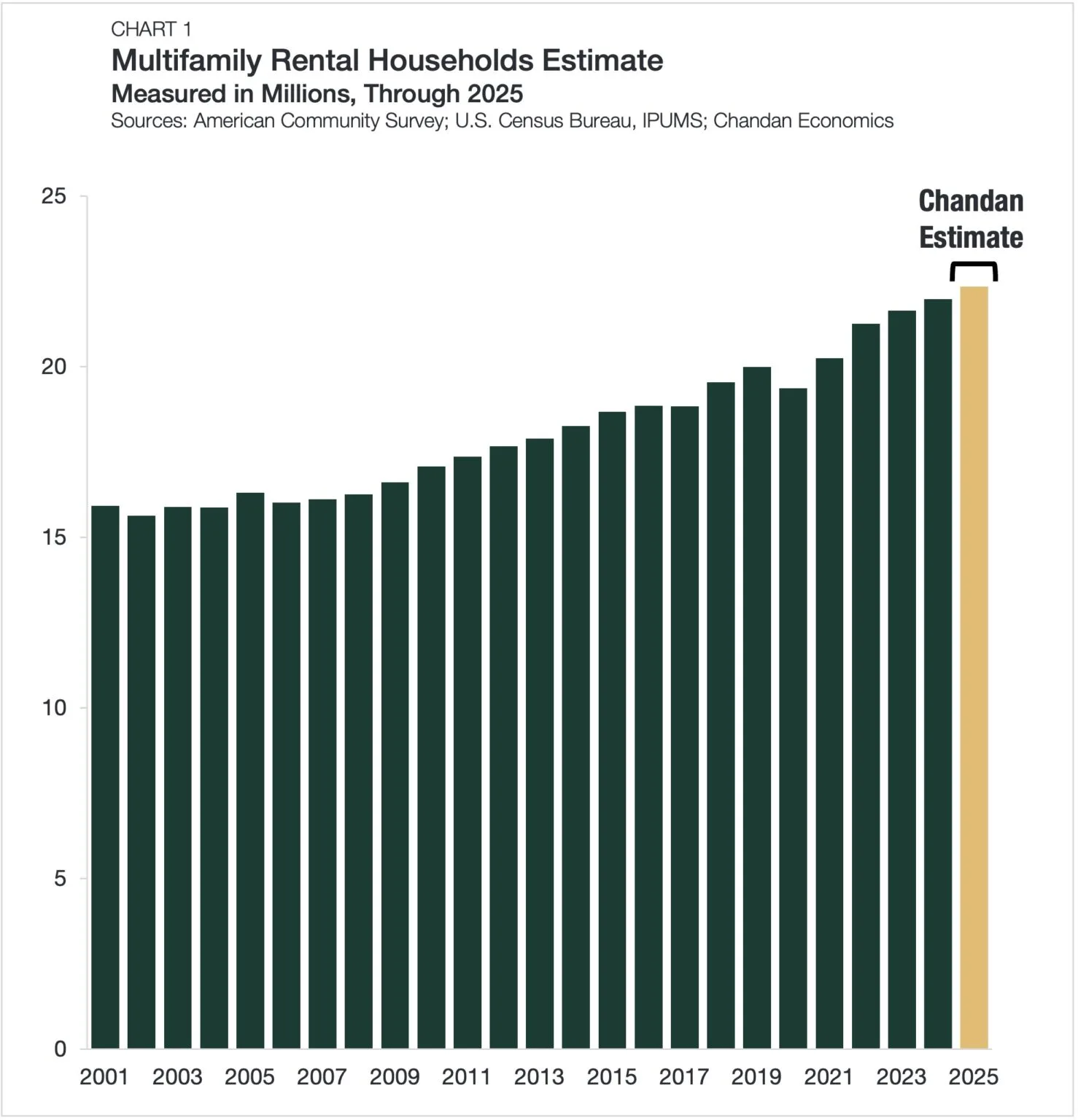
- Multifamily households estimate hit 22.4M in 2025, an all-time high.
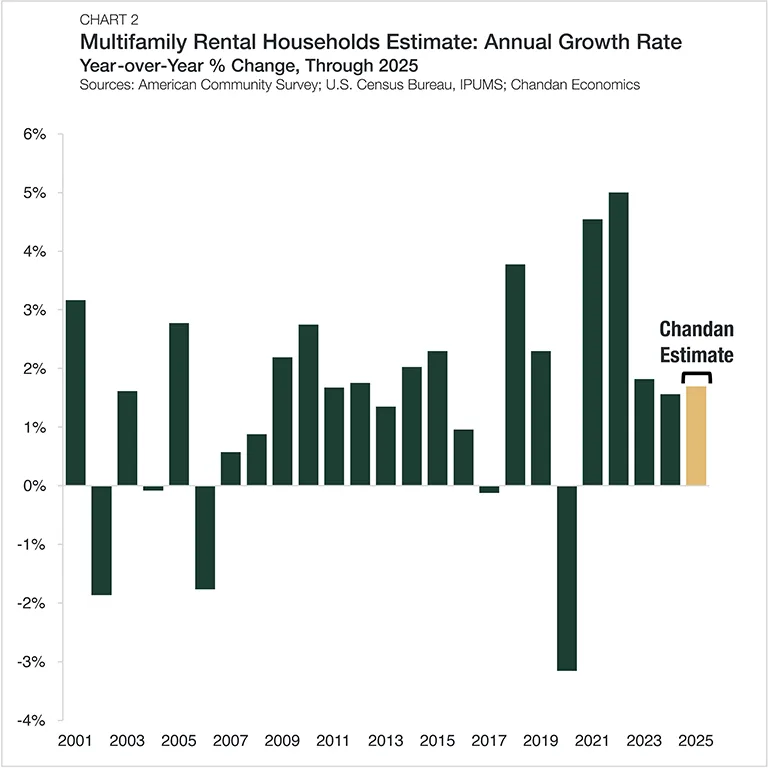
- Annual growth rate for multifamily households held between 1.6% and 1.8% over three years.
- Recent five-year gain of 3M multifamily households marks the strongest growth in over 20 years.
- Elevated completions and constrained homeownership supported continued rental demand.
Multifamily Growth Sets Records
The number of US multifamily rental households climbed to a record 22.4M in 2025, according to new research from Chandan Economics and Arbor Realty Trust. This reflects a steady pace of growth following pandemic-era shifts that drove demand for affordable rentals and kept household formation strong.
Preliminary estimates for 2025 show an increase of nearly 373,000 new multifamily households compared to the previous year. American Community Survey data confirms the upward trend, with 2024’s total at 22.0M households.
Consistent, Healthy Gains
The multifamily households estimate has consistently grown at an annual rate between 1.6% and 1.8% for the past three years. From 2020 to 2025, the sector posted a 15.4% increase, outpacing the 5.3% growth in total US households over the same period. The five-year net gain of 3M multifamily households is the largest since 2000.
Supply Meets Demand
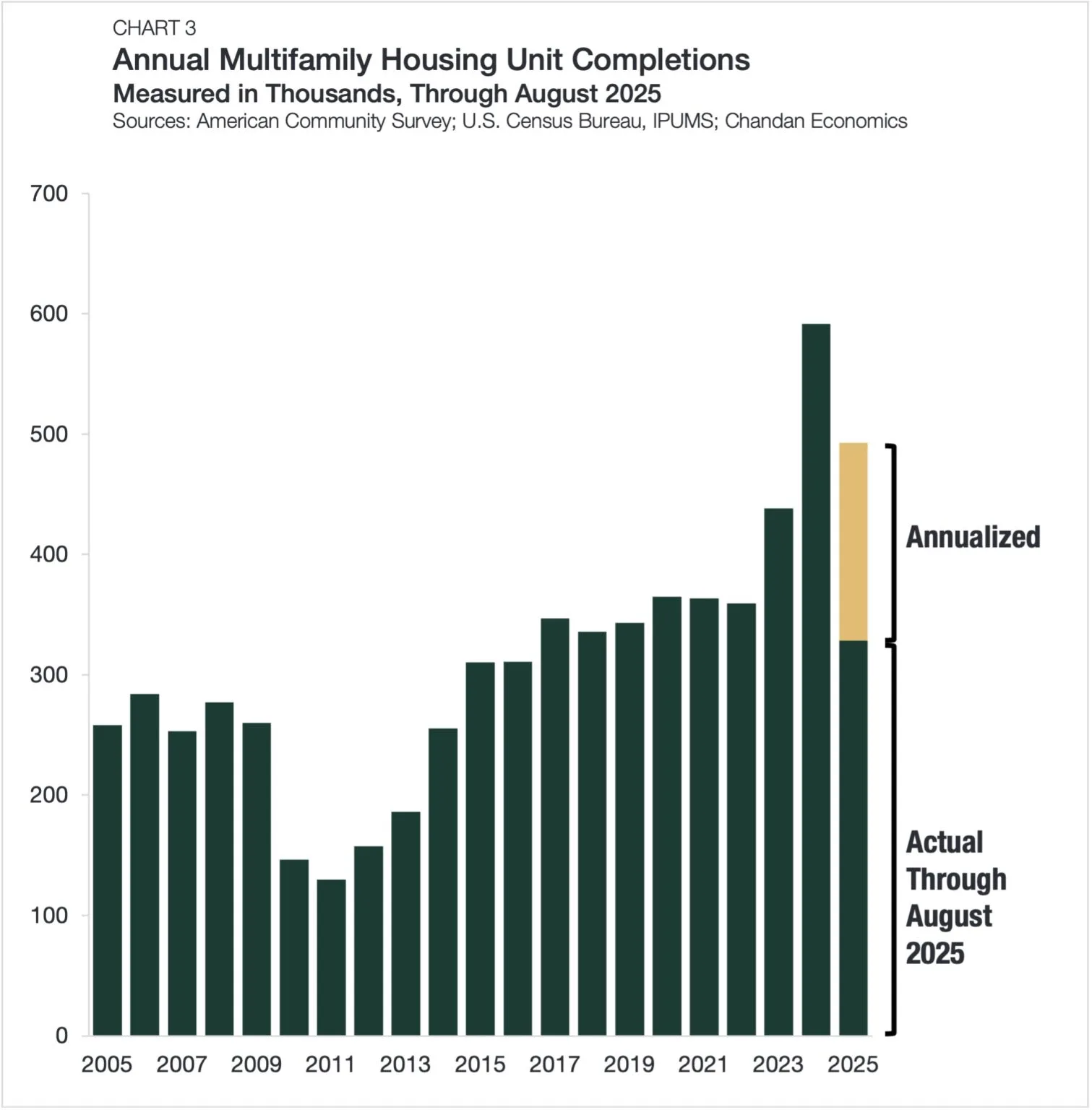
Robust new supply has played a major role. In 2024, 591,400 multifamily units were completed—the highest since 1974. Through August 2025, an additional 328,500 units hit the market, keeping annualized completions high. Without this surge in multifamily deliveries, overall household growth in the sector would have been more limited.
Strong Demand Drivers
Several demand-side factors have supported the multifamily households estimate. Corporate return-to-office policies have buoyed demand in metros with strong employment centers. Meanwhile, the cost of homeownership has moved out of reach for many, with related expenses consuming 43% of the median income—well above the customary affordability threshold. In some southern metro areas, this affordability gap is being widened further by a surge in high-income renters, adding competitive pressure to local rental markets.
Looking Ahead
Supply and demand fundamentals underpin the sector’s resilience. Growth in the multifamily households estimate eased rent pressure and helped maintain occupancy, even with a surge in new inventory. As supply pipelines normalize and structural rental demand persists, the multifamily sector is expected to stabilize in both household growth and rent trends in 2026.
Get Smarter about what matters in CRE
Stay ahead of trends in commercial real estate with CRE Daily – the free newsletter delivering everything you need to start your day in just 5-minutes