



- Ray Washburne proposes relocating Dallas City Hall for a $2B mixed-use redevelopment, including a new Mavericks arena.
- Architects push to preserve the I.M. Pei-designed City Hall, suggesting affordable renovations and plaza redesign.
- The proposal could generate up to $10B in downtown investment but hinges on trading public property for new development.
- The decision sets up a high-stakes choice between historic preservation and mixed-use redevelopment potential.
Mixed-Use Redevelopment Proposal
Developer Ray Washburne has outlined a plan to move Dallas City Hall operations into his Founders Square building, freeing the current 1M SF site at 1500 Marilla Street for a $2B mixed-use redevelopment, reports The Real Deal. The envisioned project would include a new arena for the Dallas Mavericks and an entertainment district, aiming to boost downtown tax revenue and draw further investment.
Preservation vs. Redevelopment
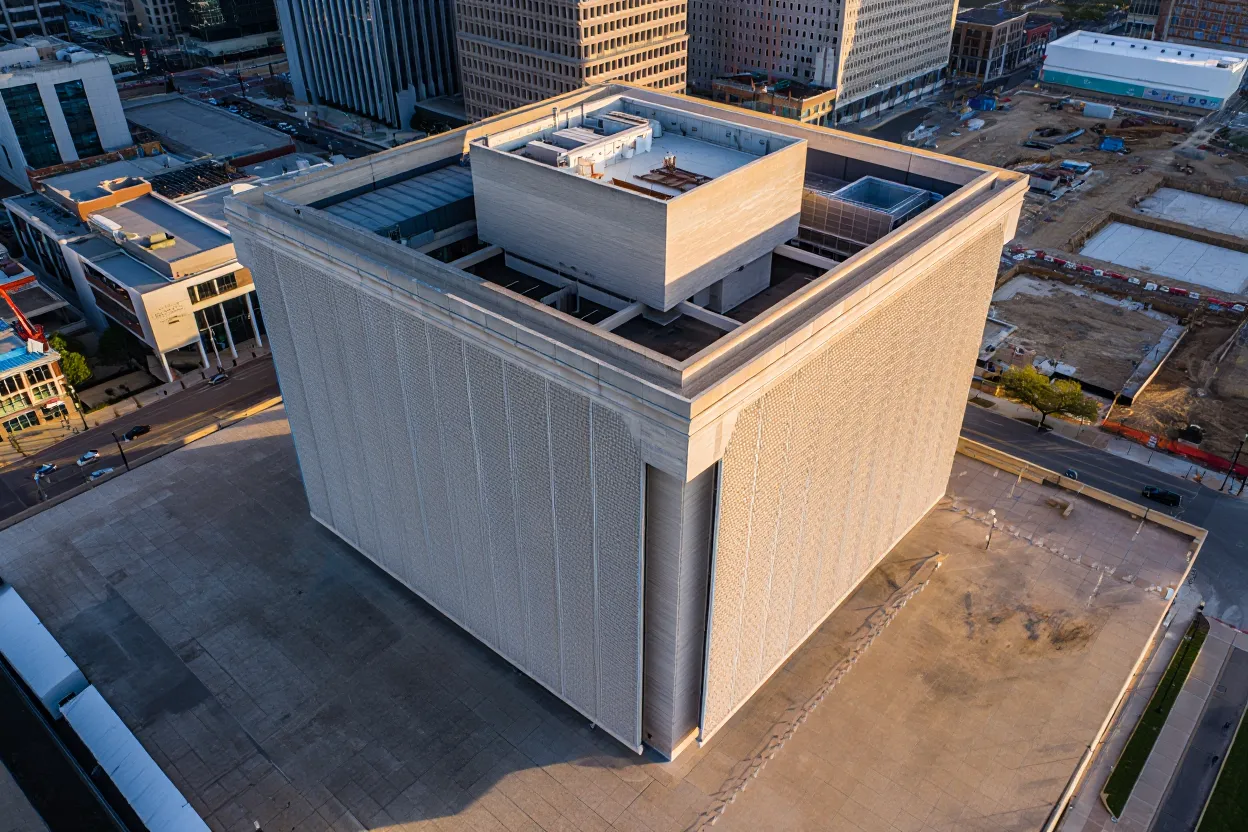
A group of leading architects is pushing back, championing City Hall’s preservation. They argue the I.M. Pei-designed Brutalist building’s issues could be addressed affordably by updating entrances, interiors, and wayfinding, along with transforming the plaza into a public park. Supporters say these updates would reinvigorate the downtown area without losing an iconic civic structure.
Get Smarter About What Matters in Texas
Subscribe to our free newsletter covering the biggest commercial real estate stories across Texas — delivered in just 5 minutes.
Why It Matters
The debate forces Dallas to choose a direction. One path favors a $2B mixed-use redevelopment that could attract $10B in investment. The other emphasizes preserving City Hall’s architecture with targeted upgrades to entrances, interiors, and the plaza.
Ray Washburne sees his proposal as a chance to redefine downtown. Meanwhile, architects argue that removing the I.M. Pei-designed building would erase a civic landmark for private gain.
What’s Next
City leaders face a defining choice. They must weigh economic growth against the cultural and architectural value of City Hall.
The conversation comes as the commercial real estate sector navigates headwinds across design and development, highlighting broader uncertainties in how cities evolve. The outcome will shape downtown Dallas for decades. It could influence both future development and the city’s identity.