






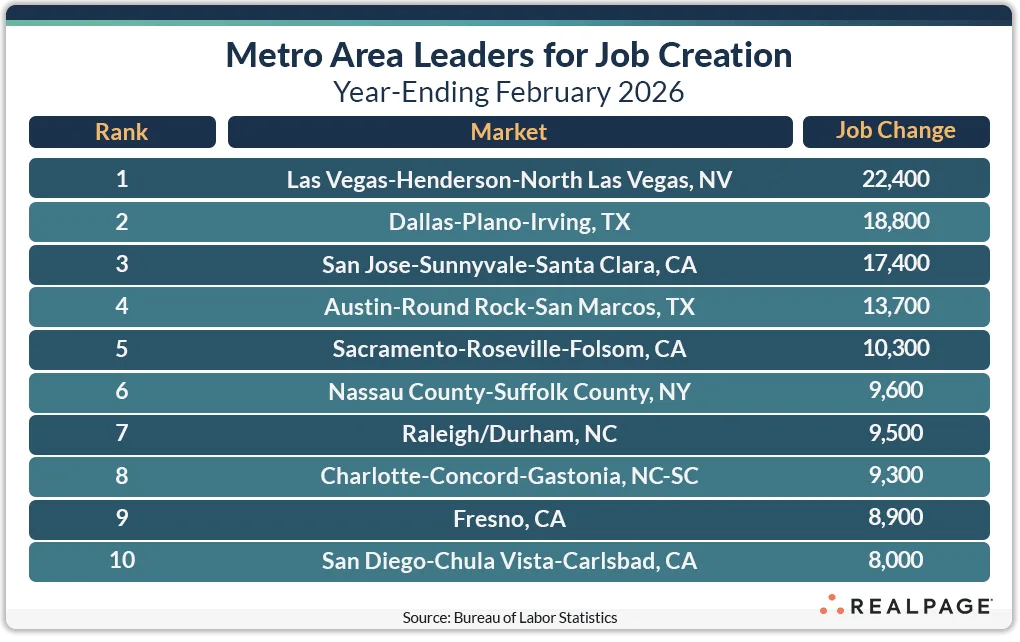
- Metro employment growth slowed, with Las Vegas leading at 22,400 new jobs.
- Major cities like Washington, DC and New York saw significant job losses in the period.
- Only 73 of the top 150 metro employment markets reported gains year-over-year.
- Annual employment growth now favors smaller and secondary metro areas.
Metro Employment Leaders Shift
RealPage reports that metro employment growth continued to decelerate across the US, with February’s top 10 markets adding fewer jobs than in previous years. According to the latest Bureau of Labor Statistics data, Las Vegas led all markets with 22,400 new jobs, well below typical #1 market gains of 50,000 to 60,000 positions. San Diego ranked tenth with just 8,000 jobs added.
Other non-traditional markets such as Sacramento, Raleigh/Durham, and Fresno joined Dallas and Austin in the top ranks for annual job creation. Meanwhile, employment-heavy metros like Houston, Phoenix, and Los Angeles dropped in the rankings, with Los Angeles falling from first in January to 27th in February.
Major Metros See Job Losses
Several large metro employment markets recorded significant losses. Washington, DC shed 119,000 jobs and New York lost 57,500 jobs over the year. Cities such as Boston, Baltimore, Chicago, and Seattle also saw declines. This uneven contraction is already showing up regionally, with coastal and Midwest hubs facing sharper slowdowns tied to weakening local labor momentum. In total, 77 of RealPage’s 150 largest markets lost jobs, increasing from 60 the month prior.
The top 10 metro employment markets combined for 127,900 jobs gained, down by 17,000 from last year. The next 10 markets saw even sharper declines compared to previous periods.
Get Smarter about what matters in CRE
Stay ahead of trends in commercial real estate with CRE Daily – the free newsletter delivering everything you need to start your day in just 5-minutes
Secondary Markets Show Stronger Growth
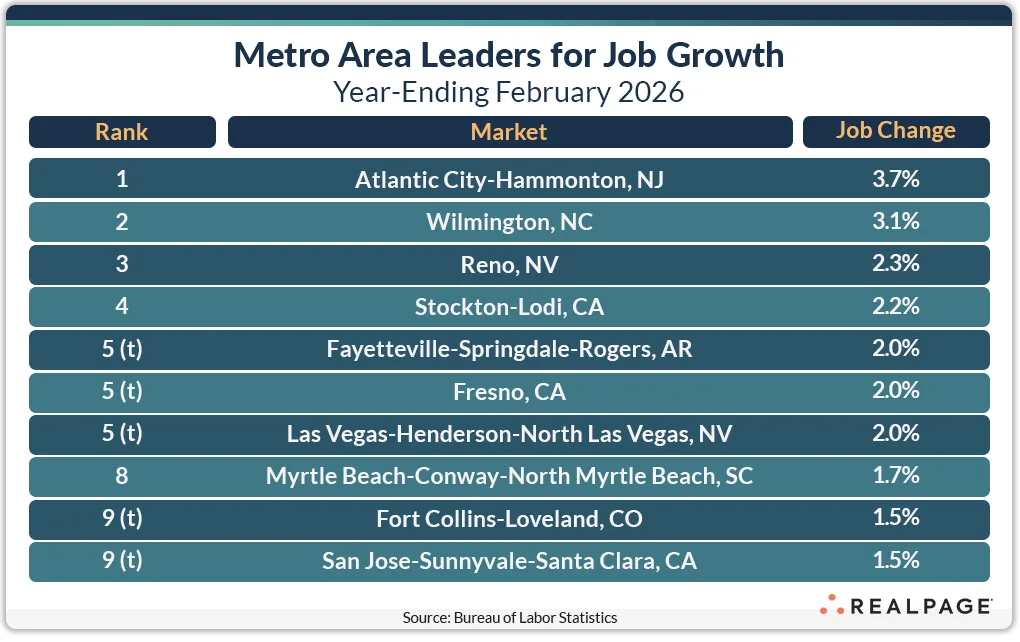
Unlike absolute job gain, annual percentage growth in metro employment favored smaller locations. Atlantic City led with a 3.7% increase, and markets like Wilmington, Reno, and Stockton-Lodi posted gains between 2.2% and 3.1%.
Las Vegas and San Jose were the only two metros to appear in both the top job gains and job growth lists. Most top percentage growth markets are state capitals, smaller cities, or resort destinations. Several of these locations saw higher annual percentage increases compared to last year, led by Fort Collins and Atlantic City.
What’s Next
As metro employment patterns shift, expect continued divergence between absolute gains in large markets and percentage growth in smaller metros. Ongoing job losses in key cities may impact regional real estate dynamics throughout 2026.