





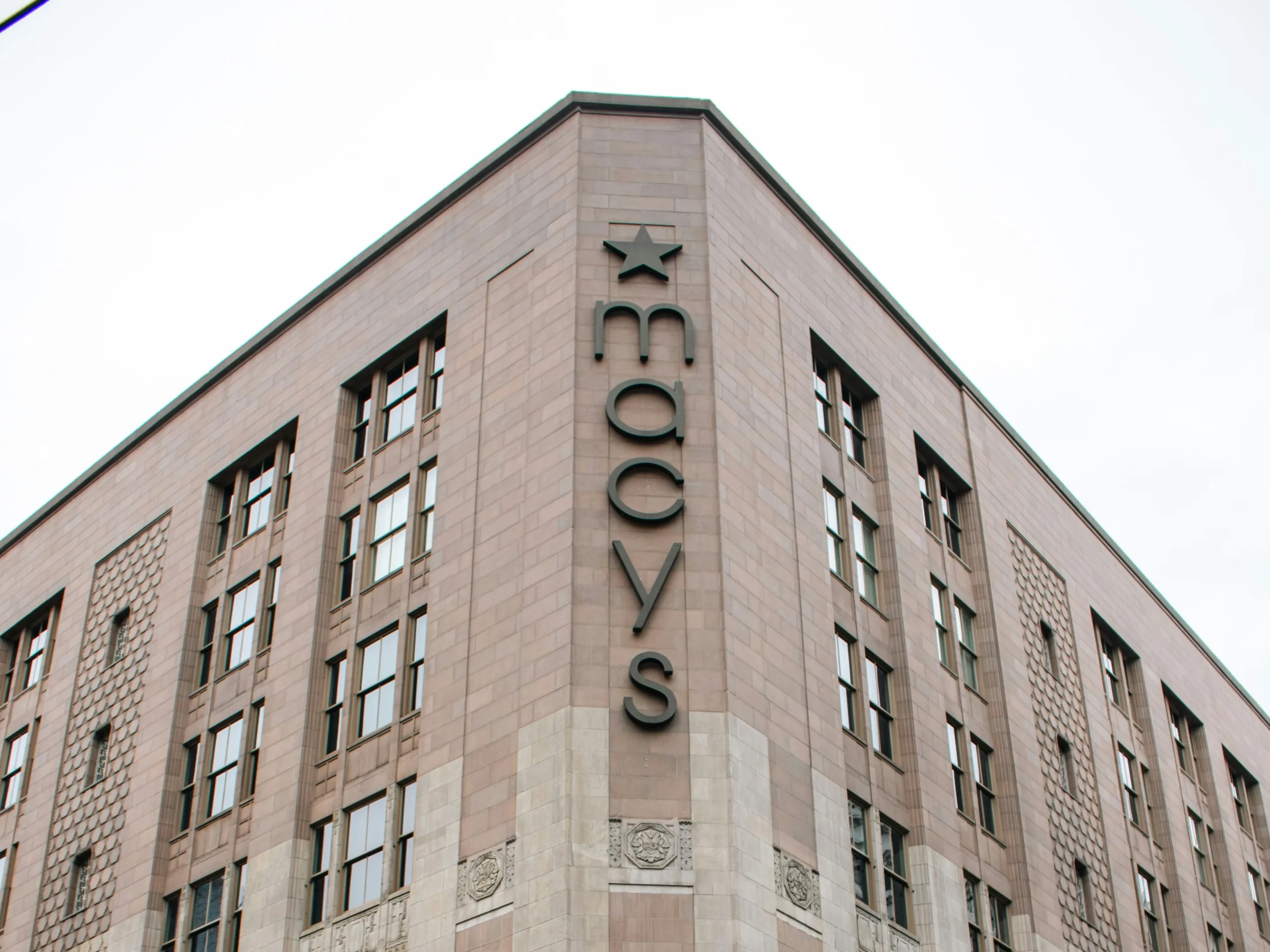
- Macy’s is delaying its plan to close 150 underperforming stores until 2028, giving it more flexibility to time property sales for higher returns.
- The retailer now expects to generate up to $700M from real estate sales, exceeding earlier projections.
- Improved store performance and positive sales growth are allowing Macy’s to slow dispositions and focus on optimizing its portfolio.
Macy’s is taking a more measured approach to shrinking its store footprint, opting to delay closures in favor of maximizing real estate value, reports CoStar. The department store chain now plans to complete its 150-store reduction by 2028, two years later than originally scheduled.
A Strategic Slowdown
The revised timeline reflects Macy’s stronger financial position as it continues executing its “Bold New Chapter” turnaround plan. Rather than rushing asset sales, the company is choosing to wait for more favorable market conditions to extract higher prices from its real estate.
Executives say the flexibility comes from improved cash flow and a healthier balance sheet, allowing the retailer to prioritize value over speed.
The Details
Macy’s has already closed 64 stores and plans to shut another 14 this year, leaving roughly 65 locations still to be addressed. Once completed, the company expects to operate about 350 stores nationwide.
At the same time, Macy’s is reinvesting in its higher-performing locations, with upgrades underway at roughly 200 stores. These “go-forward” locations are delivering stronger sales compared to the broader fleet.
Bigger Real Estate Upside
The slower pace could pay off. Macy’s now estimates it will generate up to $700M from property sales—up from prior guidance of $500M to $650M.
So far, the company has monetized about $400M in assets, leaving another $250M to $300M in potential proceeds. By spacing out transactions, Macy’s hopes to capitalize on improving market conditions and buyer demand. This approach aligns with broader discussions inside the company about unlocking greater value from its property portfolio, including evaluating more formal structures for its real estate holdings.
Get Smarter about what matters in CRE
Stay ahead of trends in commercial real estate with CRE Daily – the free newsletter delivering everything you need to start your day in just 5-minutes
Industry-Wide Reset
Macy’s isn’t alone in reevaluating its physical footprint. Competitors including Saks Global and Nordstrom are also closing stores as they recalibrate portfolios and respond to shifting consumer habits.
The broader trend reflects a retail sector increasingly focused on quality over quantity, with fewer but more productive locations.
Why It Matters
Macy’s strategy signals a shift in how retailers approach real estate—treating store closures not as a race to cut costs, but as an opportunity to unlock value. With performance stabilizing and sales turning positive, the company has more leverage to time dispositions strategically.
What’s Next
As Macy’s continues upgrading its core stores and trimming underperformers, its real estate decisions will play a key role in funding the turnaround. If market conditions cooperate, the delayed timeline could translate into significantly higher returns.
For now, the retailer is betting that patience will pay.