



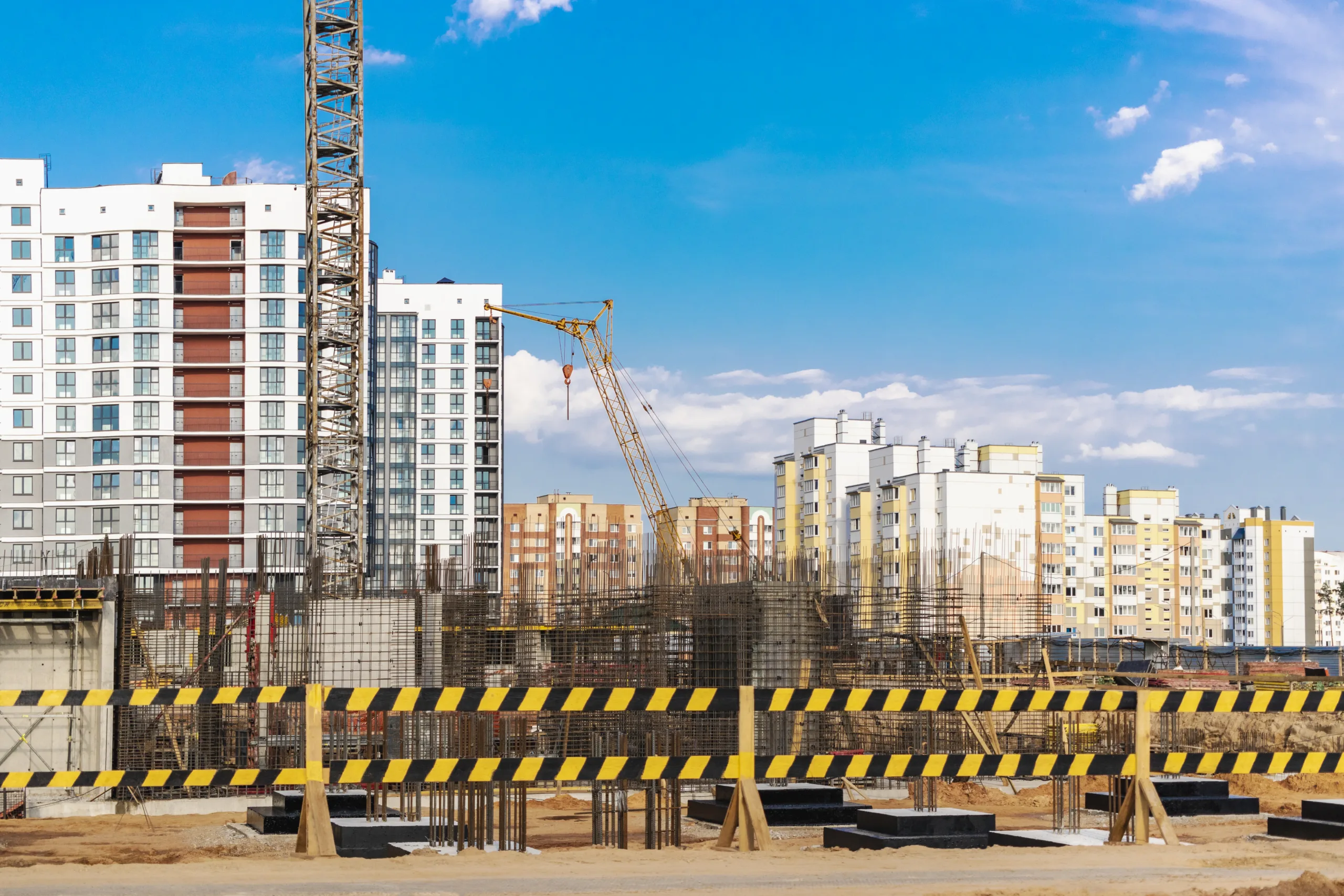
- Industrial construction starts in 2025 have dropped to their lowest level this decade, driven by oversupply and rising costs.
- Tariff uncertainty and inflated material prices are delaying new projects and major leasing decisions.
- Tenants are favoring lease renewals over new commitments, pushing vacancy and sublease availability to multi-year highs.
- Developers are pausing or seeking alternatives as costs for land and steel soar, while short-term supply chain fixes gain traction.
A Decade Low For New Development
Through May 2025, developers broke ground on just 86.9M SF of industrial space — down from 116.1M in the same period in 2024 and 158.3M in 2023, reports Commercial Observer. The decline marks the lowest point for industrial starts in the US since 2010, a dramatic shift from the 2022 peak of 228.5M SF.
The slowdown comes as the sector reckons with overbuilding during the pandemic, when demand for logistics space appeared limitless. Now, with more than 340M SF under construction and just 117.8M SF delivered this year, supply is catching up — and exceeding — current demand.
Get Smarter about what matters in CRE
Stay ahead of trends in commercial real estate with CRE Daily – the free newsletter delivering everything you need to start your day in just 5-minutes
Tariff Uncertainty Hits Construction And Leasing
The looming expiration of a 90-day pause on the Trump administration’s global tariffs has introduced renewed uncertainty to industrial real estate. Developers are particularly concerned about a 50% steel tariff on imports from key trading partners, including China and Canada, which supplied $32B and $7.1B in steel to the US in 2024, respectively.
“The uncertainty is worse than the tariffs themselves,” said Peter Kolaczynski, associate director at CommercialEdge.
This volatility has left many industrial tenants unwilling to commit to new leases or construction projects — especially given material inflation, rising interest rates, and capital constraints.
Tenants Stay Put, Sublease Space Surges
As a result, lease renewals are dominating the market while sublease availability has ballooned. At the end of Q1 2025, 160.5M SF of industrial space was available for sublease — higher than levels seen during both COVID-19 and the Great Recession.
“Most tenants are just renewing and staying in place,” said Alex Redfearn, CEO of Redfearn Capital. “There’s too much uncertainty to justify a major rent jump or relocation.”
The national vacancy rate hit 8.5% in May, up nearly 300 basis points from a year ago. In markets like New Jersey, where only 25% of new space is pre-leased, the disparity is even more pronounced.
Developers Pivot Or Wait It Out
While some firms like Greek Real Estate Partners are still acquiring and developing new assets cautiously, others are pivoting.
Manufacturing firm Master Wall abandoned plans to build a new Georgia plant after construction cost estimates — including interest rates in the 5–7% range — came in far above expectations. “We’ve been searching for existing buildings that could meet our needs,” said CEO Steve Smithwick.
Some architects and developers are also exploring wood as an alternative to steel, especially in areas where costs or tariffs have made traditional materials prohibitively expensive.
Long-Term Demand, Short-Term Tactics
Despite the pullback, industry players remain optimistic about long-term industrial demand — particularly in e-commerce and cold storage sectors. But in the near term, companies are turning to short-term supply chain workarounds, including:
- Stockpiling inventory
- Using bonded warehouses and foreign-trade zones
- Shifting sourcing and logistics routes
- Automating operations
“The bigger trend is resilience and optionality in supply chains,” said J.C. Renshaw of Savills. “But the short-term path is tactical adjustments.”
What’s Next
The full impact of the revived tariffs is expected to hit during the second half of 2025. While some firms may benefit from reduced construction competition, most are likely to face higher costs, slower leasing activity, and weaker consumer demand stemming from inflated prices.
A J.P. Morgan Chase analysis found that US mid-market companies — many reliant on imports — could face $82.3B in direct costs from the tariffs. For now, the industrial market is holding its breath.
“There’s no question the US will feel the impact more than the rest of the world,” said Gregory Healy of Savills. “And that will be felt most directly in industrial real estate.”