


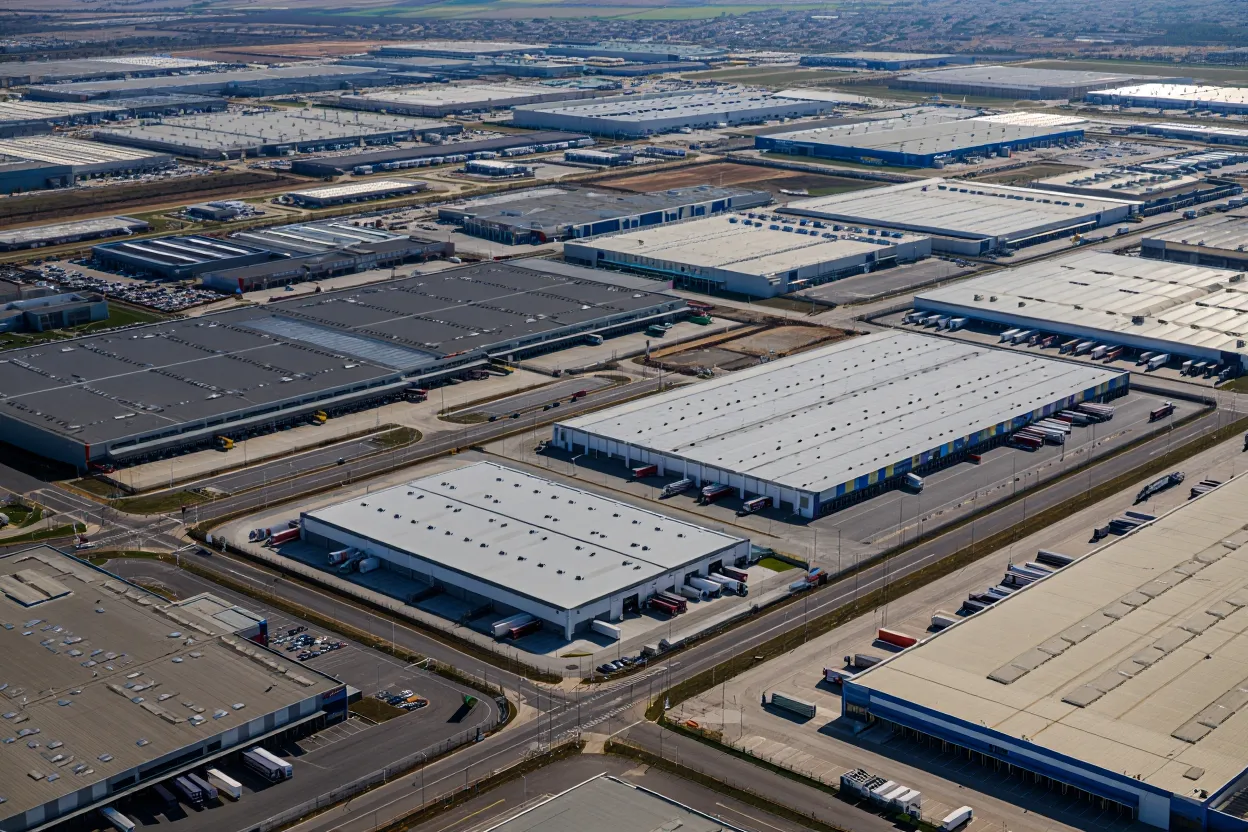

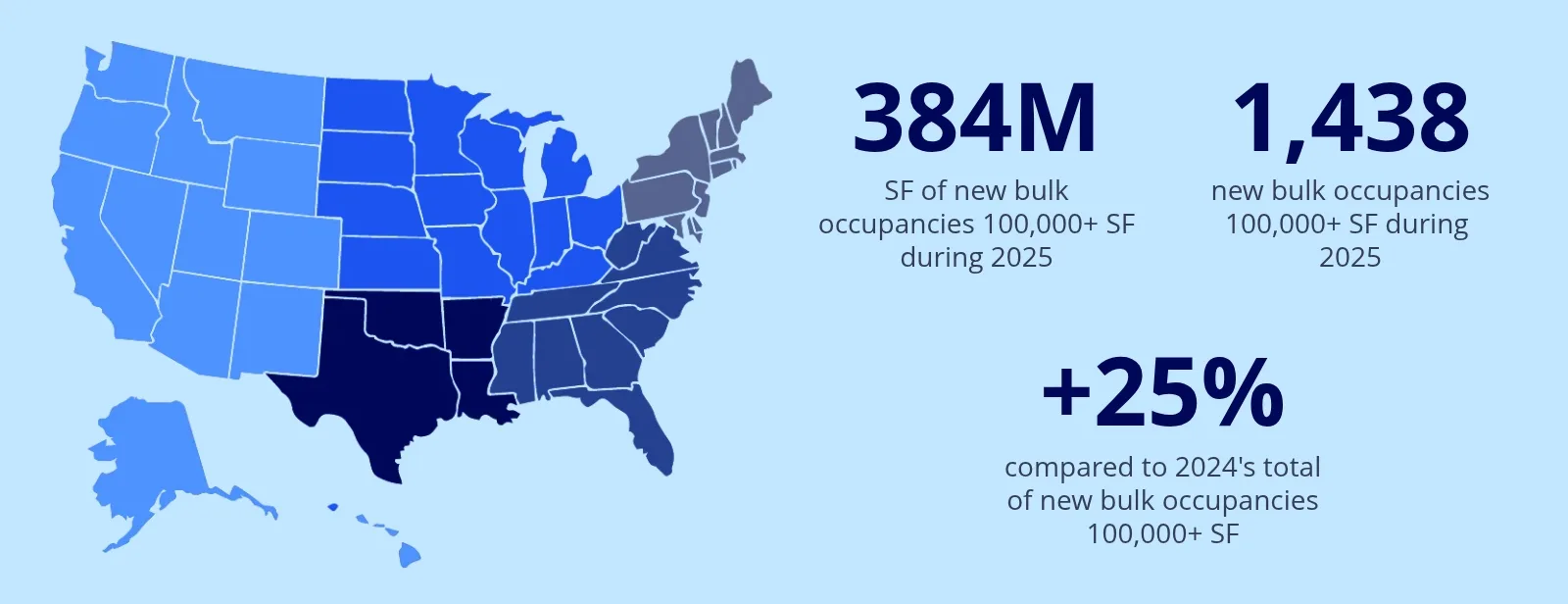
- Bulk industrial occupancies of 100 KSF+ grew 25% year over year to 384M SF in 2025.
- Midwest and West led regional growth, while the Northeast saw a decline.
- Third-party logistics accounted for about one-third of bulk occupancies in 2025.
- New leasing momentum signals continued industrial recovery into 2026.
Bulk Occupancies Surge
The US industrial recovery is gaining traction as bulk occupancies rebound across key regions and size categories, according to Colliers’ Knowledge Leader. In 2025, total industrial move-ins for spaces of 100 KSF or larger reached 384M SF—an increase of 25% from 307M SF in 2024. More than one-third of the largest move-ins were build-to-suit facilities or user purchases.
Regional and Size Trends
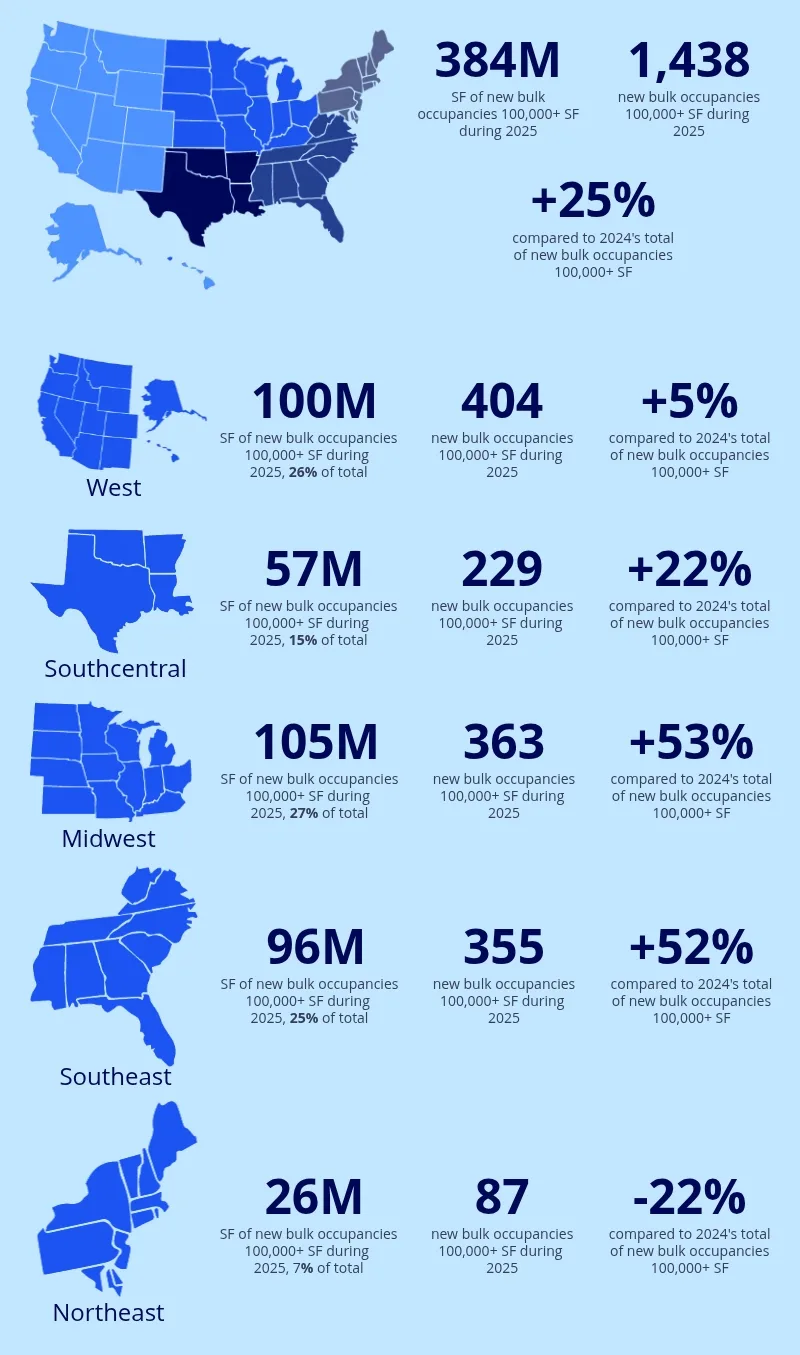
The West had the highest number of bulk occupancies with 404 move-ins totaling 100M SF, up 5% from 2024. The Midwest recorded the largest volume at 105M SF, up 53% year over year. In contrast, the Northeast saw a 22% decrease, with 26M SF across 87 move-ins. Demand rose across all size brackets, most notably in the 500–749.9 KSF range, which jumped 47%. Spaces between 100–199.9 KSF saw 792 move-ins totaling 108M SF, marking a significant increase as well.
Key Users Drive Industrial Recovery
Third-party logistics providers, trucking, and transportation firms remained dominant in 2025, occupying 123M SF in 430 move-ins—a 22% year-over-year rise. Asian-based logistics firms expanded their US footprints, accounting for 21% of these occupancies since 2024. Manufacturing, fabrication, and materials processing businesses also contributed, moving into 66M SF in 2025, 49% higher than the prior year. The Midwest accounted for over 40% of these gains. At the same time, smaller industrial leases have gained traction across several markets, signaling broader momentum beyond the largest bulk deals.
Industry Leaders and Outlook
Amazon remained the largest new bulk occupier in 2025. The company leased 9M SF across 20 facilities. DHL ranked second, occupying 6.8M SF.
Looking ahead, leasing activity continues to rise. New supply deliveries in 2026 should strengthen the industrial recovery. As the market moves toward balance and construction slows, vacancy rates should decline.
As a result, new bulk occupancies will likely play a larger role in net absorption and overall market health.
Get Smarter about what matters in CRE
Stay ahead of trends in commercial real estate with CRE Daily – the free newsletter delivering everything you need to start your day in just 5-minutes