



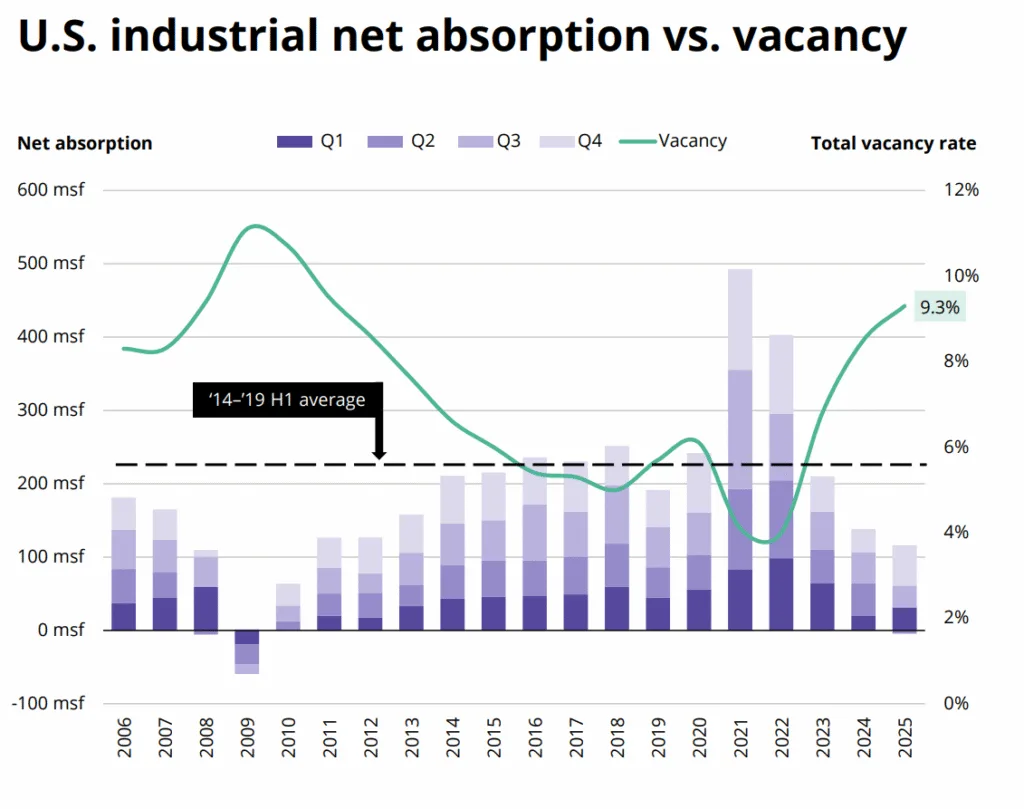
- Industrial market vacancy rates plateaued in Q4 2025 at 9.3% after rising for two years.
- Net absorption rebounded strongly in H2 2025, led by a Q4 surge of +54.9 MSF.
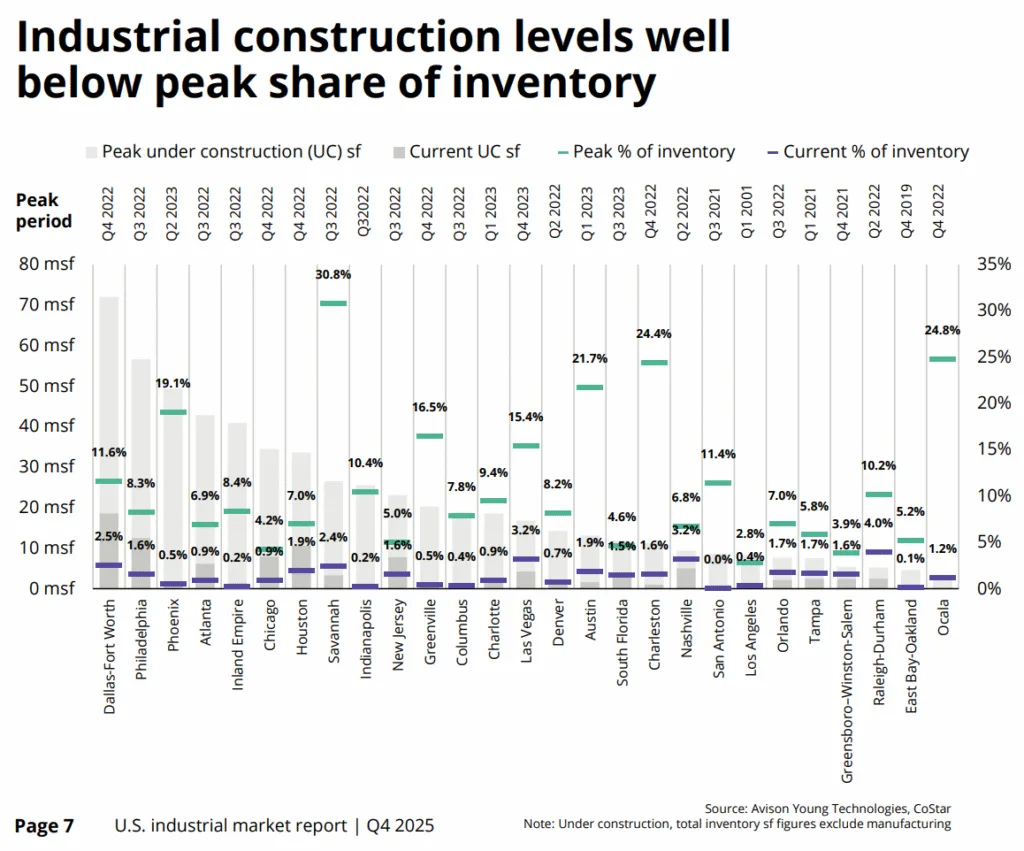
- Inventory under construction rose to 2% as confidence and tenant demand improved.
- E-commerce growth and new .manufacturing projects are expected to drive 2026 activity
Why It Matters
According to Avison Young, the US industrial market ended 2025 showing signs of renewed momentum. After two consecutive years of rising vacancy, the rate leveled off in the last half of the year, signaling a new equilibrium as tenant demand outpaced project deliveries for the first time since the pandemic expansion. Net absorption posted its highest quarter since 2023, driven by tenants finalizing deals paused during the year’s economic uncertainty.
Supply and Demand Dynamics
Leasing volume for industrial space eclipsed pre-COVID averages by 10.2%, with renewed activity across major size segments. While 2025 saw the first negative net absorption since 2009, a sharp resurgence in the second half—particularly Q4—indicates pent-up demand returning to the market. Developers also responded: the percentage of inventory under construction rose for only the second time since the Fed began hiking rates in 2022. This modest rise in starts reflects rising confidence and anticipation of tighter vacant space in 2026.
Geographic Hotspots and Construction
Post-2019 construction represents over 20% of inventory across most major industrial markets nationwide. In fast-growing metros like Savannah and Austin, post-2019 projects account for more than 50% of inventory.
However, speculative development paused during the past nine quarters following the post-pandemic delivery surge. As a result, markets now face a potential space gap in 2026 as tenants absorb existing vacancies.
Construction as a share of inventory remains far below pandemic peaks across nearly all US markets. Only a small group of metros report more than 2% of inventory currently under construction.
Investment and Pricing Trends
Industrial investment volume surpassed all pre-pandemic years as institutional buyers reentered the market. Buyers adjusted underwriting assumptions to account for persistently higher borrowing costs. Cap rates for class A industrial assets averaged between 4.2% and 6.4% in core markets.
Notably, industrial pricing continues to rise despite elevated interest rates. Industrial assets remain the only CRE sector appreciating above COVID-era pricing levels.
Get Smarter about what matters in CRE
Stay ahead of trends in commercial real estate with CRE Daily – the free newsletter delivering everything you need to start your day in just 5-minutes
Macro Drivers for 2026
Several macro factors position the industrial sector for growth heading into 2026. E-commerce penetration reached a record 16.4% of total US retail sales. At the same time, rising tariff uncertainty has added pressure to supply chains and inflation expectations, shaping how tenants and investors assess near-term risk. Meanwhile, OBBBA policy changes allow 100% expensing for qualified production property investments. These incentives are accelerating timelines for new manufacturing and automation projects.
In addition, the Office of Strategic Capital is expanding with $100B in new loan authority. That capital should increase space demand from manufacturers and their supporting tenant networks.
What’s Next
Limited speculative supply and expanding advanced manufacturing support stronger fundamentals through 2026. The industrial sector should see faster absorption and sustained rental growth. Stabilized vacancy rates reinforce improving supply-and-demand balance.
At the same time, record e-commerce activity continues to support long-term space needs. Together, healthy capital markets and tenant demand point to continued industrial outperformance in the year ahead.