



- Industrial growth is now defined by efficiency, power availability and resiliency.
- Power constraints and supply chain diversification are key market drivers in 2026.
- AI and automation are rapidly reshaping industrial facility operations and site selection.
- Speculative construction is expected to remain measured, with build-to-suit and regional factors gaining importance.
Sector Focus Shifts
The Commercial Property Executive reports that the US industrial market has entered 2026 with a focus on efficiency and long-term resilience. While demand remains strong, growth is increasingly shaped by operational realities—such as tariffs, construction constraints, and evolving power requirements.
Instead of rapid speculative development, companies are emphasizing more disciplined, balanced solutions to address nearshoring, automation, and supply chain redundancy.
Regional Differences Emerge
Development patterns in 2025 highlight emerging regional advantages. Midwest hubs like Chicago lead with efficient national distribution, while Texas and the Southeast benefit from population growth, manufacturing reshoring, and proximity to major ports.
Despite restrained new development, build-to-suit projects and selective speculative starts persist. A notable slowdown in large-format construction raises concerns about future big-box supply, but increasing absorption rates point to strengthening demand ahead.
Get Smarter about what matters in CRE
Stay ahead of trends in commercial real estate with CRE Daily – the free newsletter delivering everything you need to start your day in just 5-minutes
Power Availability Becomes Critical
Power access is now a major constraint for industrial growth. Developers are coordinating closely with utilities, as timelines for securing electrical capacity can delay projects for up to two years. Manufacturing’s rising share of leasing—20% in some regions—further intensifies these needs.
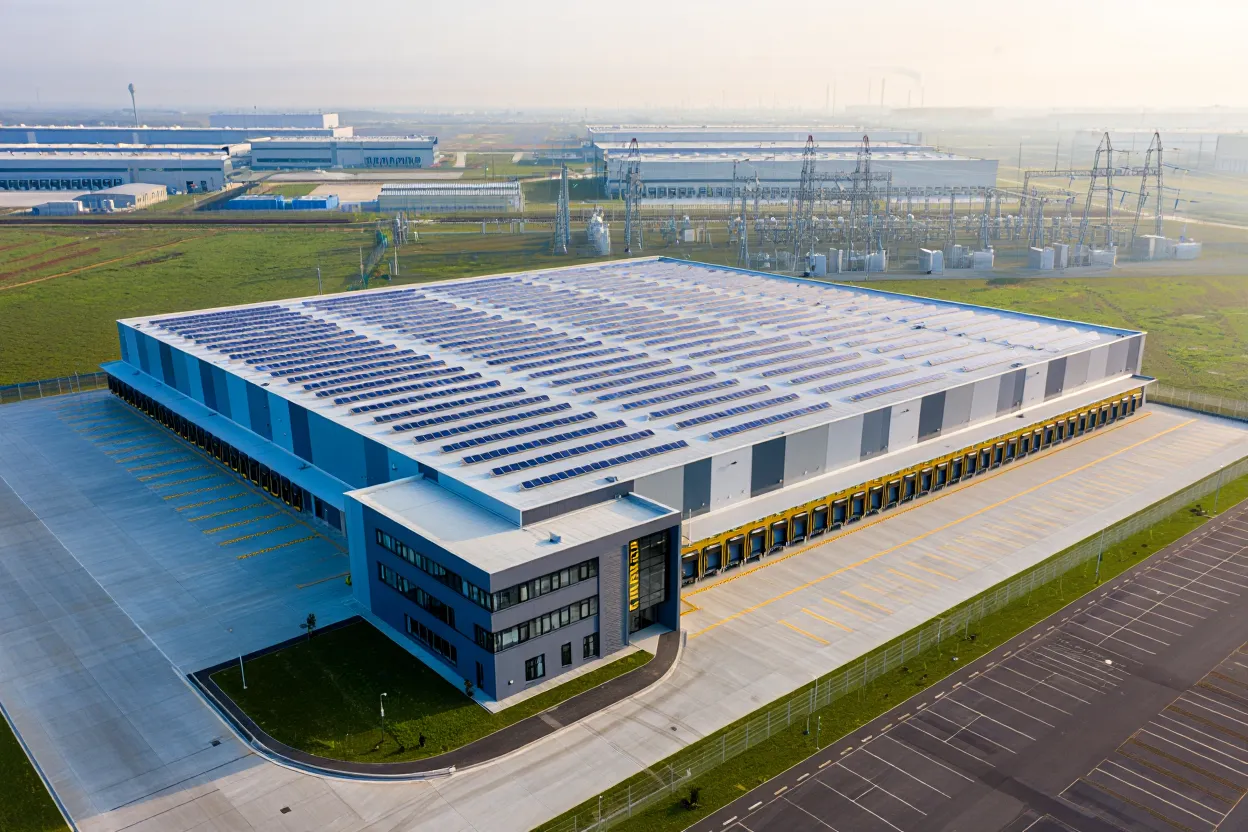
Massive, power-intensive projects such as Eli Lilly’s $6B Alabama facility and Hyundai’s $7.6B Georgia plant typify the sector’s new scale. Sustainability strategies, such as rooftop solar and energy-efficient systems, are key differentiators in leasing velocity going forward.
AI and Automation Proliferate
Automation and artificial intelligence are expanding beyond warehouse operations, influencing development from site selection to marketing. Advanced robotics and AI-driven site modeling improve operational efficiency, while tight labor markets drive more automation investment, especially among major occupiers. Some of the largest industrial tenants have already scaled their robotic capabilities significantly, reinforcing the trend toward tech-forward logistics hubs.
Supply Chain Resiliency and Policy
Supply chain resilience is central to industrial growth strategies amid shifting trade policies and tariffs. Companies are diversifying sources, embracing port redundancy, and looking to secure geographic advantages as global uncertainties persist.
Recently announced trade agreements give importers more confidence, but ongoing unpredictability means development will focus on disciplined, resiliency-driven growth. The next phase for industrial real estate will emphasize balance and long-term planning over rapid expansion.