



- Industrial aerospace projects accounted for nearly half of all announced US manufacturing jobs in 2025.
- Aerospace expansions are leading capital investment, propelled by surging demand for jets and defense spending.
- States like North Carolina, Ohio, and Texas are competing to attract major aerospace facilities and jobs.
- Industrial site selection challenges now focus as much on labor supply as land, incentives, and infrastructure.
Sector Shift Accelerates
US manufacturing experienced a major pivot in 2025, as industrial aerospace replaced cleantech as the fastest-growing segment. Bisnow says that aerospace and defense projects made up 49% of job announcements and $42B in investment, outpacing all other manufacturing categories, according to Savills’ 2025 report.
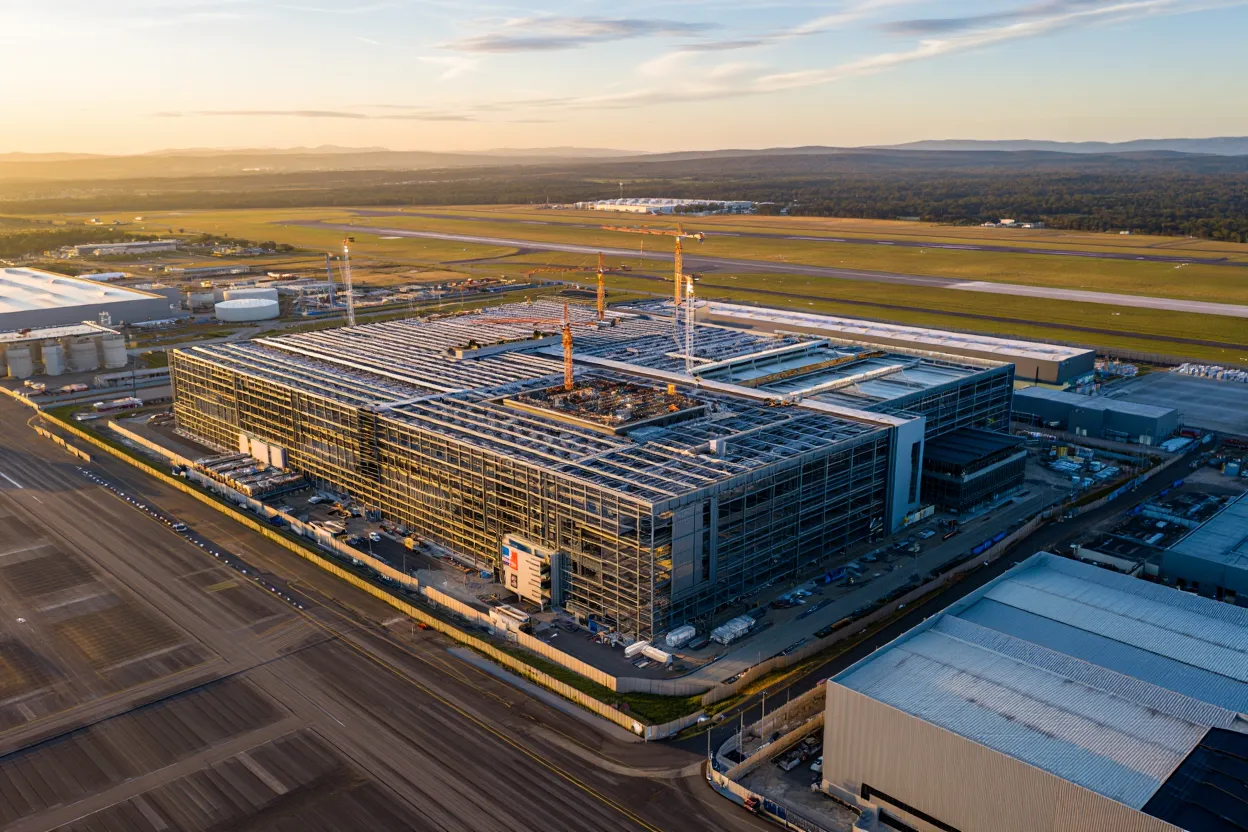
Companies like Natilus, JetZero, and Joby are leading a wave of new industrial aerospace factories, responding to increased global travel, rising defense budgets, and new aviation technologies. Demand for new aircraft has doubled in the civil sector, with a global shortfall of 17,000 jets.
States Battle for Factories
Traditional aerospace states—California, Washington, and Texas—remain industry centers, but North Carolina and Ohio have seen a surge in industrial aerospace real estate deals. Recent highlights include JetZero’s $4.7B, 3M KSF facility at North Carolina’s Piedmont Triad Airport and Joby’s 700 KSF site in Dayton, Ohio. Economic development teams are leveraging incentives, existing infrastructure, and job training programs to draw these projects.
Get Smarter about what matters in CRE
Stay ahead of trends in commercial real estate with CRE Daily – the free newsletter delivering everything you need to start your day in just 5-minutes
New Facilities Spur Local Growth
Major aerospace manufacturing sites are catalyzing broader commercial real estate development, including office parks, innovation hubs, and warehouse projects. Investor activity in fast-growing regions like the Sunbelt has intensified alongside this trend, as industrial users and developers chase long-term growth tied to defense and aviation. Examples include Dayton’s onMain Innovation District and a proposed $250M office park outside Wright-Patterson Air Force Base. These facilities bring high-paying jobs, supplier demand, and growth to adjacent markets.
Labor Pool Now Key Concern
Industrial aerospace growth is raising the bar for site selection. While sites need sufficient land and power, the most difficult challenge is finding skilled workers. New plants often require thousands of trained technicians, driving workforce development strategies and partnerships with local universities and technical schools.
Outlook Remains Strong
Momentum for industrial aerospace looks set to continue, with robust defense budgets and expanding venture capital investment. PitchBook reported $10B in deals for airplane parts firms through Q3 2025, outpacing previous years. As the sector grows, its impact on industrial real estate—and regional economies—will likely intensify.