





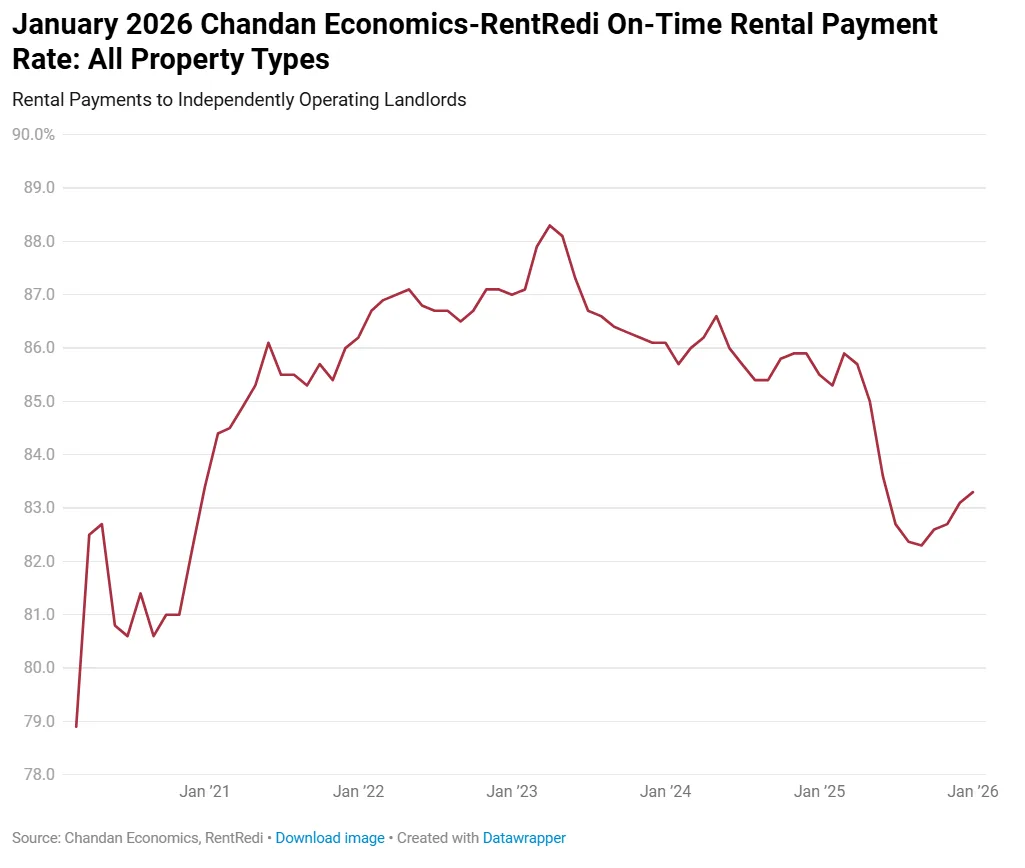
- On-time payment rates in independent landlord rentals rose to 83.3% in January 2026, continuing a gradual upward trend.
- Year-over-year on-time rates remain lower than 2025, marking 30 consecutive months of annual declines.
- Full-payment rates stayed resilient in 2025, averaging 96.0% and outperforming the previous year’s average.
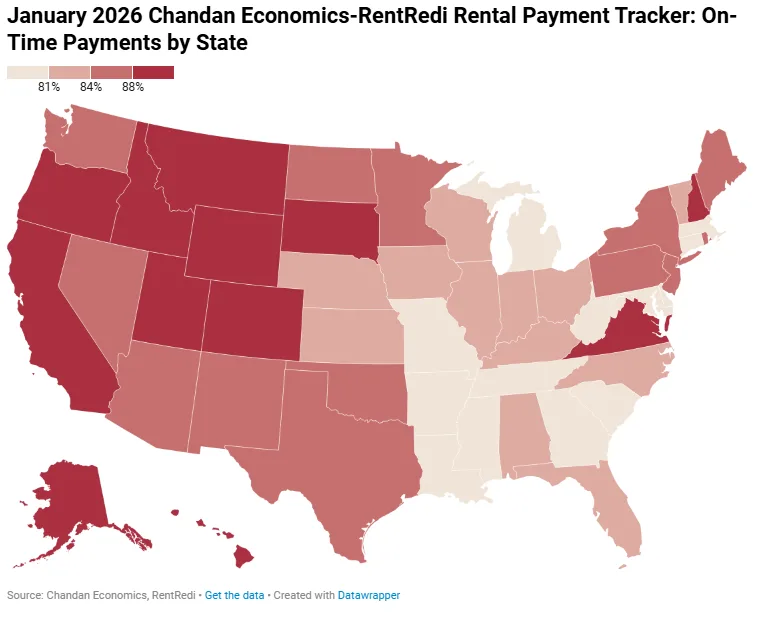
- Western and Mountain states, including Alaska and Utah, reported the highest on-time payment rates among mom-and-pop landlords.
Rental Payment Trends Improving
Independent landlord performance in the US rental sector showed steady improvement at the start of 2026. According to Chandan Economics, on-time payment rates for non-institutional rental units rose to 83.3% in January, extending a positive trend that began in late 2025.
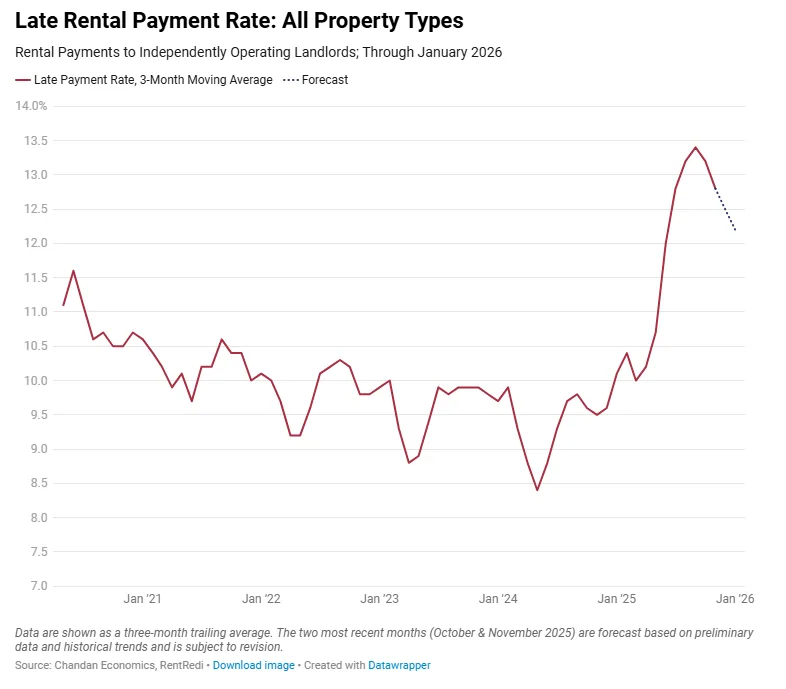
Although collections remain below the highs seen after the pandemic, the market is showing resilience. The stabilization observed since late summer 2025 has persisted, aided by steady wage growth and a stable job market.
Late Payments Still a Challenge
While independent landlord performance has improved, late payments remain a significant concern. In 2025, late payments stayed above 10% throughout the year, a marked change from previous years. These delays continue to challenge landlords’ cash flow, especially those with fewer financial resources.
However, full-payment rates—factoring in eventual cure of late payments—averaged around 96.0% in 2025. This suggests many tenants ultimately meet their obligations, even if payments are delayed. The forecasted full-payment rate for January 2026 stands at a stable 95.5%.
Steady Regional and Property Type Patterns
Regional differences remain pronounced in independent landlord performance. States in the West and Mountain regions led the country, with Alaska at 95.8% and Utah at 92.9% on-time payments. Meanwhile, the lowest-performing states clustered in the high-70% to low-80% range, highlighting uneven sector recovery.
Performance also varied by property type. Two- to four-family rentals saw the highest on-time rates at 84.0%, while single-family and larger multifamily units trailed slightly behind. All segments saw modest month-over-month improvement in January, signaling broad-based stabilization.
Importance for Independent Landlords
The independent landlord performance report, powered by RentRedi data and Chandan Economics analysis, tracks a representative set of over 64,000 units, offering valuable benchmarks for operators and investors. Its monthly insights help gauge the health and trends of the mom-and-pop rental sector across the US. Recent monthly movements have continued to build on signs of recovery seen at the end of 2025, offering cautious optimism for landlords navigating ongoing affordability and payment challenges.
Looking ahead, continued wage growth and stable employment conditions are expected to support gradual further improvement for independent landlords, provided broader economic conditions hold steady.
Get Smarter about what matters in CRE
Stay ahead of trends in commercial real estate with CRE Daily – the free newsletter delivering everything you need to start your day in just 5-minutes