




- Houston attracted a record 117 foreign business announcements in 2025, fueled by companies relocating manufacturing operations closer to US markets amid tariffs and geopolitical uncertainty.
- Taiwanese manufacturers led several major investments, including Foxconn’s $450M AI server facility and Inventec’s $251M hardware plant, adding thousands of jobs to the metro.
- Port Houston’s record cargo volumes and Houston’s export dominance highlight the city’s growing role as a North American energy and advanced manufacturing hub.
Houston’s position as a global trade gateway is strengthening as tariffs, geopolitical conflicts, and supply chain disruptions push more manufacturers to expand operations in the US, reports Bisnow. The metro posted a record number of foreign business announcements in 2025 while Port Houston handled its highest cargo volumes ever, according to the Greater Houston Partnership (GHP).
Executives and economic researchers say the shift reflects a broader onshoring trend as companies look to reduce exposure to global trade volatility while staying close to major consumer markets and logistics infrastructure.
Get Smarter About What Matters in Texas
Subscribe to our free newsletter covering the biggest commercial real estate stories across Texas — delivered in just 5 minutes.
Onshoring Accelerates In Houston
Houston recorded 117 new foreign business announcements in 2025, up from 81 in 2024 and 72 in 2023, according to GHP data shared at the organization’s State of Houston’s Global Economy event on May 8. Colin Baker, GHP’s manager of economic research, said rising trade tensions are pushing more overseas manufacturers to establish operations in Houston.
Taiwan emerged as a major source of new industrial investment. Foxconn announced a $450M artificial intelligence server manufacturing facility expected to create 600 jobs, while Inventec unveiled a $251M AI hardware manufacturing project projected to add 2,000 jobs. Additional Taiwanese investments included Arizon, a radio-frequency identification hardware manufacturer, and Tension Steel Industries Co., an oil pipeline producer, each committing $50M.
The Details
Houston’s manufacturing appeal extends beyond geopolitics. Companies are also targeting the region for its labor pool, access to domestic consumers, and proximity to Port Houston, one of the country’s busiest trade hubs.
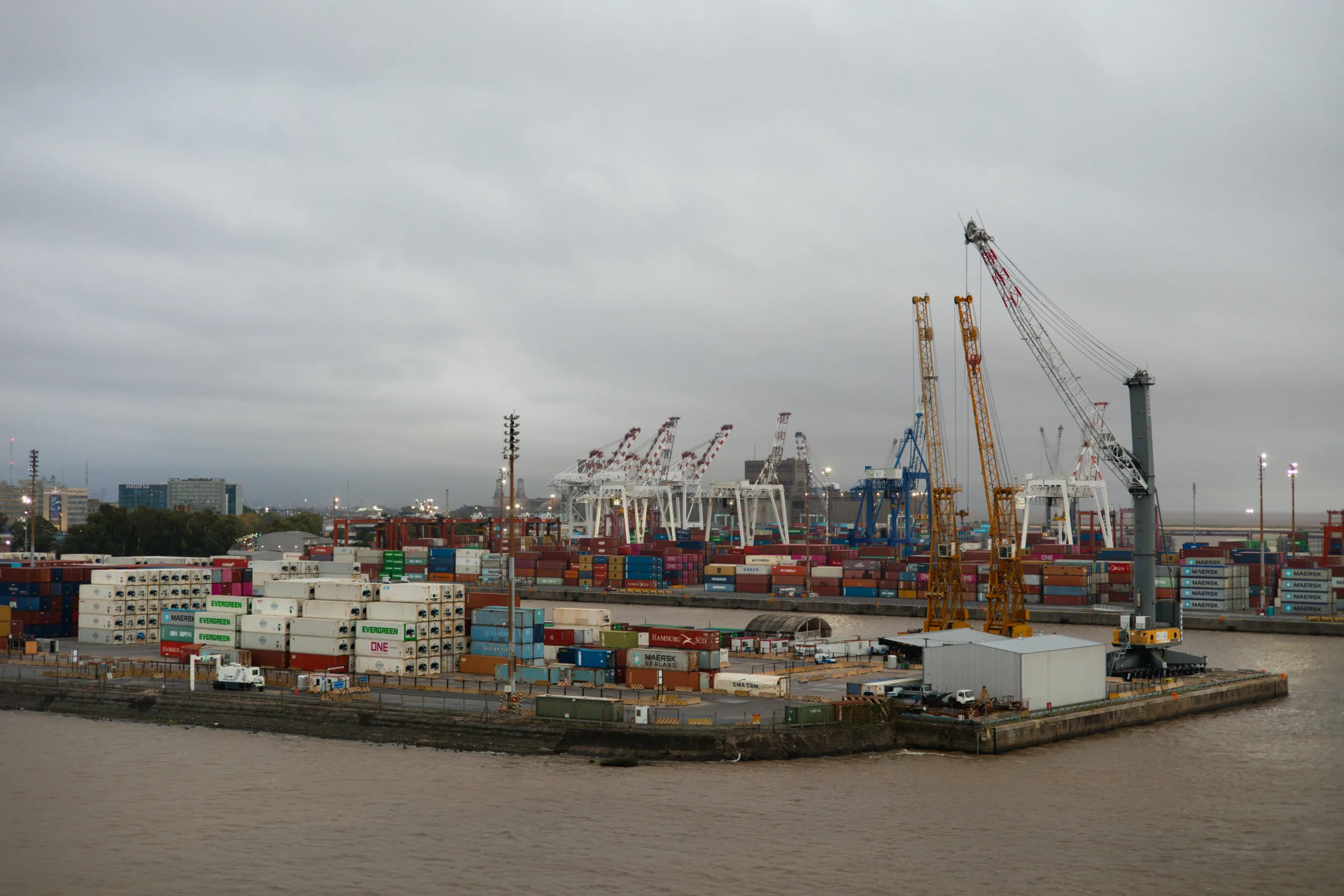
Port Houston handled a record 4.3M containers in 2025, up from 4.1M in 2024 and 3.8M in 2023. Container traffic has nearly doubled from the 2.2M units processed in 2016, underscoring how pandemic-era supply chain changes permanently expanded Gulf Coast trade flows.
Houston also maintained its position as the nation’s top exporting metro for the ninth consecutive year, according to Baker. The metro exported $177.3B in goods during 2025, surpassing the combined export totals of Los Angeles, Chicago, and Dallas. New York ranked second nationally with $161.4B in exports.
Energy Exports Reshape Trade Flows
Houston’s export growth has been closely tied to shifting global energy markets. Baker noted that exports to the Netherlands surged after Russia’s 2022 invasion of Ukraine prompted European nations to reduce dependence on Russian oil and gas.
The Netherlands now serves as Houston’s largest export destination, functioning as a key distribution point for energy products across Europe. Crude oil and refined petroleum products remain the top-traded commodities moving through the Houston/Galveston Customs District. Houston’s manufacturing surge also mirrors a broader national shift as companies expand domestic production footprints and rework supply chains to reduce geopolitical and tariff-related risks.
The trend also reflects a broader industrial repositioning underway across the US. According to CBRE’s 2025 US Manufacturing Report, companies continue expanding domestic production footprints to improve supply chain resilience and reduce geopolitical risk exposure. Sun Belt markets with port access and lower operating costs have captured an outsized share of that investment.
Why It Matters
Houston’s growth reinforces how industrial real estate demand is increasingly tied to geopolitical strategy as much as traditional economics. Manufacturing reshoring and export growth are driving demand for industrial facilities, logistics space, port infrastructure, and workforce housing across the region.
The influx of advanced manufacturing projects also broadens Houston’s economic base beyond energy. Semiconductor, AI hardware, and electronics production could create longer-term demand for specialized industrial assets and skilled labor pipelines, particularly near major transportation corridors.
What’s Next
Houston’s momentum appears poised to continue into 2026. Baker said foreign business announcements are already trending higher this year as companies reevaluate global supply chains and tariff exposure.
Investors and developers will likely watch for additional manufacturing expansions tied to semiconductors, AI infrastructure, and energy exports. Port Houston’s ongoing infrastructure upgrades and deepening trade ties with Europe and Asia could further cement the metro’s role as a leading North American industrial and export hub.