




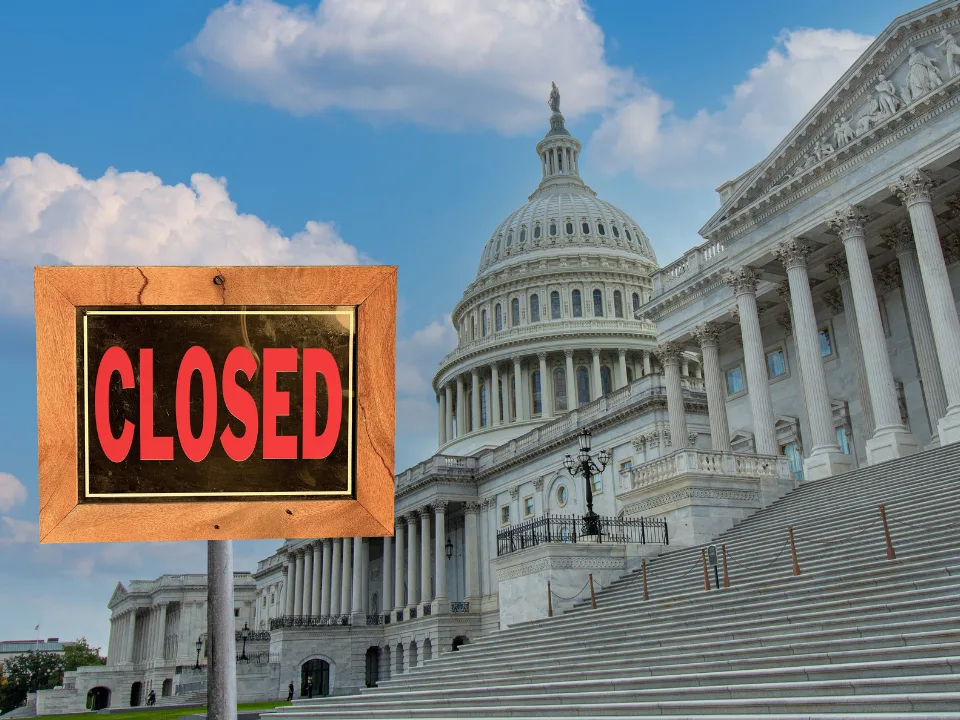
- The US is experiencing its second-longest government shutdown, with over 900,000 federal workers furloughed.
- The CRE sector faces delays in development, financing, and access to key federal data.
- Despite short-term uncertainty, industry experts say liquidity and deal pipelines remain strong heading into Q4.
Another Historic Shutdown Looms
The US government is nearing its longest shutdown on record, per the Commercial Property Executive. Over 900,000 workers are furloughed, and the impact is reaching the commercial real estate (CRE) sector.
A Confidence Game, Not a Liquidity Crisis
Lisa Pendergast, CEO of the Commercial Real Estate Finance Council (CREFC), described the situation as a “confidence and timing headwind.” She emphasized this is not a liquidity crisis. Liquidity remains strong, and deals are still progressing, offering a buffer against market uncertainty.
Permits Delayed, Projects Paused
Wei Luo, global research director at CBRE Investment Management, said any project requiring federal permits will likely face delays. These delays are especially problematic in metros with a large federal presence, including Washington, D.C.
Despite this, Luo noted that US transaction volumes hit a Top Ten all-time high in Q3, and momentum could carry into Q4.
Get Smarter about what matters in CRE
Stay ahead of trends in commercial real estate with CRE Daily – the free newsletter delivering everything you need to start your day in just 5-minutes
Lack of Data Fuels Market Hesitation
David McCarthy, head of legislative affairs at CREFC, said the shutdown has frozen access to federal economic data. Without reliable benchmarks, credit committees are turning more conservative. Contractors may also scale back spending, increasing the risk of project slowdowns.
Localized Pain Points
Markets with high federal employment—like San Diego, Baltimore, Oklahoma City, and Norfolk—could feel more disruption. These areas may experience localized leasing slowdowns or performance issues if the shutdown continues.
Contingency Mode Activated
CRE firms are adapting. CBRE Investment Management is using private data and academic research to guide decisions. The firm is also watching cap rates, REIT pricing, and leasing fundamentals to monitor performance trends.
Why It Matters
Even though CRE is in a healthier position than it was two years ago, prolonged government inaction increases market uncertainty. Developers and investors rely heavily on federal data and permitting to make timely, strategic decisions.
What’s Next
The upcoming Federal Open Market Committee (FOMC) meeting may bring another rate cut. But if the shutdown stretches on, expect more cautious lending, delayed projects, and a drag on deal flow in select markets.