




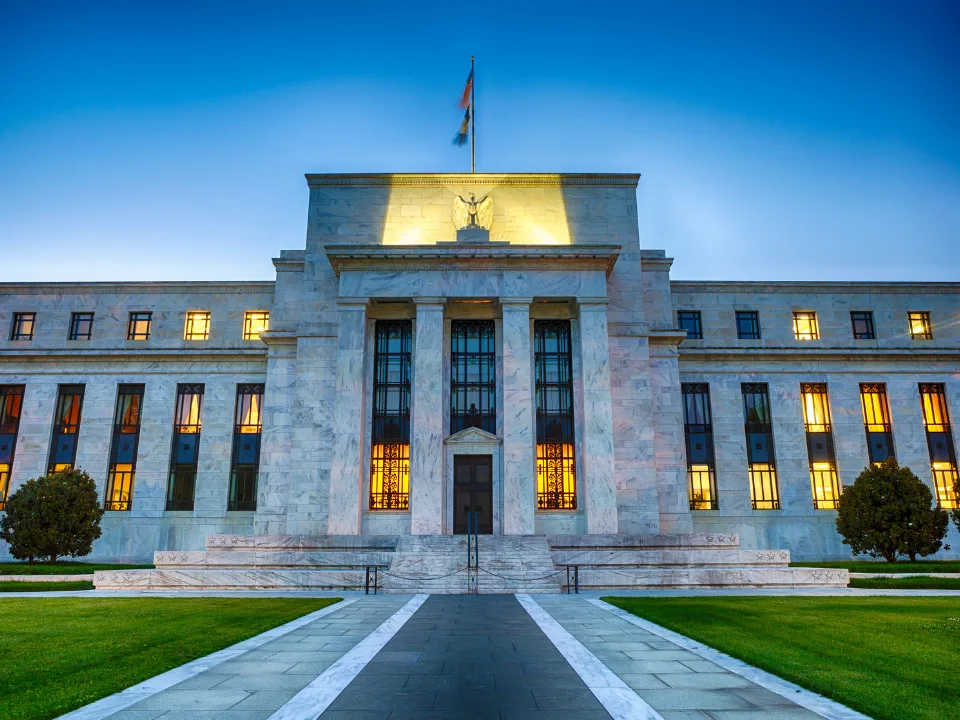
- The Federal Reserve lowered the federal funds rate by 25 basis points, its second consecutive cut, setting the new range at 3.75%–4%.
- The decision comes as transaction volumes in commercial real estate continue to rise, with U.S. office sales up 42% year-over-year.
- Although inflation remains above the Fed’s 2% target and the U.S. government shutdown hinders key economic data, the rate cut offers borrowers a timely opportunity to refinance debt and lock in more favorable terms.
Fed Delivers Another Rate Cut Amid Uncertainty
In a closely watched decision, the Federal Reserve cut its benchmark interest rate for the second consecutive month. The new target range of 3.75% to 4% reflects continued efforts to ease financial conditions and stabilize capital markets, even as economic signals remain mixed.
The vote to cut rates was not unanimous. Two members of the Federal Open Market Committee (FOMC) dissented: one favored a larger 50-basis-point cut, and another preferred no change at all. It marked the third straight meeting with internal divisions among policymakers.
Real Estate Activity Already Picking Up
Commercial real estate markets have shown signs of renewed strength. According to Bisnow, total transaction volume reached $42B in September, a 19% increase over the previous year, according to MSCI Real Assets. Office sales rose 42% year-over-year, and national office vacancy declined in Q3 for the first time since 2019.
The rate cut is expected to further support refinancing efforts, particularly as yields on 10-year Treasury bonds — a key CRE lending benchmark — dipped below 4% prior to the Fed’s announcement.
Delayed Data, Divided Views
Economic visibility remains limited due to a government shutdown that began on October 1. The disruption delayed inflation and employment reports, leaving policymakers without key data as they made their latest decision.
The Consumer Price Index eventually showed inflation ticking up to 3% — still above the Fed’s 2% target. Employment data for September and October remains unavailable due to the shutdown.
Fed Chair Jerome Powell emphasized that another rate cut in December is not guaranteed, stating, “A further reduction in the policy rate at the December meeting is not a foregone conclusion — far from it.”
Why It Matters
The rate cut offers a near-term window for CRE borrowers to refinance maturing debt under more favorable conditions, though volatility remains a concern. Analysts note that developers and investors may accelerate deals to lock in current rates before inflation or policy shifts return borrowing costs to higher levels.
While inflationary pressures persist and economic data gaps cloud the outlook, the cumulative 150 basis points in cuts over the past year have helped ease financial conditions — a trend that could continue to lift real estate transaction volumes into 2026.