




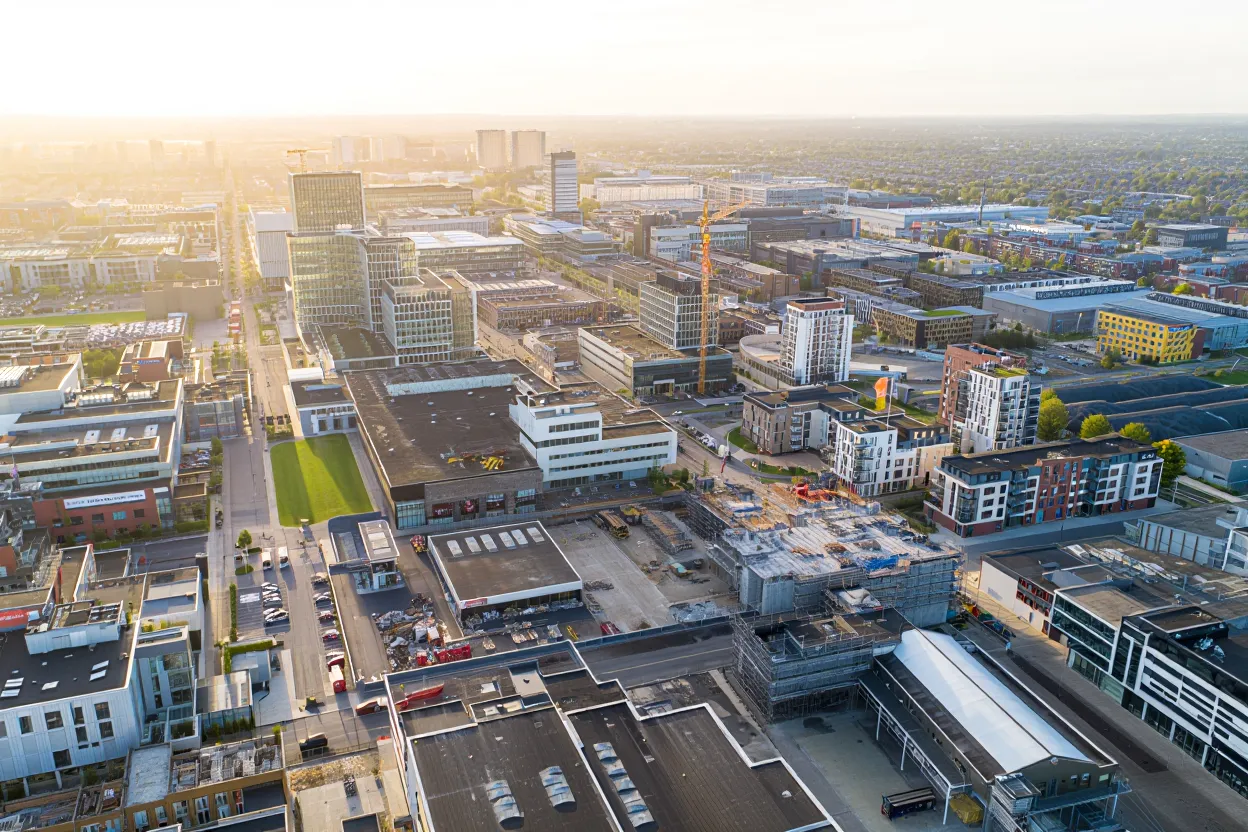
- CRE development contributed $1.55T to US GDP and supported 7.37M jobs in 2025.
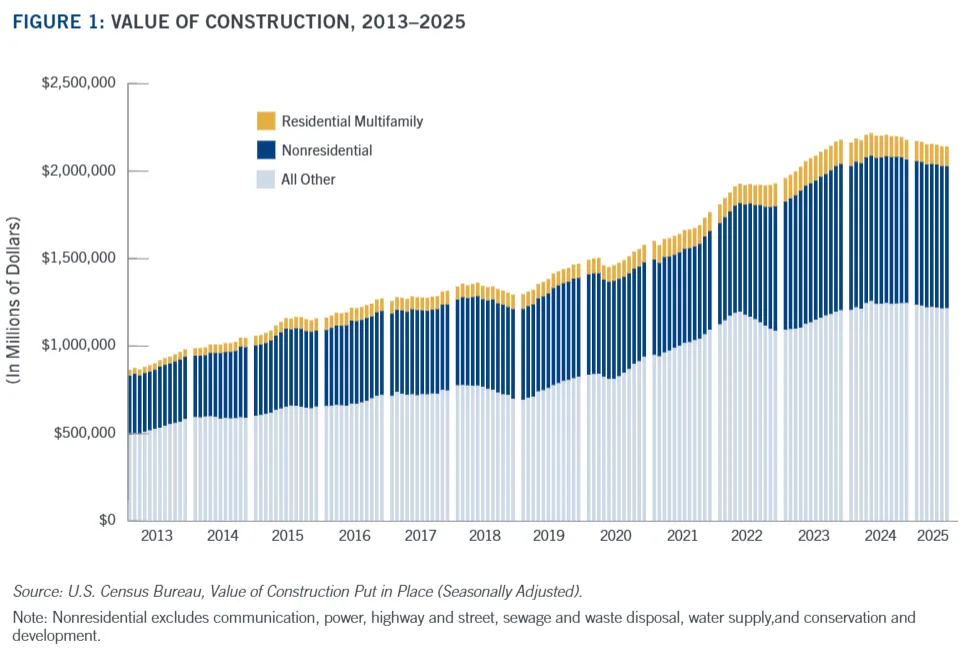
- Construction spending reached $2.15T, with total economic output at $5.3T.
- Hard construction costs rose 5.8% overall, with significant variation by property type.
- Long-term CRE operations generated $2T in GDP and 13.1M jobs beyond new builds.
Development Activity Lifts US Economy
Globe St reports that commercial real estate (CRE) development delivered a major boost to the US economy in 2025, according to new research by the NAIOP Research Foundation. The sector added $1.55T to GDP, up from $1.25T in 2021, and created over 7.37M jobs nationwide. CRE development also fueled $554.75B in personal earnings last year, demonstrating its critical national role.
Construction Spending and Economic Impact
Direct construction spending for CRE reached $632.21B in 2025. When including multiplier effects, overall construction activity contributed $5.3T—or 17.5% of total US GDP—and supported 25.6M jobs across the country. Total construction expenditures, including nonbuilding projects, hit $2.15T.
Cost and Volume Trends by Property Type
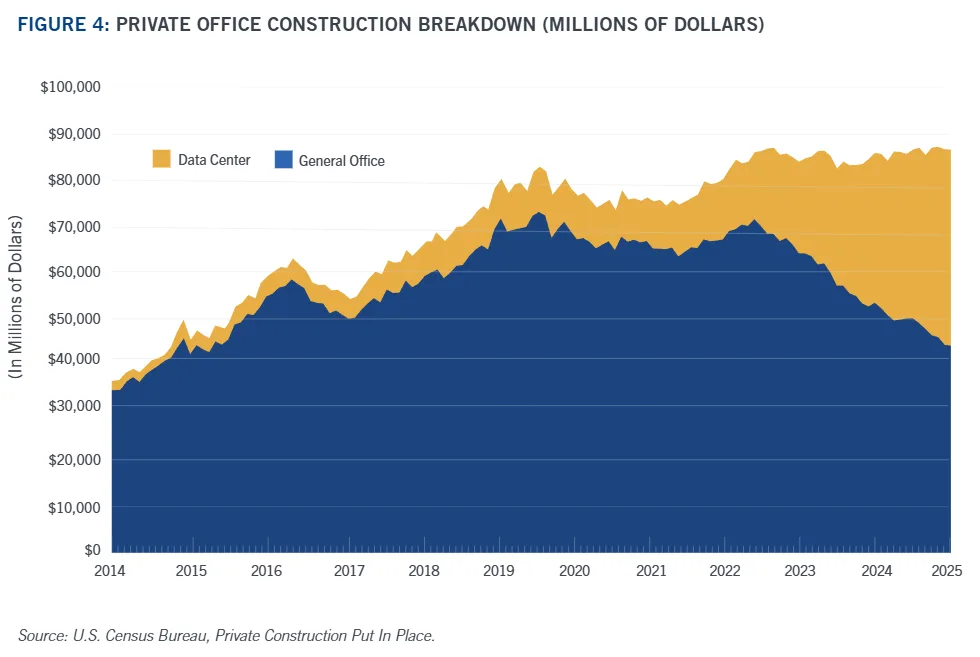
Construction costs fluctuated by sector: office project hard costs increased 15.8%, industrial fell 5.6%, warehouse dropped 0.4%, and both retail/entertainment and multifamily rose 6.6%. In terms of dollar volume, multifamily led with $135.3B, followed by office ($85.5B), industrial ($50.5B), warehouse ($42B), and retail ($22.9B).
Get Smarter about what matters in CRE
Stay ahead of trends in commercial real estate with CRE Daily – the free newsletter delivering everything you need to start your day in just 5-minutes
CRE Operations and Ongoing Economic Impact
Beyond new development, ongoing operations of US CRE inventory (73.8B SF) accounted for $752B in annual spending and $2T in GDP, supporting 13.1M jobs. These operating activities—covering management, maintenance, and utilities—underscore CRE’s ongoing contribution beyond cyclical construction booms.
Sector Performance and Labor Market Dynamics
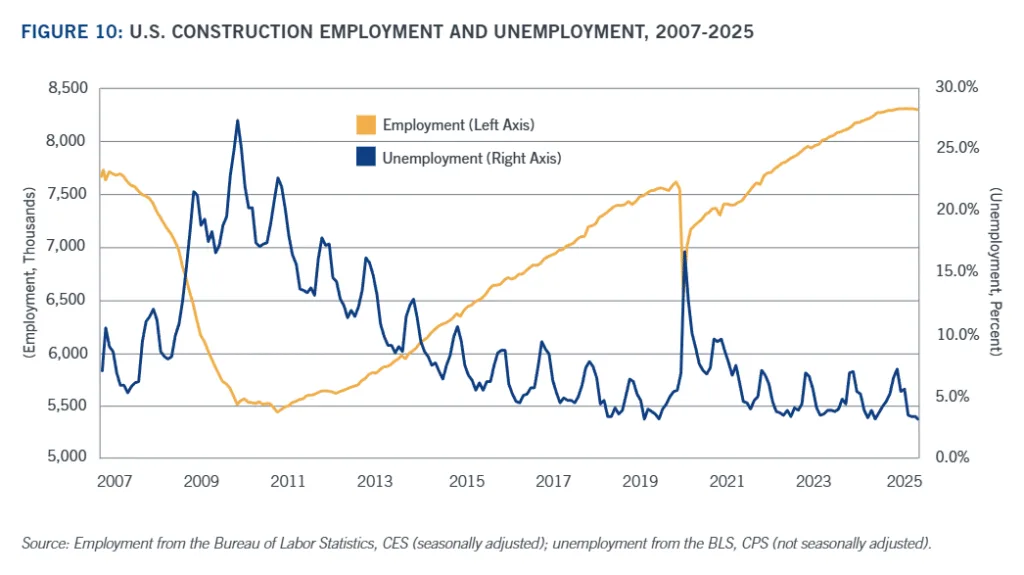
Office began stabilizing with slight vacancy declines and rising demand for high-quality assets, while office-to-residential conversions accelerated. Retail showed renewed leasing and steady vacancies as development remained limited. Industrial and warehouse faced increased vacancies after pandemic-era supply surges, though long-term demand fundamentals remained strong. Multifamily held steady, with robust demand expected to balance recent supply growth. Construction employment peaked at 8.3M, but labor shortages and rising input costs continued to challenge new development.
What’s Ahead for CRE
Looking to 2026, CRE development is positioned for a measured rebound. Data centers, logistics, and multifamily assets are expected to lead growth. Traditional office recovery is likely to lag, shaped by continued hybrid work and asset quality differences. The NAIOP study underscores that CRE development remains a vital engine for US economic growth despite evolving market challenges, with sectors like data centers playing an outsized role in driving recent gains.