



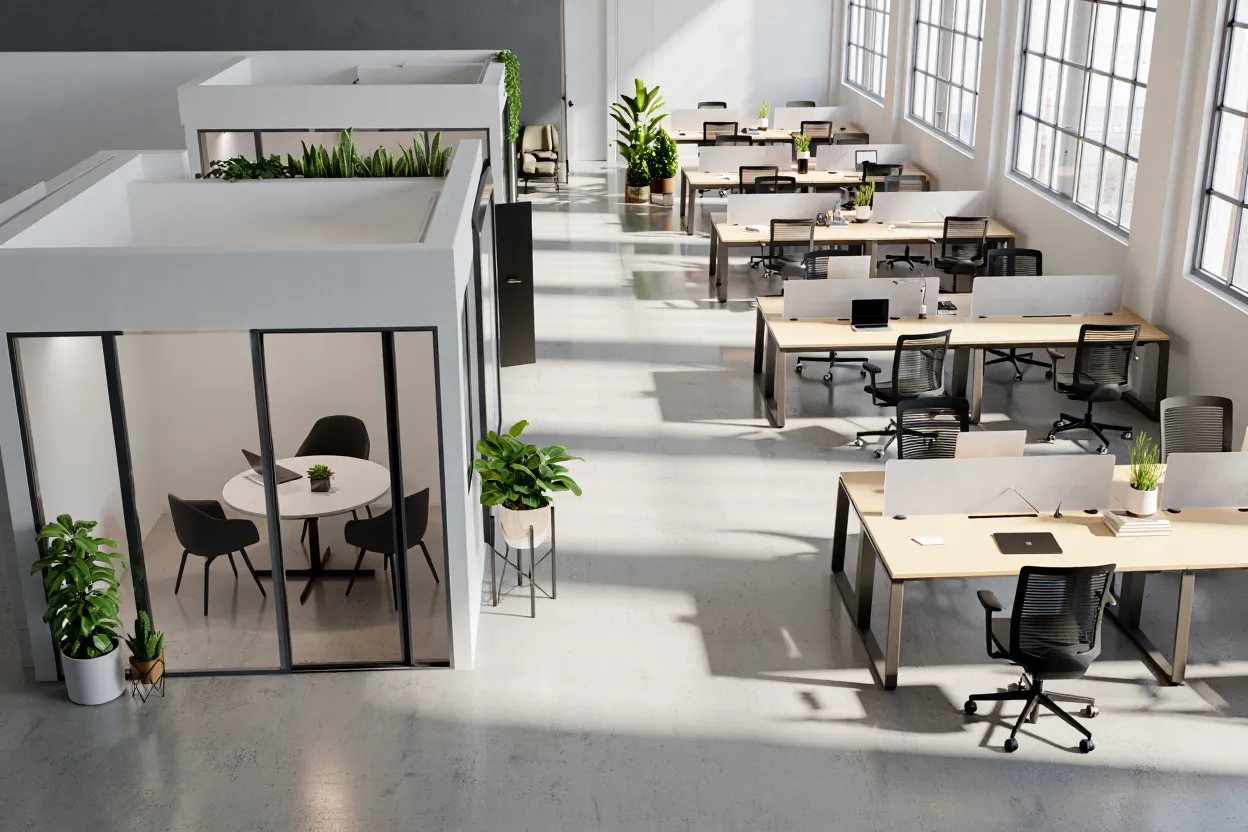
- Co-working space in the Texas Triangle grew by 2.5M SF from Jan 2025 to Jan 2026.
- Dallas-Fort Worth leads Texas, with a total of 6.7M SF and a 29% growth rate.
- San Antonio saw the fastest percentage growth, increasing its co-working supply by 30%.
- Nearly 80% of co-working sites are operated by independent companies, not major brands.
Growth Accelerates Across Major Metros
The Texas Triangle is seeing rapid expansion in co-working space as hybrid work and population growth reshape office demand. The Real Deal reports that according to Yardi Kube, the region’s top five metros added 2.5M SF of co-working inventory between January 2025 and January 2026.
Dallas-Fort Worth remains Texas’ co-working leader, now totaling 6.7M SF—fifth in the US nationally. The market added 1.5M SF in the last year alone, and saw a 29% inventory jump. Houston follows with 5M SF, while Austin and San Antonio stand at 2M SF and 1M SF, respectively.
Get Smarter About What Matters in Texas
Subscribe to our free newsletter covering the biggest commercial real estate stories across Texas — delivered in just 5 minutes.
Independent Operators Dominate the Scene
The Texas Triangle’s co-working boom isn’t just driven by major brands. Across the US, nearly four out of five co-working locations are run by independents rather than WeWork, Industrious, or International Workplace Group. In DFW, International Workplace Group (Regus, HQ, Spaces) oversees 59 of 301 sites, WeWork runs 12, and Industrious manages four—leaving 75% of sites operated by other companies, mirroring a broader national surge in flexible office demand as companies continue to rethink how and where work gets done.
San Antonio Ranks Among Fastest Growing
San Antonio’s co-working footprint grew 30% in the past year, placing it third for percentage growth nationwide. However, in absolute terms, North Texas saw the largest increase, adding 1.5M SF. Houston grew by 0.5M SF (11%), while Austin added 200K SF (12%).
What’s Next
Return-to-office mandates from large employers, including names like AT&T, are supporting steady demand for co-working space in Dallas and beyond. Industry watchers expect flexible office providers, particularly independent operators, to remain central to the region’s continued expansion in co-working as hybrid and remote trends persist across the Texas Triangle.