





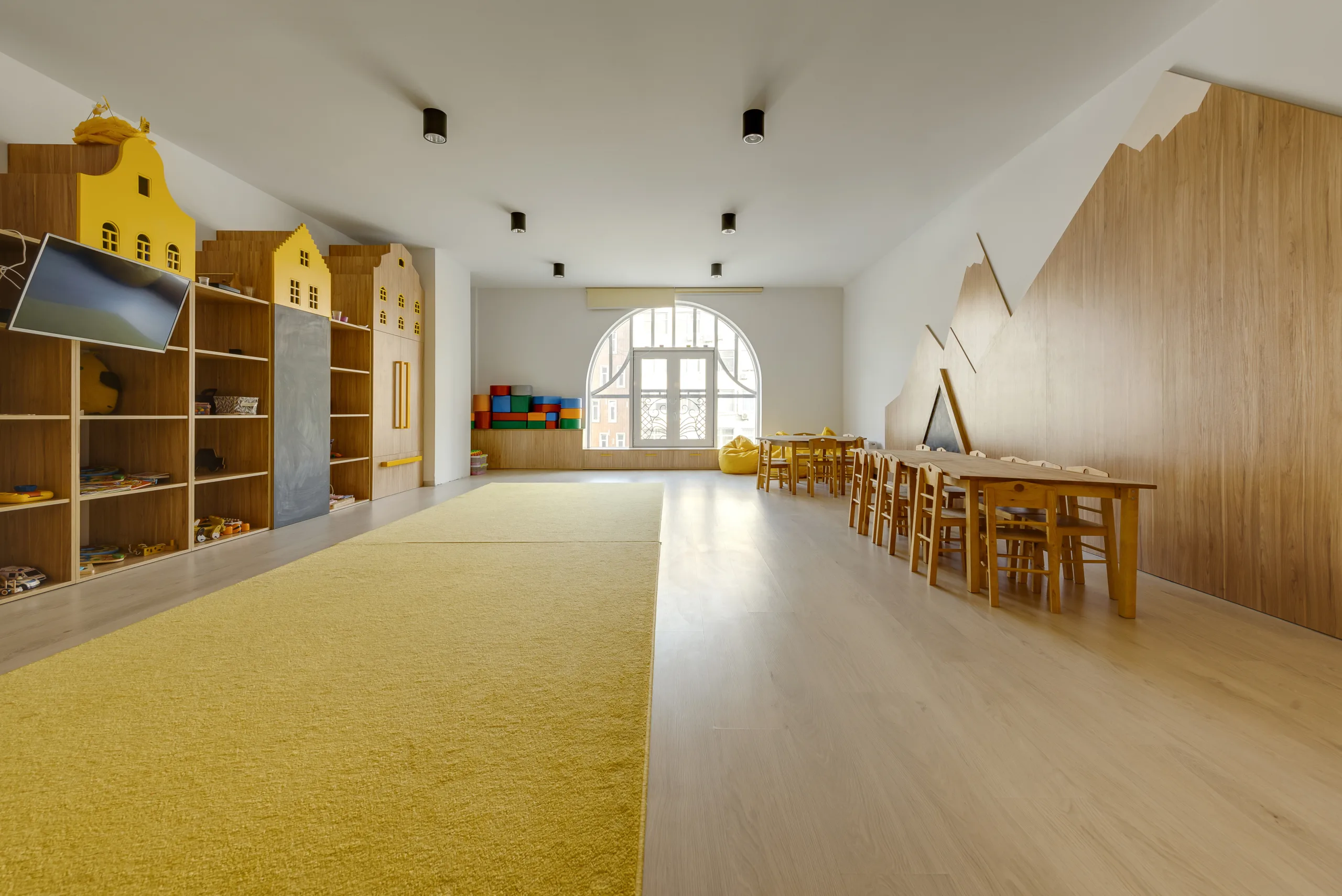
- Childcare facilities in New York City face location shortages and high retail rents.
- New tax abatements could help, but lack of awareness and difficult site discovery hinder adoption.
- Universal childcare expansion requires at least 16,000 more 3-K seats and more full-day options.
- Zoning and licensing delays further slow new childcare center openings.
Universal Childcare Hits Real Estate Snags
New York City’s plan for universal childcare, backed by a $4.5B commitment from Gov. Hochul and Mayor Mamdani, confronts a major challenge: finding suitable, affordable childcare facilities. Bisnow reports that despite property tax incentives, operators and landlords report that lack of information and high retail PSF limit expansion.
Childcare Facilities Shortfall
Childcare facilities remain unevenly distributed across NYC. Some neighborhoods have waitlists while others hold empty seats, and there’s no single data source for available or permitted centers. High demand is expected to rise further as plans for universal programs for 2-year-olds move forward.
- The city needs at least 16,000 additional 3-K seats to meet anticipated demand.
- Roughly 96,000 current pre-K slots lack full-day or year-round care options.
- Only 29% of income-eligible infants and toddlers currently access subsidized childcare.
Get Smarter about what matters in CRE
Stay ahead of trends in commercial real estate with CRE Daily – the free newsletter delivering everything you need to start your day in just 5-minutes
Retail Space, Rents, and Red Tape
Childcare tenants face citywide average retail rents of $55.16 PSF, with prime corridors costing up to $574 PSF. Zoning requires younger children’s programs to be on the ground floor, narrowing options. Brokers and operators say finding suitable sites—especially at manageable rents—poses the biggest barrier to rapid childcare facilities growth. This challenge is amplified in parts of the city where average childcare costs now exceed rent, creating added pressure on both families and providers.
Tax Abatements and Landlord Partnerships
NYC’s property tax abatements offer up to $350K ($750K in childcare deserts) for creating or expanding childcare facilities. However, awareness among landlords remains low, and only 47 projects took advantage under previous limits.
- Program expansion drove a spike in landlord inquiries after new limits were publicized.
- Operators cite slow city permitting and certificate-of-occupancy delays as significant startup hurdles.
- Collaborations like discounted rent for tenant-focused childcare programs offer a model for overcoming high costs.
What’s Next
Experts believe further streamlining the process of finding and permitting community facility space is vital for childcare facility growth. Without improvements in space discovery and incentives, the pace and distribution of universal childcare expansion may continue to lag behind policy goals.