



- Bronx multifamily housing courts are facing severe backlogs, with average case resolution taking up to 15 months.
- Eviction filings and rent arrears are rising amid staffing shortages at legal aid and social services organizations.
- Court delays impact both landlords and tenants, leading to increased mortgage defaults and unsafe living conditions.
- Recent legislative changes have improved tenant protections but further slowed case processing times.
Persistent Backlogs in Bronx Multifamily Courts
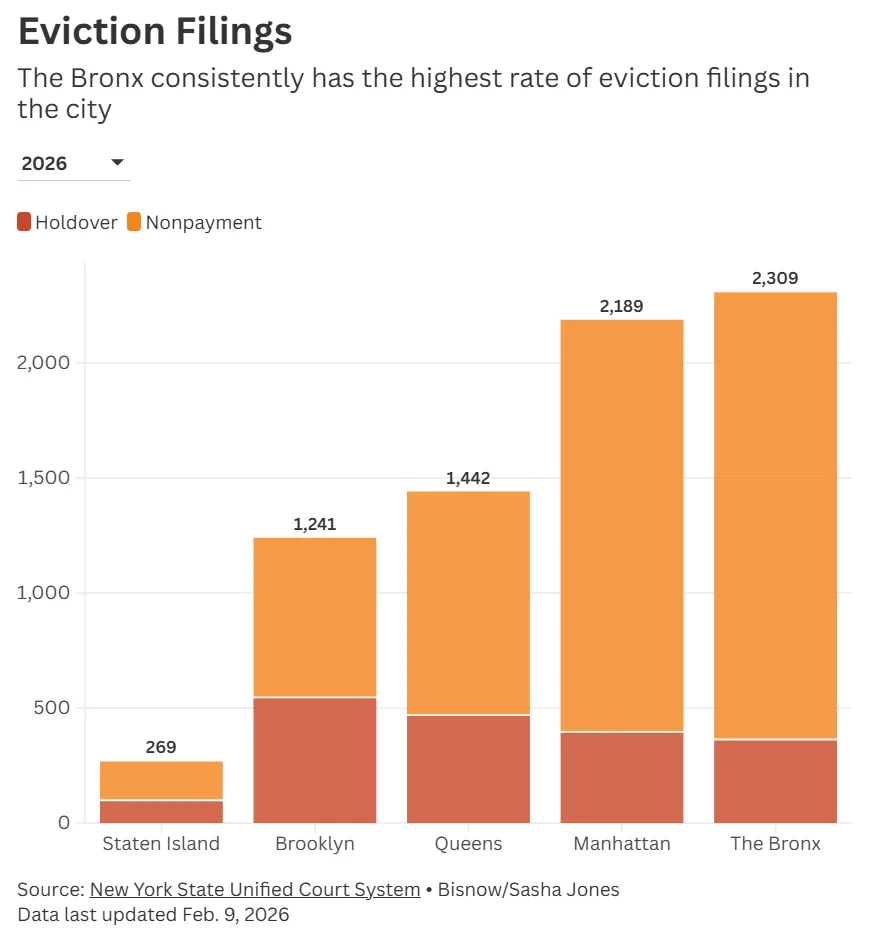
Bisnow reports that Bronx multifamily housing courts have become the focal point of New York City’s mounting housing crisis. Judges routinely handle over 60 cases daily, while parties wait months—even years—for outcomes. The number of eviction filings is trending upward, reflecting continued economic distress and slow recovery from the pandemic.
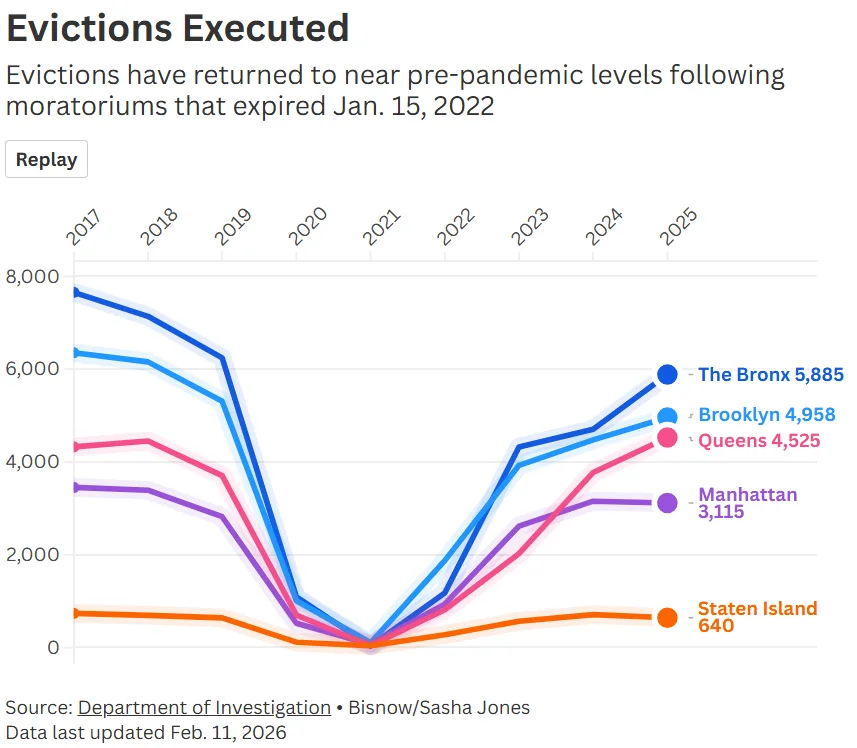
Procedural changes and limited court resources have contributed to extensive delays. In the Bronx, the average eviction case now takes about 15 months to resolve, far exceeding the one-month target set by state law.
Staffing Shortages and Legal Bottlenecks
Both legal aid providers and social service agencies report critical staffing shortages. Since the rollout of New York’s Right-to-Counsel law, legal service organizations have lost up to 55% of staff, causing tenant representation rates to drop from 50% to 30%. Similarly, the processing time for emergency rental assistance now averages 10–12 months, up from 30–60 days pre-pandemic. The strain comes as other pressures ripple through the city’s rental market, including a recent high-profile bankruptcy filing that has added fresh uncertainty for tenants and owners navigating already fragile finances.
- Legal representation keeps 89% of tenants stably housed, but fewer now have access to attorneys.
- Adjournments are common as courts wait for tenants to secure legal aid, further extending resolution timelines.
Financial Pressures on Owners and Tenants
Multifamily landlords, especially those with affordable housing portfolios, are experiencing negative cash flow and higher rates of mortgage default.
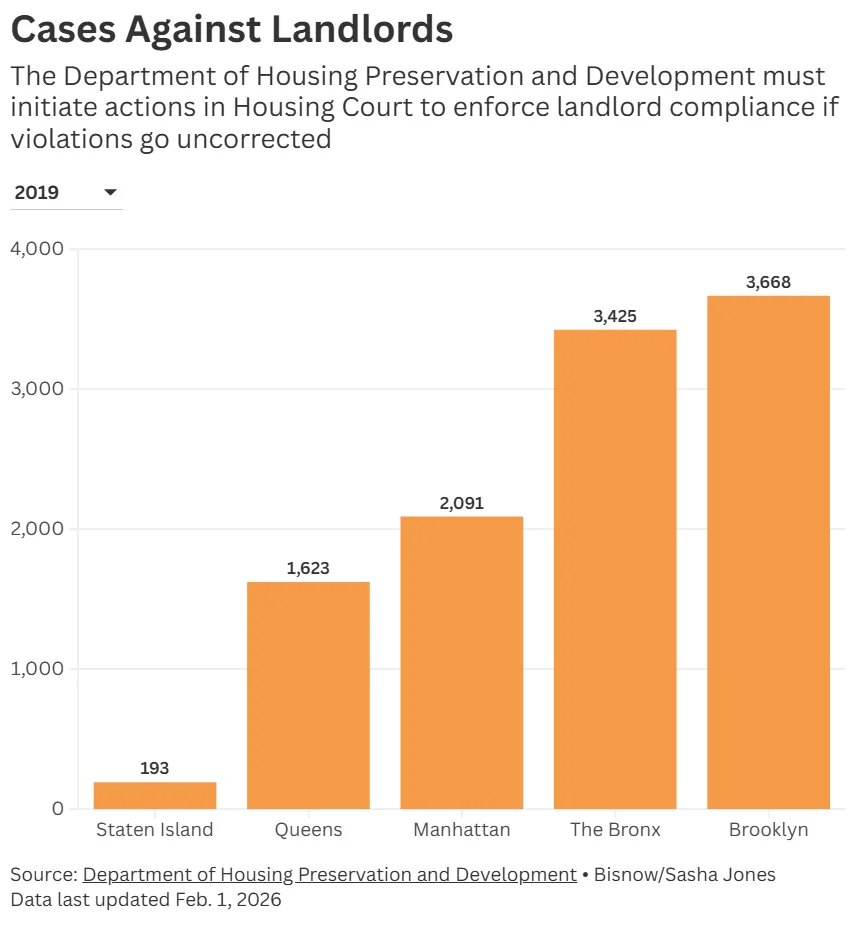
In 2024, affordable housing landlords collected rent on just 90% of their units, and nearly 60% of surveyed buildings reported operational losses after expenses. Rent arrears for some tenants now exceed $75K per year in the most extreme cases.
For tenants, the city’s historic rent burden remains high. About 20% spend over half of their income on housing, and one in three falls into arrears after unexpected setbacks, such as job loss or illness.
Systemic Solutions and Next Steps
Policy experts and housing advocates call for increased court staffing, more physical courtrooms, and streamlined rental assistance processes. Programs like Home 4 Good seek to proactively connect tenants to subsidies before cases escalate. Recommendations also include expanding fast-track court parts for small property owners and integrating social service support early in court proceedings.
Despite recent reforms, the Bronx multifamily court system remains strained, with high rents and low vacancy rates exacerbating the pressure. Substantial structural changes may be needed to restore stability and ensure fair outcomes for both landlords and tenants in one of the city’s toughest housing environments.
Get Smarter About What Matters in New York
Subscribe to our free newsletter covering the biggest commercial real estate stories across the five boroughs — delivered in just 5 minutes.