





- US regulators propose easing Big Bank capital requirements, reducing aggregate CET1 capital for largest banks by 4.8%.
- Plans target changes to the enhanced supplementary leverage ratio and stress tests.
- Regulators expect the proposal to unlock more capital for lending and shareholder returns.
- The package marks the most significant capital rule shift since post-2008 reforms.
Regulators Outline Big Bank Capital Changes
The Federal Reserve and other US bank regulators have proposed a set of rule changes to reduce capital buffers that large Wall Street banks must maintain, reports Bloomberg. If passed, these Big Bank capital changes could free up billions for additional lending, share buybacks, and dividends.
The new framework, announced jointly by the Fed, FDIC, and OCC, is now open for a 90-day public comment period prior to final approval.
What the Proposals Include
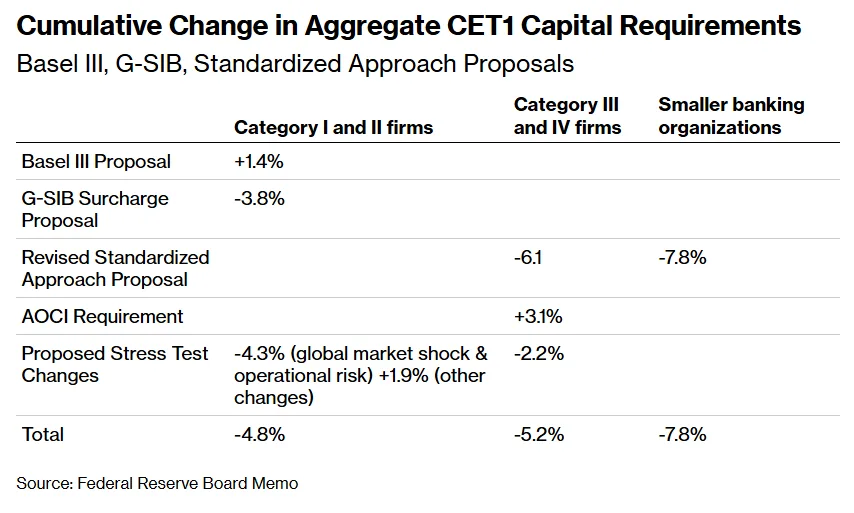
The Big Bank capital changes would lower common equity tier 1 (CET1) capital requirements for the largest banks by 4.8% in aggregate. Midsize and smaller banks could see reductions of 5.2% and 7.8% respectively.
Other measures include easing the enhanced supplementary leverage ratio, revisions to stress testing, and aligning the G-SIB surcharge process more closely with global standards.
Industry and Regulatory Reactions
Industry groups have welcomed the prospect of lower capital levels. Some policymakers and academics, however, warn that repeated reductions could weaken bank resilience over time, especially as looser lending standards and regulatory rollbacks have already begun to reintroduce risk into credit markets tied to commercial real estate.
The Big Bank capital changes are seen as a reversal of earlier tightening trends, aligning US rules more closely with international competition and President Trump’s deregulatory priorities.
Next Steps
Following the public comment period, US regulators will review feedback and may finalize or revise the Big Bank capital changes. The outcome will affect how banks allocate capital and compete globally in the years ahead.
Get Smarter about what matters in CRE
Stay ahead of trends in commercial real estate with CRE Daily – the free newsletter delivering everything you need to start your day in just 5-minutes