



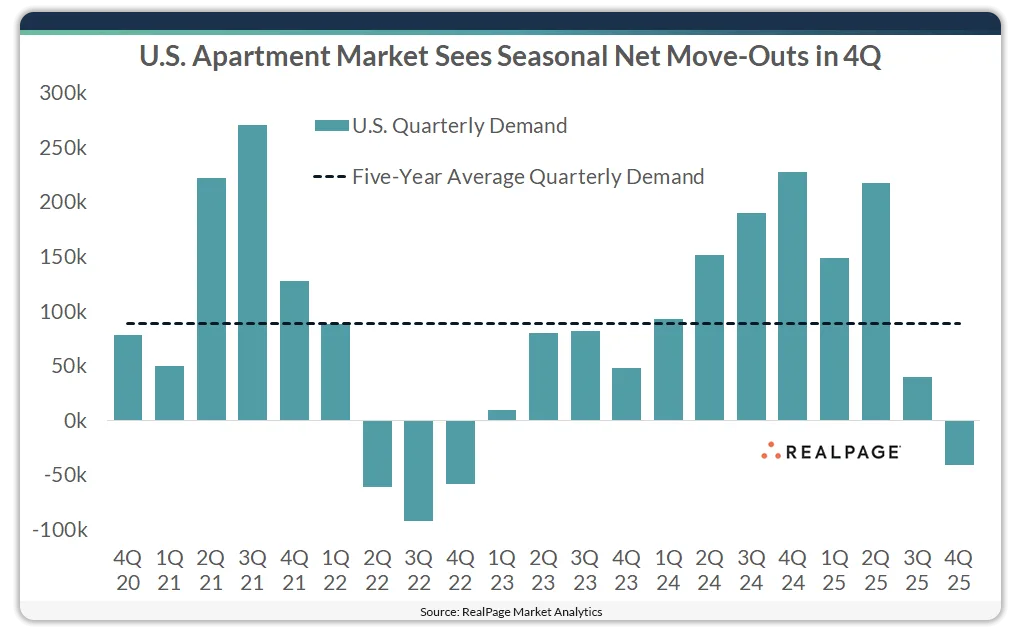
- Only 14 of the largest 50 US apartment markets posted positive demand in Q4 2025.
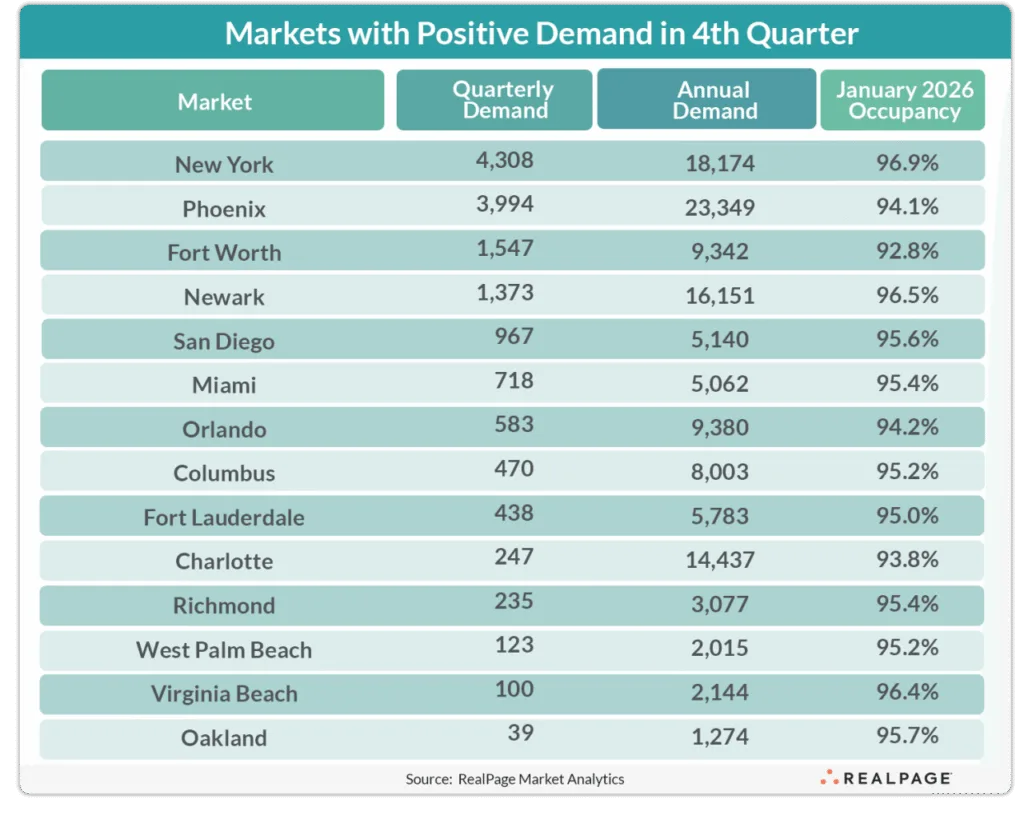
- New York led apartment demand with 4,300 units absorbed, maintaining high occupancy at 96.9%.
- Phoenix and Fort Worth also saw solid absorption, with nearly 4,000 and just over 1,500 units, respectively.
- Apartment demand cooled broadly, signaling a return to pre-pandemic leasing patterns.
Big Markets Defy Q4 Trends
RealPage reports that despite broader net move-outs driven by seasonal trends, several major US markets saw continued apartment demand in Q4 2025. Out of the nation’s largest 50 apartment markets, only 14 registered positive demand, indicating a selective but persistent appetite for rentals in key metros.
Standouts: New York, Phoenix, and Fort Worth
New York led the nation in apartment demand last quarter, with absorption around 4,300 units—slightly below its five-year quarterly average but enough to keep occupancy rates high. Phoenix followed closely, topping nearly 4,000 units and marking its eighth consecutive quarter of robust demand, though volumes are easing from late 2024 peaks.
Fort Worth was a notable Texas standout, absorbing over 1,500 units but posting one of the lower major-market occupancy rates at 92.8%. Newark, the only other significant Northeast market with positive demand, absorbed nearly 1,400 units, while Columbus led Midwest demand with about 500 units.
Why Apartment Demand Matters
Persistent apartment demand in select metros reinforces their role as stable investment markets even as broader US demand normalizes. That resilience stands out against a backdrop where property transactions have been losing steam in recent months, even as pockets of retail activity show renewed momentum, underscoring how leasing fundamentals and sales markets are moving on different tracks. High occupancy rates in gateway markets like New York and tight conditions in Newark suggest limited immediate risk of major rent softness, while modest demand in smaller metros points to diverging regional leasing climates.
Regional Shifts and What’s Next
Demand figures highlight that, although US apartment demand is softening overall, large metros continue to attract renters. Markets like Phoenix and the Southeast remain active, but the decline in demand in places like Newark underscores a shifting, yet still selective, market. Watch for broader signs of stabilization or a further slowdown through early 2026 as supply and absorption trends evolve.