



- Amazon’s average prices have increased 12.8% in 2025, more than double the rate of Walmart (5.3%) and Target (5.5%), according to new analysis by DataWeave.
- The spike is driven in large part by Amazon’s heavy reliance on third-party sellers, who face sharper impacts from tariffs and have fewer tools to absorb the costs.
- Price hikes are most pronounced in non-essential categories such as apparel, home goods, and beauty, with Amazon raising prices more aggressively than its peers across the board.
Amazon Leads In Price Increases
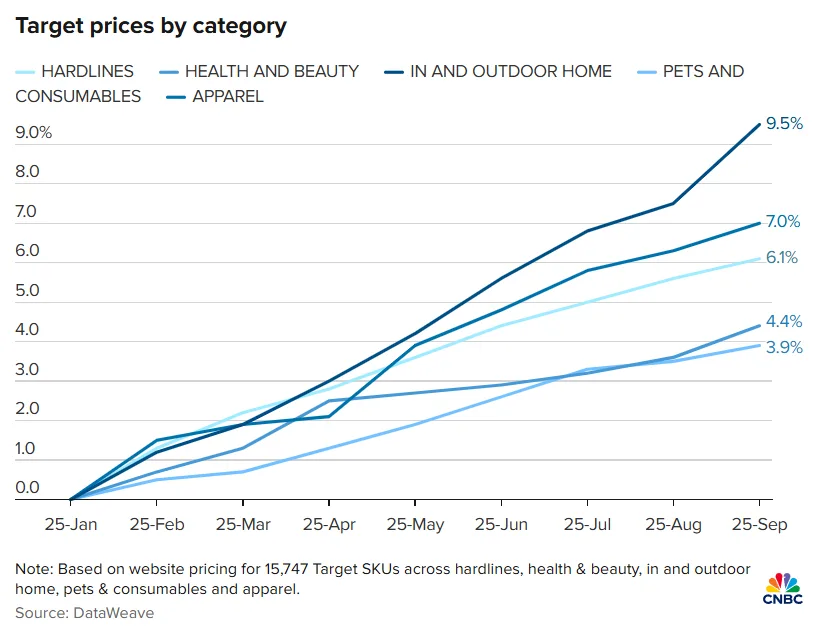
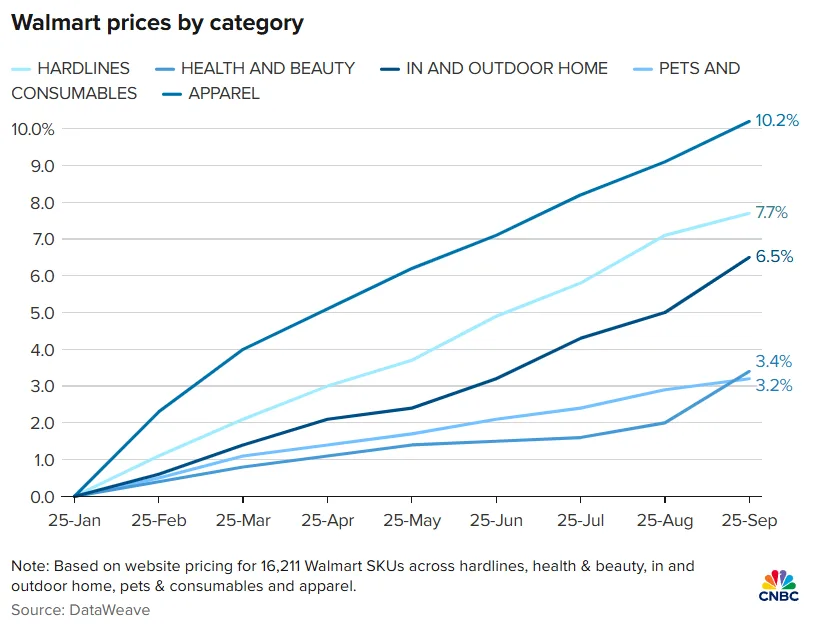
As Trump-era tariffs return, Amazon, Walmart, and Target adjust pricing strategies across key retail categories, reports CNBC. All three raised prices in 2025, but Amazon led with a 12.8% average increase through September. Prices at Target rose by 5.5% during the same period. Walmart’s prices increased by 5.3%. The data comes from research firm DataWeave, which analyzed around 16K products per retailer.
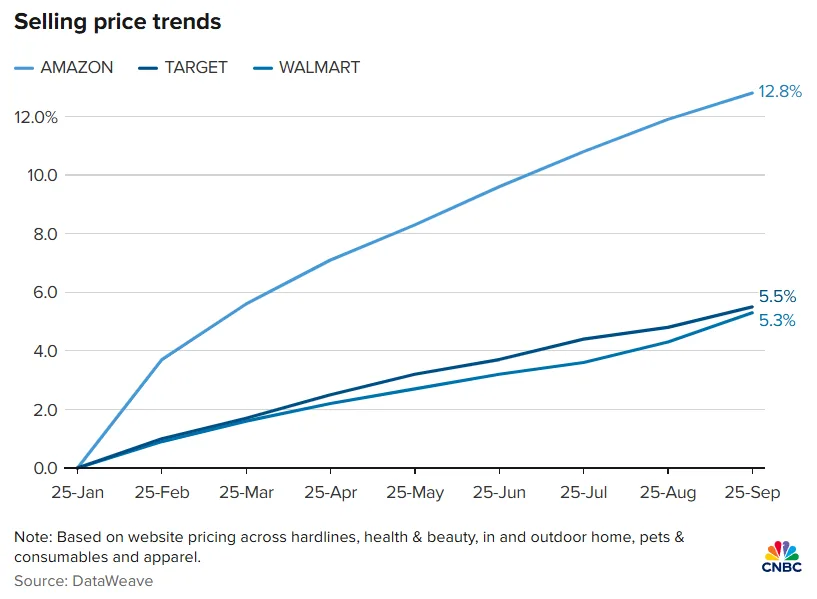
The most significant monthly spike for Amazon occurred early in the year — between January and February — when prices jumped by 3.7%, outpacing Walmart’s increase of 0.85% and Target’s rise of 0.97% during the same time frame. This initial surge came even before the bulk of the tariffs were officially announced in April and may reflect seasonal adjustments following year-end discounting.
Tariffs Hit Third-Party Sellers Hardest
Amazon’s marketplace model relies heavily on third-party sellers, who account for a significant portion of its online sales. Unlike larger retailers with robust supply chains and private-label leverage, many of these sellers lack the ability to cushion the impact of tariffs and must pass increased costs directly to consumers.
“Third-party sellers are far more exposed to tariff-driven cost increases,” said Guru Hariharan, CEO of e-commerce data platform CommerceIQ. “They don’t have the scale, inventory flexibility or private-label leverage that large retailers like Walmart or Target can use to offset costs.”
Although both Walmart and Target also operate third-party marketplaces, their share of sales from those vendors remains relatively small.
Get Smarter about what matters in CRE
Stay ahead of trends in commercial real estate with CRE Daily – the free newsletter delivering everything you need to start your day in just 5-minutes
Amazon Outpaces In Every Major Category
DataWeave’s analysis found that Amazon raised prices more than its competitors in every major shopping category it studied.
- In apparel, Amazon’s prices increased by 14.2%, compared to a category-wide average of 11.5% across Amazon, Walmart, and Target.
- For indoor and outdoor home goods, Amazon prices climbed 15.3%, while the average increase across all three retailers was 10.8%.
- Pet goods and consumables rose 11.3% at Amazon, exceeding the category-wide average of 6.1%.
- In the health and beauty segment, Amazon saw a 13.2% price increase, ahead of the overall average of 7.0%.
- And in hardlines — a retail category that includes items like electronics, furniture, and appliances — Amazon raised prices by 11.9%, compared to an 8.3% average increase across all three retailers.
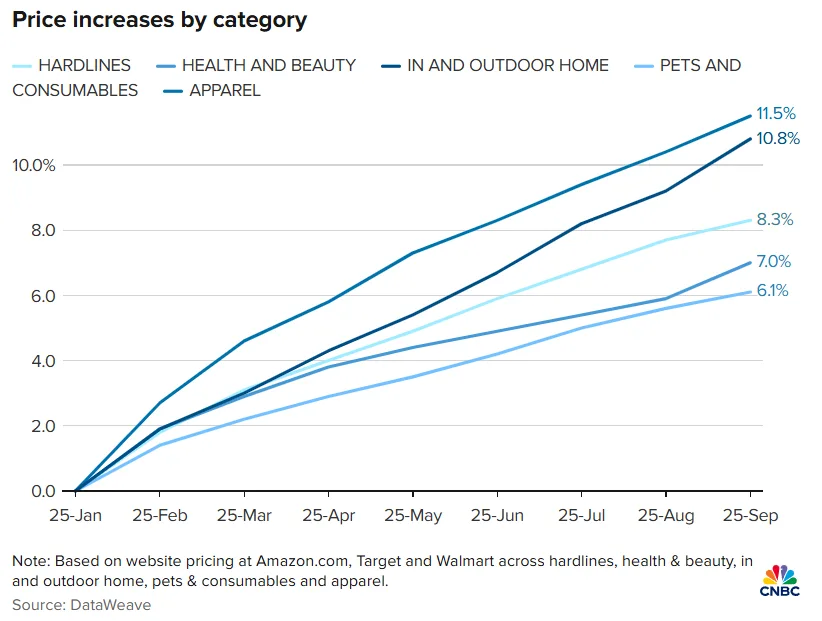
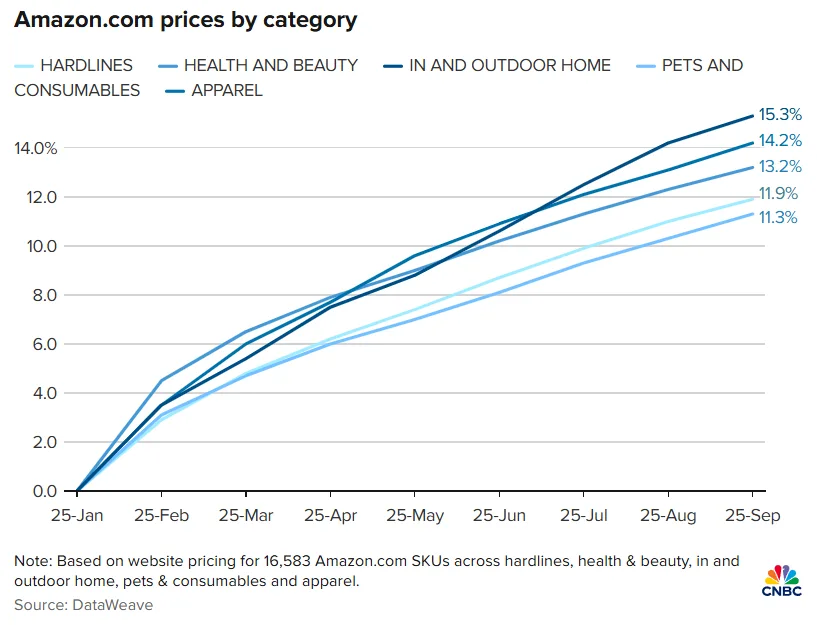
According to DataWeave CEO Karthik Bettadapura, prices rose faster in categories driven by choice, like apparel and home décor. Essential goods, by contrast, saw more moderate increases.
Consumers Still Spending On Amazon
Despite raising prices faster than competitors, Amazon has not seen a drop in consumer demand. In its most recent quarterly report, Amazon posted a 10% year-over-year increase in online store sales. Meanwhile, revenue from services tied to third-party sellers — including commissions, advertising, and logistics — rose by 12%.
Amazon maintains that its prices remain competitive. Responding to DataWeave’s findings, a company spokesperson said price fluctuations are normal in retail and that many products have stayed the same or even decreased in price. “We continue to meet or beat prices versus other retailers across the vast selection of products in our store,” the spokesperson said, emphasizing Amazon’s focus on customer trust and affordability.
Walmart And Target Take A More Conservative Approach
Walmart and Target have been more restrained in their pricing strategies. A Target spokesperson said the company has held prices steady on items like crayons, notebooks, and folders for back-to-school shopping, calling price hikes a “last resort.” Walmart highlighted its focus on affordability, permanently cutting prices on over 2K items since February 2025.
Still, executives acknowledge that tariffs are pushing costs higher. Walmart CEO Doug McMillon recently said that rising costs in general merchandise — the category most impacted by tariffs — have led to “a steady march up” in inflation levels.
Inflation And Tariffs: The Broader Picture
The Federal Reserve estimates tariffs are adding 0.5 to 0.6 percentage points to core personal consumption expenditures (PCE). PCE is the Fed’s preferred inflation measure. Without the added impact of tariffs, the Fed believes core PCE would be closer to 2.3% or 2.4%, instead of the 2.9% recorded in August.
Looking at broader inflation data, the consumer price index (CPI) showed a 3% year-over-year increase in September. Household furnishings and personal care items saw CPI increases of 3.7% and 3.5%, respectively. Apparel rose just 2.1%. These modest gains make Amazon’s sharper category-specific price hikes stand out even more.
Bottom Line
Amazon is raising prices faster than Walmart and Target as it navigates the impact of tariffs and higher seller costs — especially in categories where shoppers are less price-sensitive. Though inflationary pressure continues to mount, consumer demand remains strong, at least for now. All eyes are on how these dynamics will play out in the critical holiday shopping season.