



- San Jose leads in AI talent concentration, while New York adds the most new AI roles.
- AI salaries are highest in San Jose at $215,000, but living costs narrow the advantage.
- Dallas offers cost-effective AI growth, with strong infrastructure and moderate expenses.
- Mid-sized and small metros like Fayetteville and Boulder show rising specialization in AI jobs.
AI Hubs Shape Regional Growth
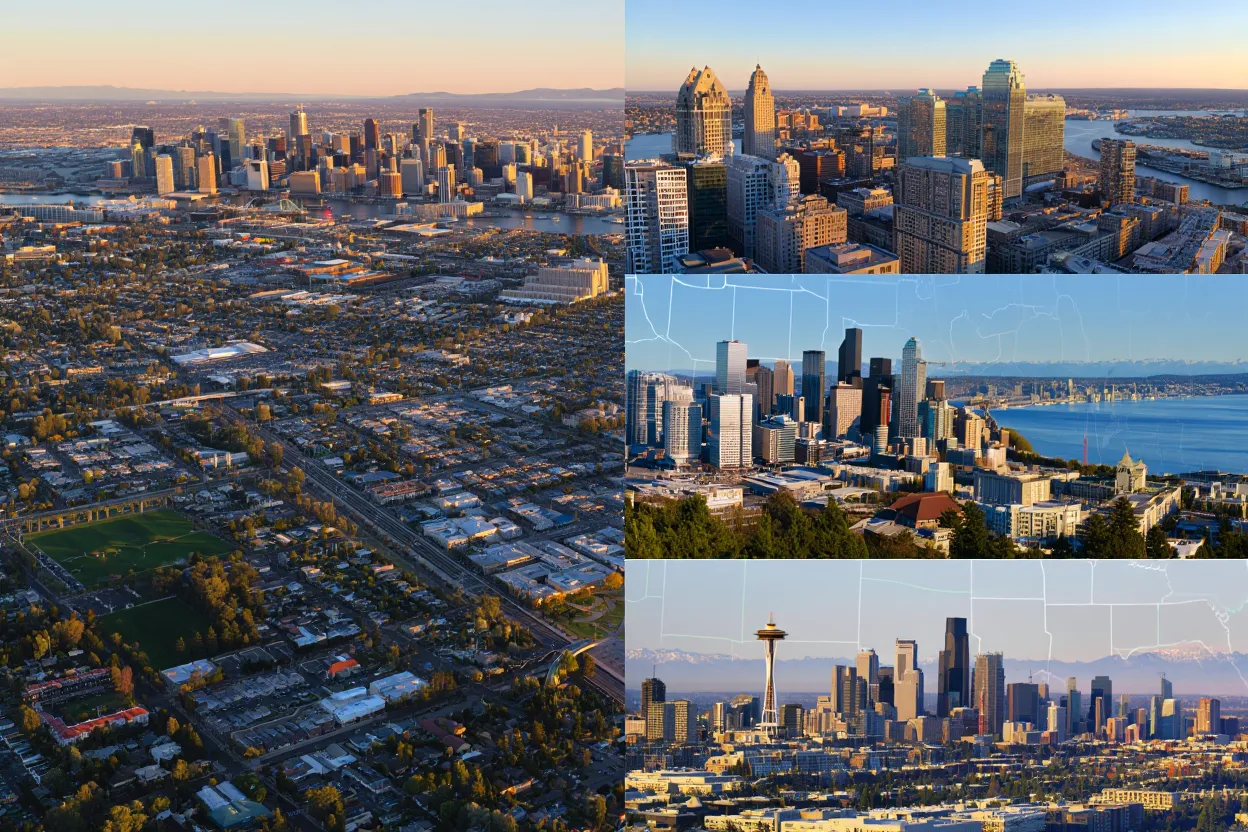
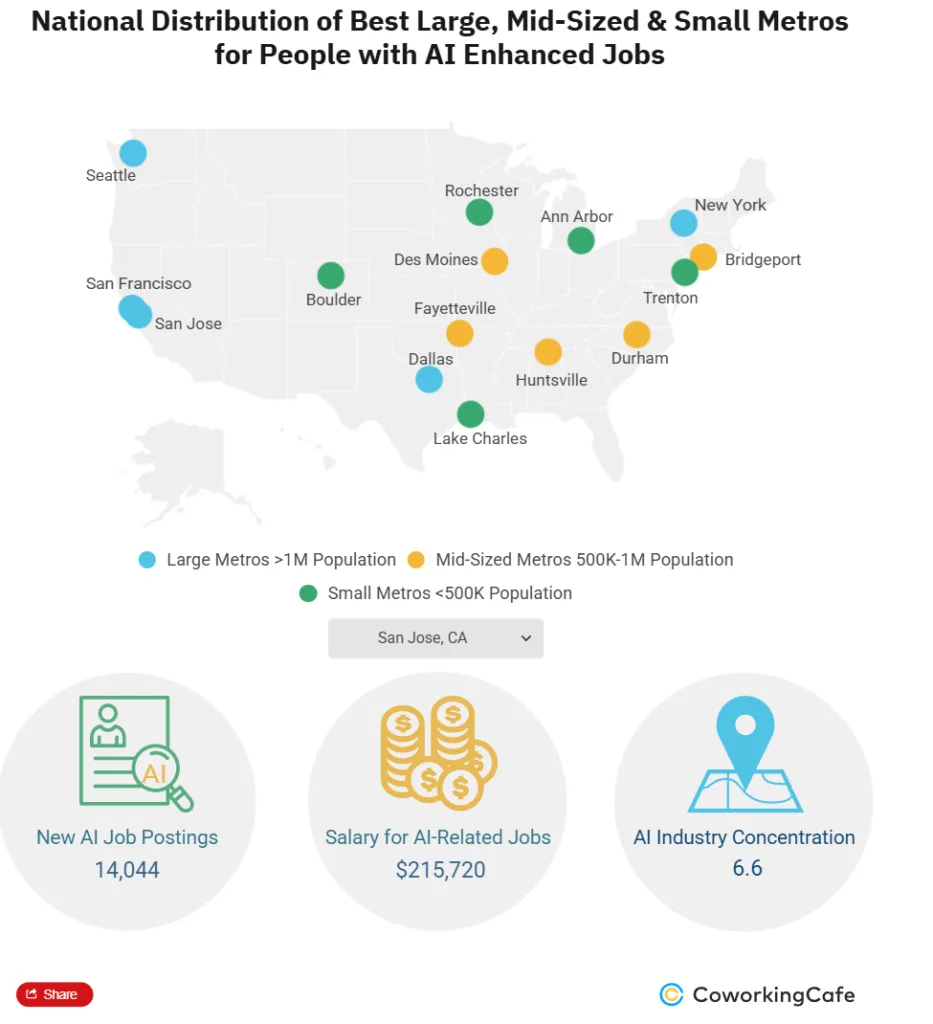
AI job growth remains highly concentrated in a select group of metro areas, reports Coworking Cafe. San Jose, New York, and Seattle continue to lead in both hiring and compensation, but emerging centers like Dallas are gaining ground as companies seek a balance of talent, infrastructure, and cost efficiency. These regional hubs are key to the national expansion of AI careers, especially as companies consider cost-of-living and local ecosystems.
Top Large Metros Lead AI Market
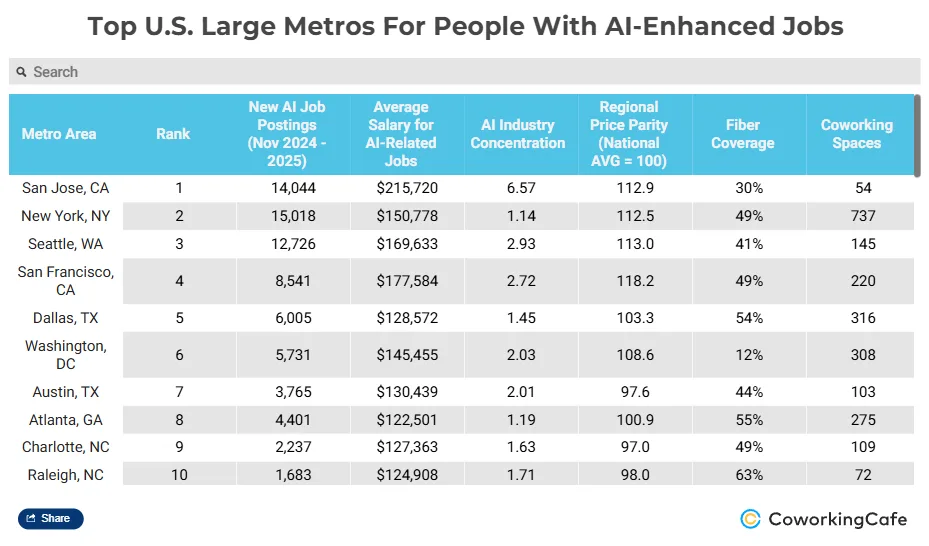
San Jose boasts the highest concentration of AI jobs—over six times the national average—with average salaries of $216,000. New York surpasses even Silicon Valley in sheer hiring volume, posting over 15,000 new AI job listings, though pay is lower at $151,000. Seattle and San Francisco remain vital for both pay and AI specialization, but high expenses remain a challenge. Dallas separates itself by combining $128,000 salaries, solid fiber coverage, 316 coworking spaces, and only a slight premium on living costs.
Mid-Sized and Small Metros on the Rise
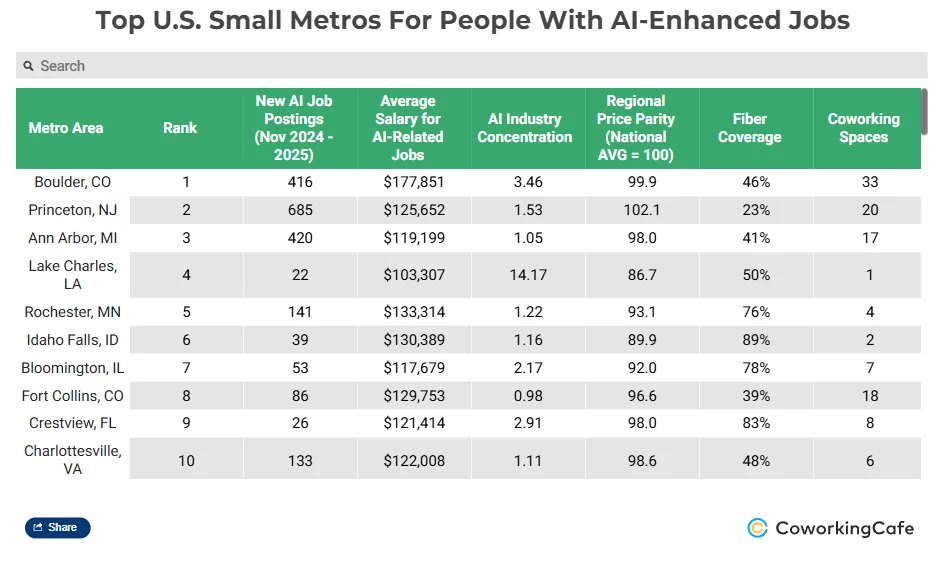
Fayetteville and Huntsville stand out among cities with populations between 500,000 and 1M, benefiting from lower costs and increased roles. Medium metros, such as Durham–Chapel Hill and Bridgeport, enhance their appeal through rising salaries and balanced infrastructure. Among small metros, Boulder claims the highest AI specialization and pay at $177,851, with other cities like Princeton and Ann Arbor leveraging research and proximity benefits. Lake Charles demonstrates deep AI focus despite a small job pool, showing how small metros can evolve as key AI hubs, even as broader workplace trends show compensation growth paired with rising dissatisfaction across parts of the commercial real estate workforce.
Infrastructure and Livability Drive Opportunity
Cities with strong digital infrastructure and accessible coworking spaces offer clear advantages for AI professionals. High fiber coverage and abundant coworking—seen in both large and select small metros—are increasingly important as hybrid and remote work expand. Cost of living remains a deciding factor, with metros that combine solid salaries with affordability most likely to attract and retain technical talent for AI work.
Get Smarter about what matters in CRE
Stay ahead of trends in commercial real estate with CRE Daily – the free newsletter delivering everything you need to start your day in just 5-minutes