



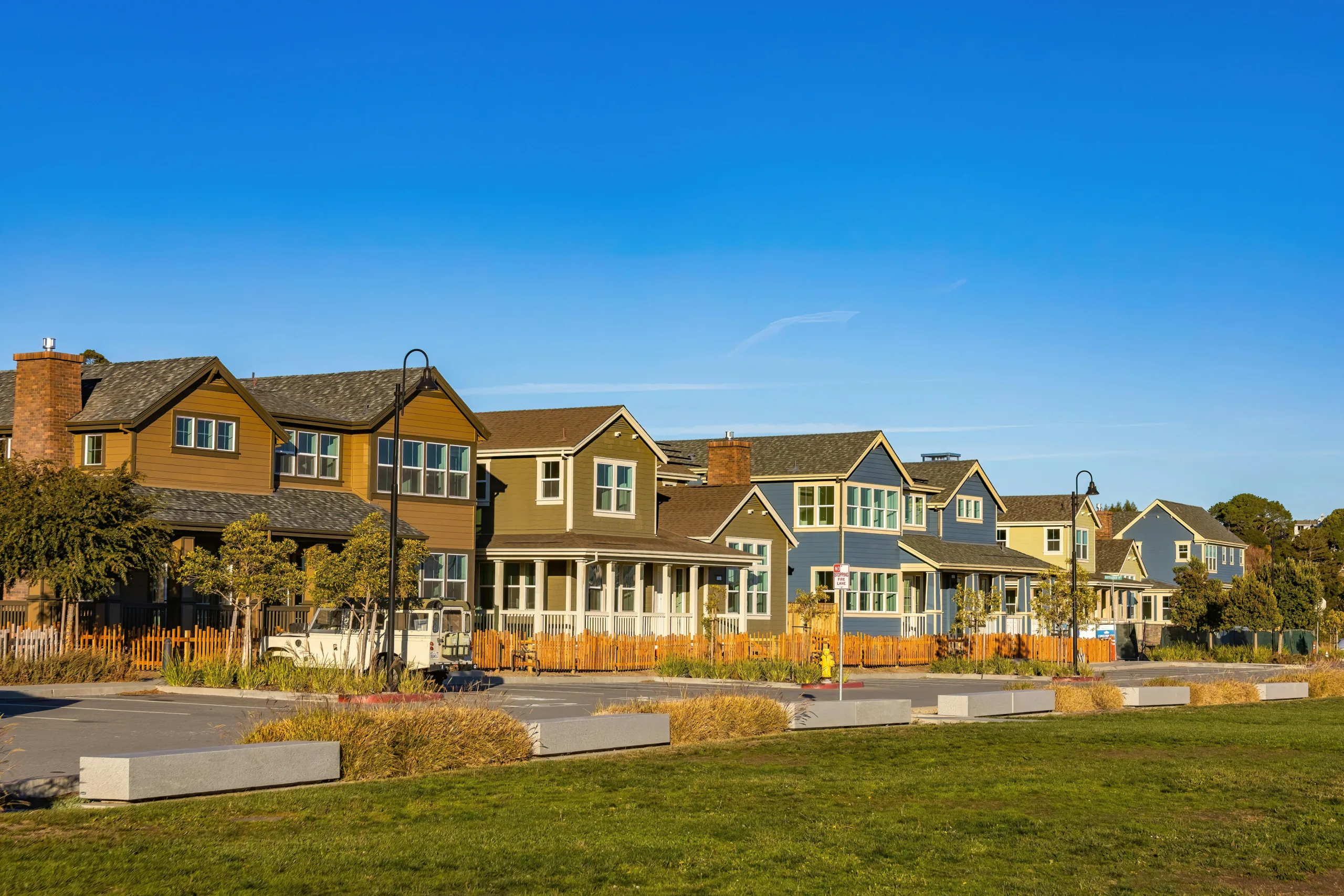
- DFW recorded more than 4,000 build-to-rent units absorbed in 2025, with vacancy falling to 6.3% even as national vacancy climbed to 9.4%, according to Northmarq.
- Nearly 80% of the region’s roughly 25,000-unit BTR inventory has delivered since 2022, tightening development opportunities in core suburban locations.
- Proposed federal legislation requiring BTR communities to sell homes after seven years has slowed investment activity and added new uncertainty for developers and lenders.
According to Bisnow, Dallas-Fort Worth’s build-to-rent sector is separating itself from the rest of the country. While national operators work through elevated vacancies and a flood of new supply, DFW posted stronger leasing activity, stable rents, and declining vacancy in 2025.
The metro has become the nation’s second-largest build-to-rent market behind Phoenix, with nearly 25,000 units delivered or under development, according to Northmarq. Developers say the region’s population growth, corporate relocations, and family-oriented suburban expansion continue to create durable demand for rental housing that offers more space and privacy than traditional apartments.
Get Smarter About What Matters in Texas
Subscribe to our free newsletter covering the biggest commercial real estate stories across Texas — delivered in just 5 minutes.
A Standout Recovery Story
DFW’s performance contrasts sharply with broader national trends. Northmarq reported that build-to-rent absorption in the region increased 30% year-over-year in 2025, while vacancy compressed by 70 basis points to 6.3%.
Nationally, vacancy climbed to 9.4% at the end of 2025 as deliveries outpaced demand across major Sun Belt markets. Phoenix, the country’s largest BTR market, finished the year at 9.8% vacancy, up 50 basis points annually.
That divergence has drawn attention from institutional developers and operators looking for markets capable of digesting large waves of new supply. NexMetro Communities Chief Communications Officer Jacque Petroulakis called DFW “one of the strongest recovery stories nationally” as renters continue absorbing recently delivered units faster than expected. The performance also aligns with broader signs that the national BTR sector is beginning to stabilize after a prolonged supply-driven slowdown, particularly in high-growth Sun Belt metros.
The Details
The region’s leasing momentum has translated into stronger pricing power than many competing metros. While national build-to-rent rents declined nearly 2% in 2025, DFW rents largely stabilized, per Northmarq.
Welker Properties recently completed Everbloom, a 343-unit build-to-rent community in Melissa, north of Dallas. Founder and CEO Andrew Welker said leasing velocity has exceeded expectations without requiring rent cuts, even as nearby projects compete aggressively for tenants.
Average DFW build-to-rent rents now sit at roughly $2,130 per month, according to Northmarq. That is more than $600 above the region’s average apartment rent but still nearly $900 below the monthly mortgage payment on a median-priced home.
That affordability gap continues to fuel renter demand, particularly among households priced out of homeownership by elevated mortgage rates and home prices.
Land Constraints Reshape the Next Wave
DFW’s growth has also created a new challenge for developers: finding attractive sites. Nearly 80% of the metro’s current BTR inventory has delivered since 2022, limiting available land in high-demand suburban corridors.
Developers say projects perform best in first-ring and strong second-ring suburbs where renters can access employment centers, schools, and retail amenities. But those locations have become increasingly competitive and expensive as residential and industrial developers chase the same land pipeline.
According to Northmarq Senior Vice President Eric Stockley, projects pushed farther into outer-ring suburbs face tougher economics. Rents typically soften farther from urban cores, while build-to-rent operators must compete directly with master-planned communities offering newly built homes for sale.
That dynamic has increased interest in smaller infill-style projects that can achieve stronger rents and lease-up velocity closer to established suburban nodes.
Why It Matters
DFW’s build-to-rent resilience highlights how demographic growth continues to outweigh oversupply concerns in select Sun Belt markets. The region added four of the nation’s 10 fastest-growing cities in 2025 and remains on pace to surpass Chicago as the third-largest US metro by 2035.
Collin County has become a major growth engine, adding roughly 250,000 residents since 2020, according to local population estimates cited by Northmarq. Higher household incomes and highly rated school districts have made the area especially attractive for build-to-rent operators targeting families.
The sector increasingly serves renters seeking larger floorplans, private yards, and suburban school access without committing to homeownership. Developers argue that profile aligns closely with DFW’s migration patterns and long-term economic growth trajectory.
At the same time, federal policy risks are beginning to weigh on capital flows. The Senate passed the 21st Century Road to Housing Act in March 2026, including language that would require many build-to-rent projects to transition homes to individual ownership after seven years.
The National Association of Home Builders estimated the provision could threaten construction of roughly 40,000 BTR units annually if enacted. Although the legislation remains stalled in Congress, developers say uncertainty alone has already slowed investment activity.
What’s Next
Most developers expect new build-to-rent starts in DFW to moderate through 2026 as the market absorbs recent deliveries and investors monitor federal legislation.
Still, operators with stabilized projects in strong suburban locations could benefit from constrained future supply. Developers including NexMetro and Welker Properties remain bullish on long-term demand fundamentals, particularly as mortgage affordability challenges continue pushing households toward rental housing alternatives.
The next phase of DFW’s build-to-rent growth will likely focus less on rapid expansion and more on selective site acquisition in high-income suburban pockets where supply remains limited and renter demand stays deep.