



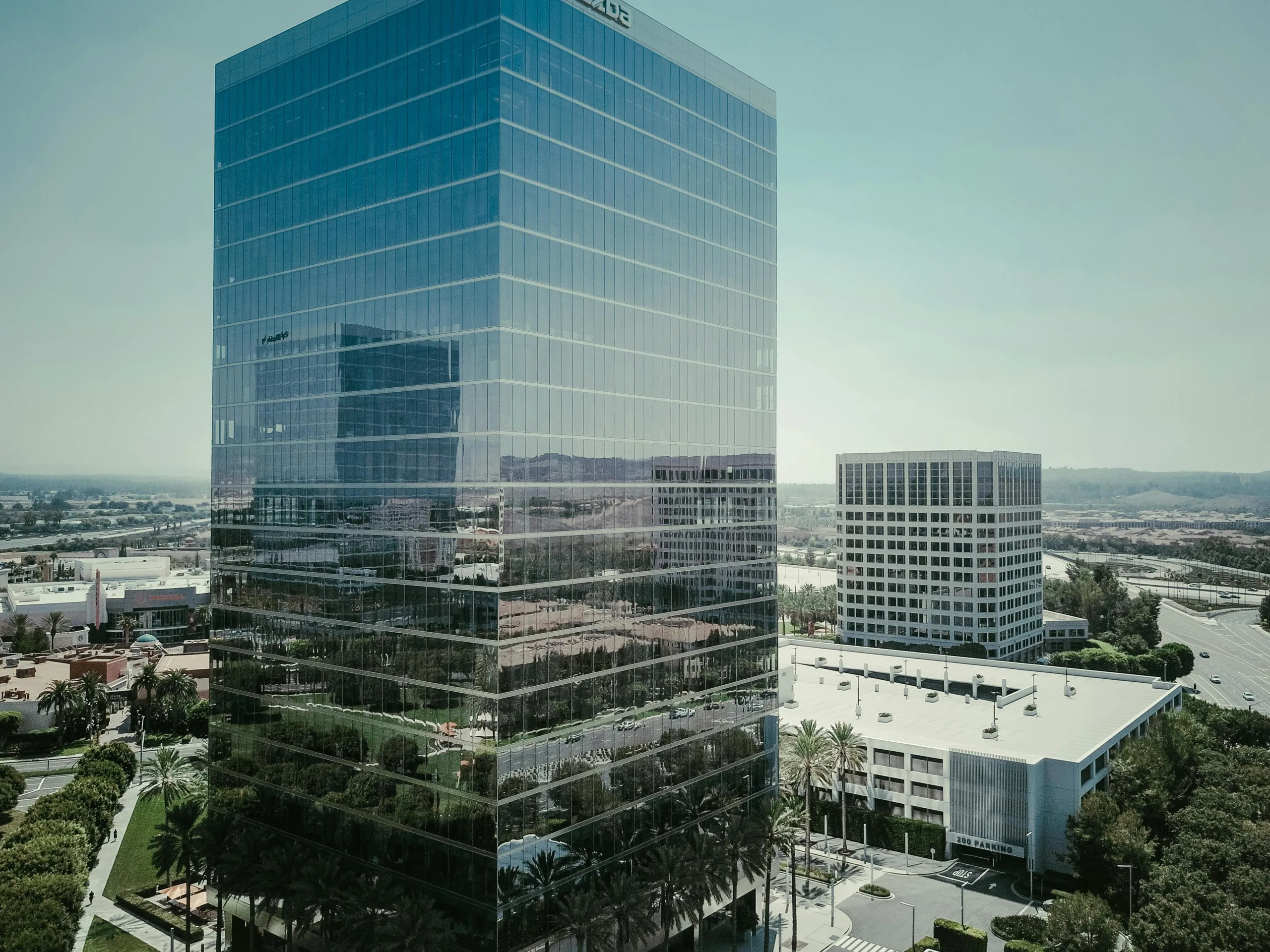



- The US office market posted its first annual net absorption gain since 2019, led by stronger leasing in Manhattan, Houston, Phoenix, and Dallas-Fort Worth.
- Class A offices absorbed 17.74M SF in the second half of 2025, while Class B properties lost 10.6M SF, highlighting the widening flight-to-quality divide.
- Limited new supply and rising office conversions are helping stabilize fundamentals, but much of the sector still faces elevated vacancy and shrinking tenant footprints.
The US office market is finally showing measurable signs of stabilization after years of pandemic-driven disruption. Leasing activity accelerated through 2025, national net absorption turned positive for the first time since 2019, and several major metros posted meaningful occupancy gains, according to a new Lee & Associates report. But the recovery remains highly uneven, with demand concentrated in newer, amenity-rich buildings and select markets tied to finance, legal services, and specialized tech sectors.
Get Smarter about what matters in CRE
Stay ahead of trends in commercial real estate with CRE Daily – the free newsletter delivering everything you need to start your day in just 5-minutes
Flight to Quality Drives the Office Recovery
The strongest office demand is flowing almost entirely toward Class A buildings. Lee & Associates reported that Class A office space absorbed 17.74M SF nationally during the second half of 2025, while Class B inventory posted negative 10.6M SF of absorption over the same period. Tenants are prioritizing upgraded amenities, efficient floorplates, and locations that support return-to-office strategies instead of simply expanding overall footprints.
Austin illustrates the split clearly. Despite overall vacancy hovering near 25%, Class A properties captured 78% of leasing activity in Q4 2025. Similar trends appeared in Atlanta, Cleveland, Omaha, and the Twin Cities as occupiers consolidated into higher-performing buildings while older commodity office stock struggled to remain competitive.
The Markets Finding Traction
Manhattan remains the clearest example of office momentum regaining traction. Leasing volume reached nearly 42M SF in 2025, including 10M SF during Q4 alone, while availability fell to 13.9%, its lowest level in five years. Bloomberg, Moody’s, Millennium Management, and Ropes & Gray all expanded or renewed large office commitments in the market.
Houston posted 2.44M SF of annual net absorption after recording losses in 2024, while Phoenix added more than 816K SF and reduced both vacancy and sublease availability. Nashville also returned to positive absorption as office-using employment improved, and Dallas-Fort Worth benefited from stronger office utilization rates and rent recovery trends. According to Lee & Associates, these markets are benefiting from a combination of stronger local employment growth, better in-office attendance, and more disciplined supply pipelines.
Attendance Improves, but Hiring Lags
Return-to-office mandates are helping utilization rates recover, but they are not fully translating into broad-based demand growth. Lee & Associates found office attendance reached 77% of pre-pandemic levels in New York and 74% in Dallas, compared with a 64% national average.
At the same time, office-using industries still employed roughly 400K fewer workers than their April 2023 peak as of early 2026. Job growth has shifted toward healthcare, transportation, and construction rather than traditional office-heavy sectors. That disconnect explains why leasing activity can improve while national vacancy still climbed to a record 21% in Q1 2026. Many tenants are renewing leases or relocating into better space while simultaneously reducing their overall square footage needs.
Supply Constraints Reshape the Market
Limited construction is helping stabilize the office market more than rising demand. Developers delivered roughly 40M SF in 2025, the lowest total since 2011. Meanwhile, owners removed more than 30M SF through demolitions and redevelopment projects.
Office-to-residential conversions continue accelerating across several markets. That trend also aligns with stronger expectations for affordable housing development activity in 2026. Orange County has seen obsolete suburban campuses demolished for industrial redevelopment, while Denver is reviewing plans to replace a 140K SF office building with multifamily housing. The shrinking pipeline is reducing future competition for top-performing buildings. Meanwhile, weaker assets still face financing stress and elevated concessions.
The shrinking pipeline is easing future competition for top-performing buildings. At the same time, weaker assets still face financing stress and elevated concessions.
Why It Matters
The office recovery remains deeply divided. Trophy buildings attract tenants in finance, legal, and AI-heavy markets. Meanwhile, many Class B and C properties continue losing relevance. Lee & Associates found much of today’s leasing activity reflects renewals, consolidations, and selective upgrades. Broad office expansion still has not returned.
That dynamic carries major implications for lenders, investors, and owners evaluating office exposure in 2026. High-quality assets with modern amenities and limited nearby competition may continue outperforming, while commodity office buildings face mounting pressure for recapitalization, repositioning, or conversion.
What’s Next
The next phase of office recovery will likely depend less on return-to-office mandates and more on employment growth in office-using sectors. Markets with expanding finance, legal, government, and AI ecosystems appear positioned to outperform, especially where new supply remains constrained.
At the same time, conversion activity and inventory reductions are expected to continue accelerating as cities and landlords search for ways to absorb obsolete office stock. For investors, the office market is increasingly becoming a selective asset-class story rather than a broad cyclical rebound.