






- Texas, Florida, and North Carolina recorded the highest net renter migration gains in 2026, according to US Census Bureau data analyzed by Apartments.com.
- Sun Belt metros like Houston, Dallas, and Atlanta continue attracting renters with lower average rents, high apartment availability, and expanding job markets.
- High-cost coastal states including California and New York are still losing residents, but major gateway cities remain highly searched rental markets despite rising rents.
Domestic renter migration is slowing overall, but the renters who are still moving are increasingly choosing Sun Belt markets where housing costs, job growth, and lifestyle advantages align. According to a May 2026 Apartments.com analysis using US Census Bureau data, domestic renter mobility fell to 21.6%, down from 26.7% in 2014, marking the lowest level in at least a decade.
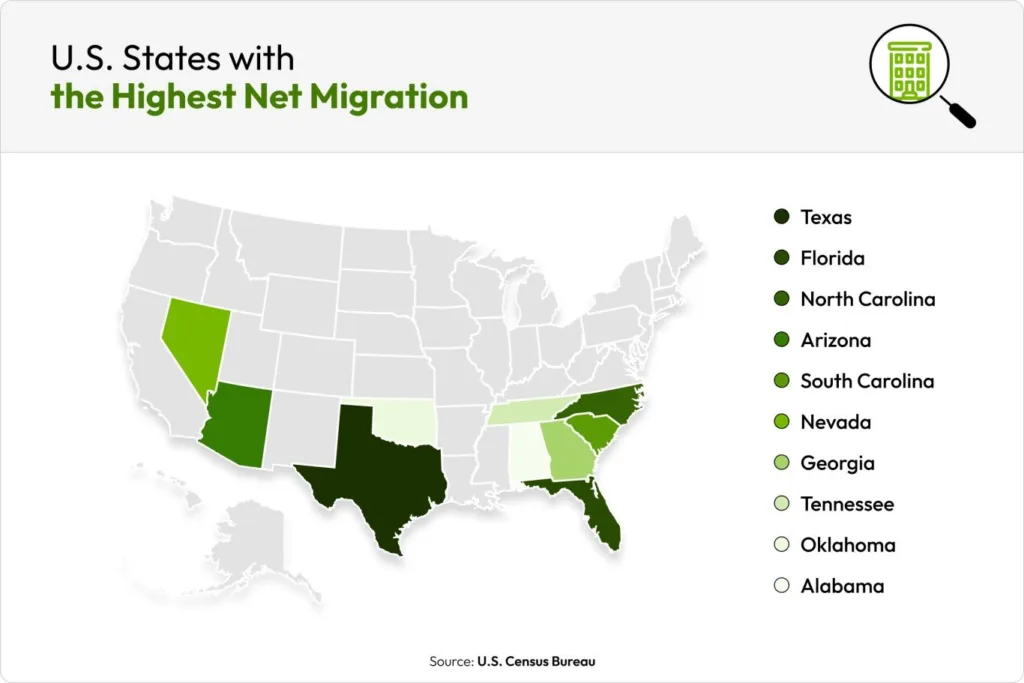
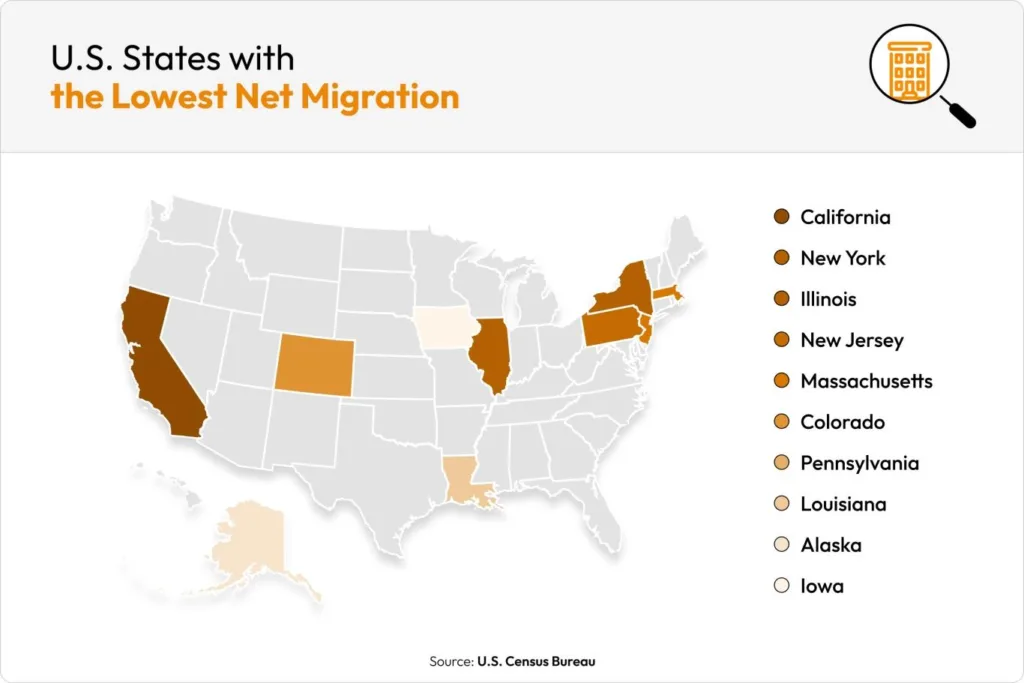
Even as fewer Americans relocate, migration patterns remain highly concentrated. Texas led the nation with net migration gains of 72,680 residents, followed by Florida at 67,630 and North Carolina at 58,587. Arizona and South Carolina rounded out the top five. Meanwhile, California posted the largest net loss at 254,332 residents, followed by New York and Illinois.
Get Smarter about what matters in CRE
Stay ahead of trends in commercial real estate with CRE Daily – the free newsletter delivering everything you need to start your day in just 5-minutes
Why the Sun Belt Keeps Winning
The Sun Belt’s momentum continues to be driven by a combination of affordability, housing supply, and employer expansion. Apartments.com noted that developers delivered a wave of new apartment communities across Southern markets over the last several years, helping keep vacancy elevated and rent growth relatively contained despite population gains.
Houston, for example, posted an average apartment rent of $1,185 per month with a 12.7% vacancy rate, according to Apartments.com’s 2026 data. Dallas averaged $1,402 per month with vacancy at 12.4%, while Atlanta averaged $1,626 per month with an 11.5% vacancy rate. Those figures remain well below gateway-market pricing and continue attracting renters seeking lower living costs without sacrificing access to jobs or amenities. The elevated vacancy levels also reflect the broader multifamily supply wave reshaping Sun Belt apartment markets, particularly across Texas and the Southeast.
Corporate relocations and expansions are also supporting migration flows. Dallas has emerged as a major destination for finance, technology, healthcare, and logistics firms, while Atlanta and Houston continue benefiting from diversified employment bases and population growth.
The Details
Apartments.com identified six Sun Belt metros among the platform’s 10 most-searched rental markets: Houston, Dallas, Atlanta, Miami, Austin, and San Diego. The report tied much of that demand to favorable renter conditions, including rent concessions, newer housing inventory, and stronger apartment availability.
Houston’s population increased 3.9% between 2020 and 2024, outpacing the national growth rate of 2.6%, according to Census Bureau data cited in the report. Atlanta grew even faster at 4.3% during the same period.
Austin also continues benefiting from substantial apartment deliveries, posting a 13.6% vacancy rate alongside average monthly rents of $1,387. Developers across the region have leaned heavily into mixed-use, amenity-rich multifamily projects that appeal to younger renters and remote workers.
At the same time, major coastal states continue struggling with affordability pressures. California recorded the nation’s largest migration loss, while New York lost 130,145 residents and Illinois lost 82,470.
Gateway Cities Still Hold Appeal
Despite outward migration from high-cost states, major urban markets remain highly competitive rental destinations. Half of Apartments.com’s top searched cities were located in states with net population losses, underscoring continued demand for major metros.
New York maintained the nation’s highest average rent among the cities analyzed at $4,095 per month, alongside a tight 2.9% vacancy rate. Chicago averaged $2,015 per month with rents rising 3.9% year over year, while Los Angeles averaged $2,184 monthly.
The report suggests renters are weighing affordability more heavily, but not abandoning large cities altogether. Instead, many are comparing gateway markets against mid-sized metros that now offer similar lifestyle amenities and employment opportunities at lower price points.
According to Apartments.com, 47% of renters in 2026 adjusted their housing preferences or living situations to better manage rising expenses and inflation pressures.
Why It Matters
The migration shift continues reshaping multifamily investment and development pipelines across the country. Sun Belt markets remain magnets for capital because population inflows support long-term apartment demand, even as rent growth moderates due to elevated supply.
For developers and operators, the report reinforces the importance of balancing affordability with amenities. Markets with strong job growth and plentiful housing inventory are outperforming both expensive coastal cities and smaller low-cost regions that lack economic opportunity.
The data also signals that renter demand remains resilient despite slower overall mobility. Fewer renters are moving, but those who do relocate are making increasingly deliberate decisions centered on value and lifestyle.
What’s Next
Sun Belt migration trends are likely to persist through 2026, although the pace of new apartment deliveries is expected to slow as the current supply wave tapers off. That could eventually tighten vacancy rates and place upward pressure on rents in several high-growth metros.
Investors and developers will also be watching whether affordability pressures in gateway cities stabilize or continue pushing residents toward lower-cost alternatives. If mortgage rates remain elevated and homeownership stays out of reach for many households, multifamily demand in fast-growing Sun Belt markets could remain strong for several more years.