




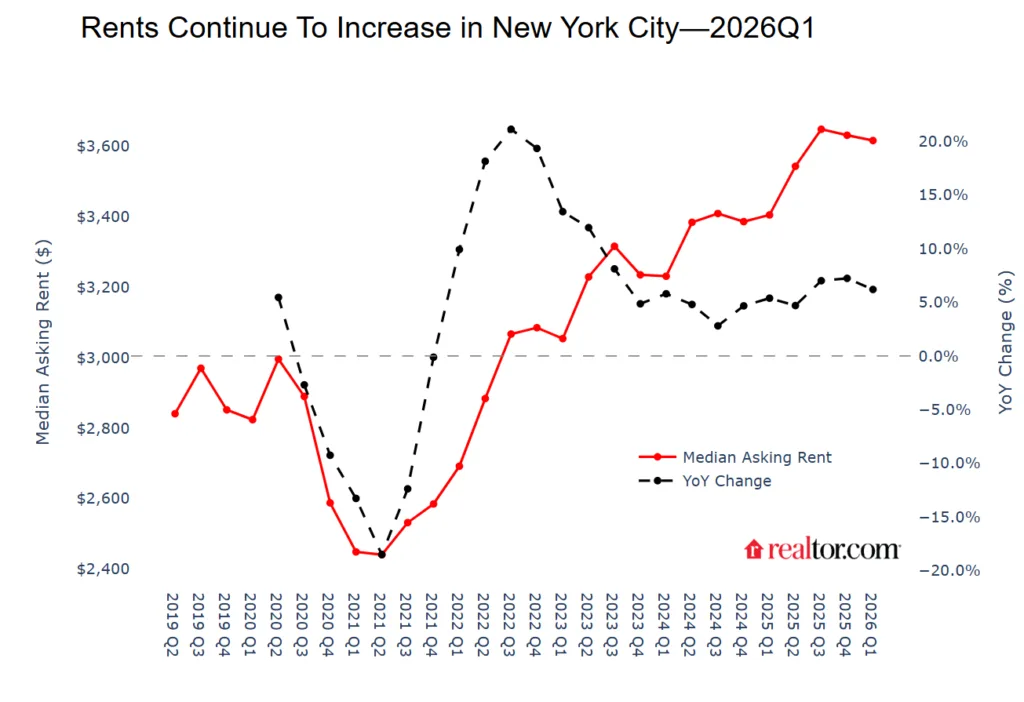
- NYC rental prices reached a median asking rent of $3,616 in 2026Q1, up 6.2% year over year.
- The cost gap between what renters currently pay and new asking rents exceeds $1,700 per month citywide.
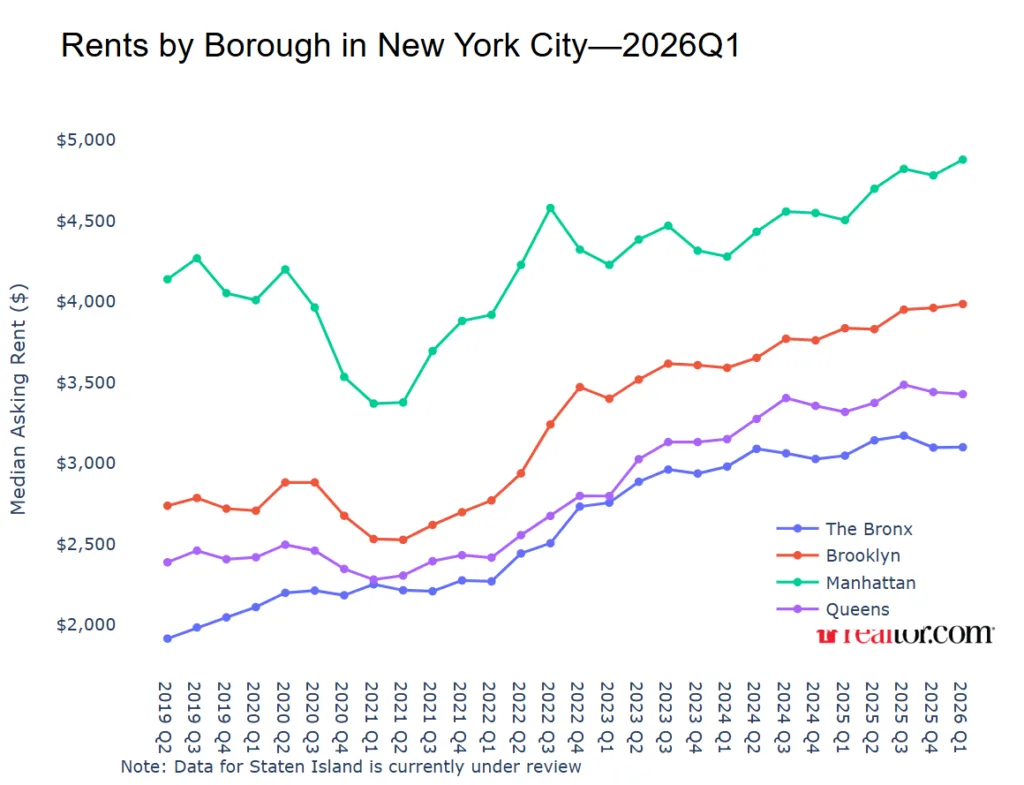
- All boroughs saw higher rents, with Manhattan leading at an 8.3% annual increase.
- Affording a new NYC rental now requires annual incomes well above most household earnings.
NYC Rental Prices Surge
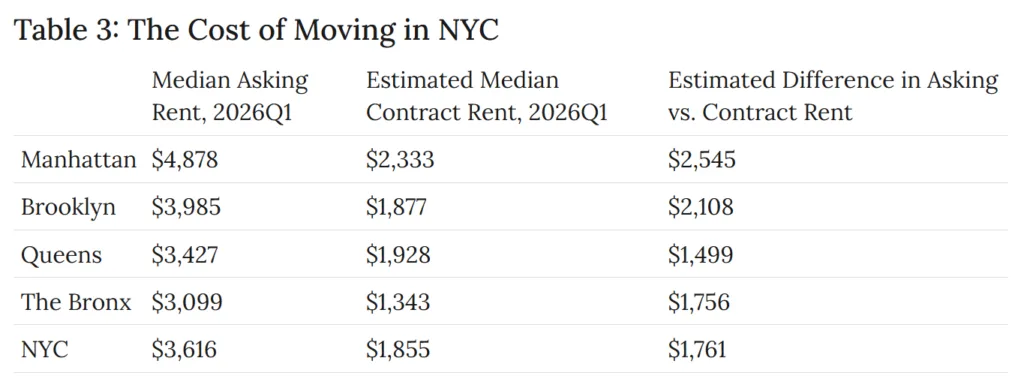
The first quarter of 2026 saw NYC rental prices continuing to climb, with the median asking rent citywide at $3,616, a 6.2% gain over last year, reports Realtor. Manhattan rents jumped fastest, but every borough saw increases. Rising prices drive the gap between what existing tenants pay and current market rents to new highs, highlighting deep affordability challenges across New York City.
Broad Increases Across Boroughs
Manhattan’s median asking rent rose to $4,878 (up 8.3% YOY), while Brooklyn reached $3,985 (up 3.9%), Queens hit $3,427 (up 3.3%), and the Bronx saw $3,099 (up 1.7%). Every area’s asking rent now requires six-figure household incomes to meet the 30% affordability benchmark. For perspective: typical renters in the Bronx now need $123,960 annually to afford moving; in Manhattan, the requirement tops $195,120.
Growing Affordability Gaps and Low Mobility
The contract-asking rent gap now stands at $1,761 citywide, meaning moving to a new unit would nearly double a typical renter’s housing costs. For most, this translates to requiring over $5,800 in additional monthly income to keep housing affordable. Recent leasing data also showed Manhattan and Brooklyn continuing to drive the city’s strongest rent gains, reinforcing how demand in core boroughs keeps upward pressure on pricing despite affordability constraints. The burden varies by borough but is severe everywhere, keeping mobility extremely low and making long-term tenancy the default for many New Yorkers.
Source: Realtor.com
Policy Moves & Market Outlook
The city’s heavy reliance on rent-stabilized units (42% of rentals) keeps contract rents below market listings. With a proposed rent freeze on stabilized units likely, this gap may widen, offering short-term relief but further limiting mobility. As NYC rental prices continue upward, affordability and flexibility for renters remain serious policy questions for the years ahead.
Get Smarter About What Matters in New York
Subscribe to our free newsletter covering the biggest commercial real estate stories across the five boroughs — delivered in just 5 minutes.