


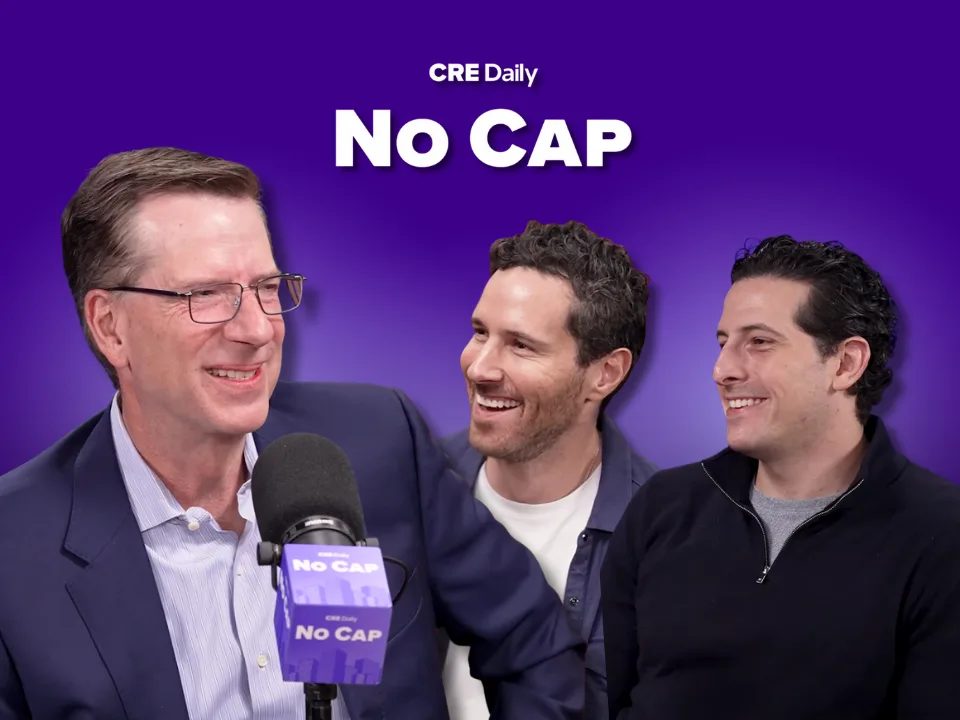

Season 7 of the No Cap podcast kicks off strong. Richard Litton, President of Harbor Group International, joins hosts Jack Stone and Alex Gornik. Harbor Group has grown from a small regional operator into a $21B platform. Today, it spans multifamily, office, retail, and credit.
Jack and Alex dig into how Harbor scaled so dramatically. They press Richard on what actually drove that growth. Debt maturities are starting to hit. Capital is growing more selective. Read on on how Richard breaks down how Harbor is navigating both pressures head-on.
Conversation Highlights
Alex: Why don’t you tell us what it is that you do day to day?
Richard Litton: A lot of it is data driven. We’re constantly looking at what’s happening across markets, rent growth, migration, and asset values to make better investment decisions and understand where demand is actually forming versus where people assume it is.
Jack: Walk us through your background and how you got to Harbor.
Richard: I started as a corporate lawyer and worked with Harbor as outside counsel. At the time, it was a much smaller firm with under a billion in assets and just a few thousand units, so I got a close look at how the business operated before joining full time.
Alex: How did the firm scale from there?
Richard: It really came down to delivering strong returns and attracting larger sources of capital, first from institutional investors and then expanding from there, which allowed us to grow both the platform and the range of strategies we could pursue.
Rents just weren’t growing.
Jack: What made you move away from office early on?
Richard: Even in the best buildings in secondary markets, rents weren’t moving, and that made us question the long-term fundamentals, especially around job growth and tenant demand, so we started exiting before the GFC.
Alex: What did that lead to coming out of the GFC?
Richard: We felt better about multifamily because supply slowed and demand held up, and that’s when we also started expanding into credit to broaden how we invest and give investors more ways to deploy capital with us.
Jack: How do you think about credit today compared to when you started?
Richard: There’s just too much capital in the space now, and we’re seeing tighter spreads and weaker protections, which makes it harder to justify the risk, especially when you’re not being compensated for potential downside.
At some point it’s a race to the bottom on spreads.
The conversation shifts as Jack and Alex move from credit into where capital is actually getting deployed today.
Alex: So where are you finding opportunities right now?
Richard: Values have reset. Sellers are more willing to transact. Harbor has responded by growing much more active on the equity side. Motivated sellers drive the best deals. A looming debt maturity or a liquidity need forces a decision. Those moments create the clearest entry points.
Jack: What broke in the last cycle in your view?
Richard: People stopped underwriting the real estate properly and relied too much on assumptions around growth or capital markets instead of focusing on the property itself and how it would actually perform.
Alex: How are you looking at workforce housing versus class A right now?
Richard: Workforce housing has seen a price reset, and cap rates are now above the cost of debt, which creates opportunity, but it really comes down to being in markets where tenants can afford rents and fundamentals are stable.
The discussion then turns toward geography and how Harbor is thinking beyond the usual gateway markets.
Jack: What markets are interesting to you today?
Richard: We’re seeing strong fundamentals in places like Cleveland, Detroit, and southeastern Virginia, where supply is limited, occupancy is high, and the local economies are stable even if they’re not high-growth markets.
Alex: How do you think about investing in those markets versus gateway cities?
Richard: We’d rather buy at a good basis in a stable market and rely on fundamentals than count on cap rate compression in a gateway city, especially in a more uncertain rate environment.
Jack: What about office right now?
Richard: In Manhattan, class A is performing well with strong leasing activity, but outside of that it’s been tough to find equity opportunities, which is why we’ve looked more at office credit where we can be better protected.
Alex: What has to be true for you to invest in office credit?
Richard: You need strong conviction in the location, the tenant base, and the sponsor, because outcomes vary a lot building to building and the margin for error is much smaller today.
As the conversation wraps, Jack and Alex shift toward what’s actually driving deals in this cycle.
Jack: What’s creating opportunity right now?
Richard: A lot of loans from 2021 are maturing, especially floating rate debt, and lenders are starting to step back from extending, which is finally creating real buying opportunities.
Alex: Where do those opportunities show up?
Richard: Sometimes it’s assets being sold at reset values, other times it’s notes trading at a discount, but both create entry points if you’re prepared to move quickly.
Jack: Why does that matter for groups like Harbor?
Richard: Debt funds don’t build portfolios for long-term ownership. When they take control of an asset, they eventually need to exit. That exit creates real opportunity. Investors who can step in and execute on the real estate stand to benefit directly.
Watch the full episode on our YouTube Channel or your favorite podcast app.
Tune in weekly for new episodes of No Cap by CRE Daily!