






- Construction tech startups are seeing increased investment, especially from corporate venture capital (CVC) arms of major contractors.
- AI and robotics, like those from Dusty Robotics, are being deployed on a growing number of jobsites across the US.
- CVCs are backing fewer deals but contributing the majority of deal value in construction tech.
- Labor shortages and rising demand for data centers are driving more innovation and tech adoption on construction sites.
Venture Capital Spurs Adoption
Major general contractors—including DPR Construction, Turner, Webcor, and Suffolk Construction—have established innovation arms or internal CVC funds to invest in construction tech startups, reports Bisnow. Early adopters like DPR leveraged these investments to deploy solutions such as Dusty Robotics’ layout robots across their projects nationwide. These corporate arms not only supply funding but also provide real-world testing grounds for emerging technology.
Investments Show Rapid Growth
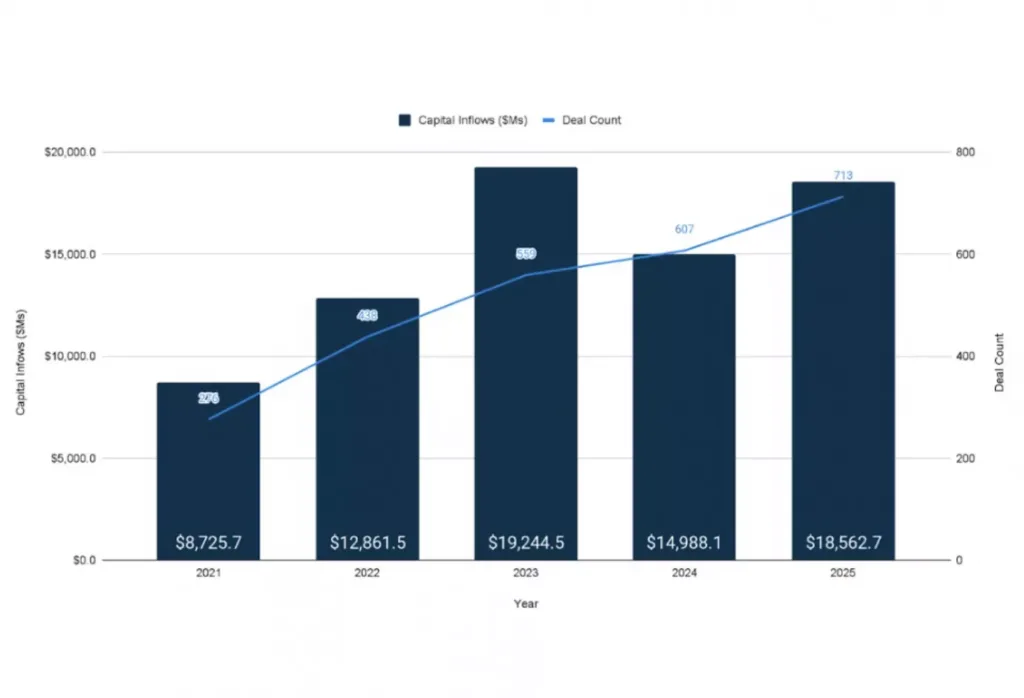
Corporate investment in built-tech startups is rising. In 2025, there were 713 venture deals in construction, building, and infrastructure—up from the prior year. BuiltWord data show sector investment grew by $3.6B to $18.6B year-over-year. While CVCs accounted for just 22% of overall venture capital activity last year, they represented 67% of deal value, focusing on bigger, more strategic bets.
AI and Robotics Lead Next Wave
Technology priorities are shifting toward automation and AI as contractors seek to address labor shortages and construction backlogs, especially for data center demand. Over half of recent construction tech deals now involve some form of AI. Suffolk’s recent enterprise agreement to expand Trunk Tools’ AI agent to 1,500 field users reflects these priorities, as do ongoing investments in robotics and other automation solutions. This momentum mirrors how robotics expansion is reshaping industrial demand, particularly in markets tied to advanced manufacturing and automation.
Strategic Partnerships Drive Scale
CVCs bring domain expertise and offer startups pathways to rapid scaling through real-world deployment. Suffolk Technologies, for example, has expanded its startup portfolio from 30 to more than 50 in two years. Programmatic initiatives, like Suffolk’s Boost program, combine pilot opportunities with product feedback, supporting startups in reaching production scale faster. These developments highlight how close collaboration between contractors and tech firms is reshaping construction workflows across the US.
Get Smarter about what matters in CRE
Stay ahead of trends in commercial real estate with CRE Daily – the free newsletter delivering everything you need to start your day in just 5-minutes