



- Rental competition remains high in Chicago, Atlanta, and San Francisco despite a slight national cooldown.
- Midwest markets, led by Chicago, dominate the nation’s most competitive rankings with low vacancy and new supply.
- Lease renewal rates and low apartment construction rates fuel competition in both large and small markets.
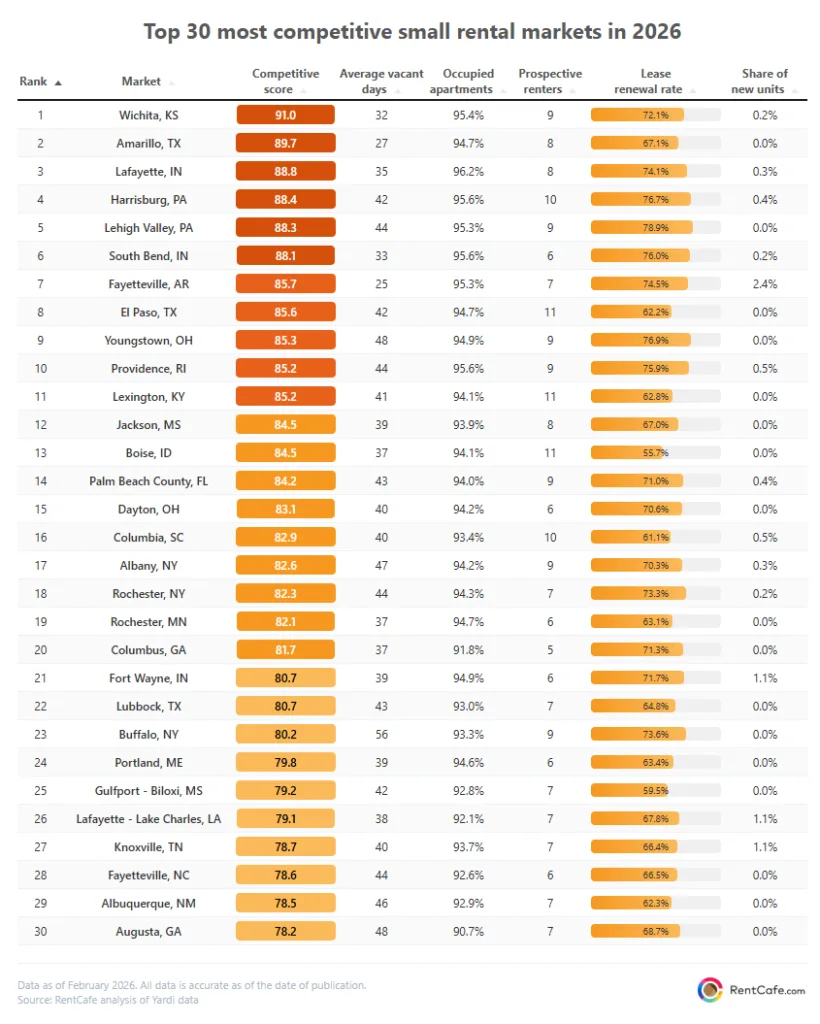
- Small cities like Wichita and Amarillo are seeing fast-growing rental competition, matching or surpassing larger metros.
Rental Competition Cools Nationally, But Relief Is Uneven
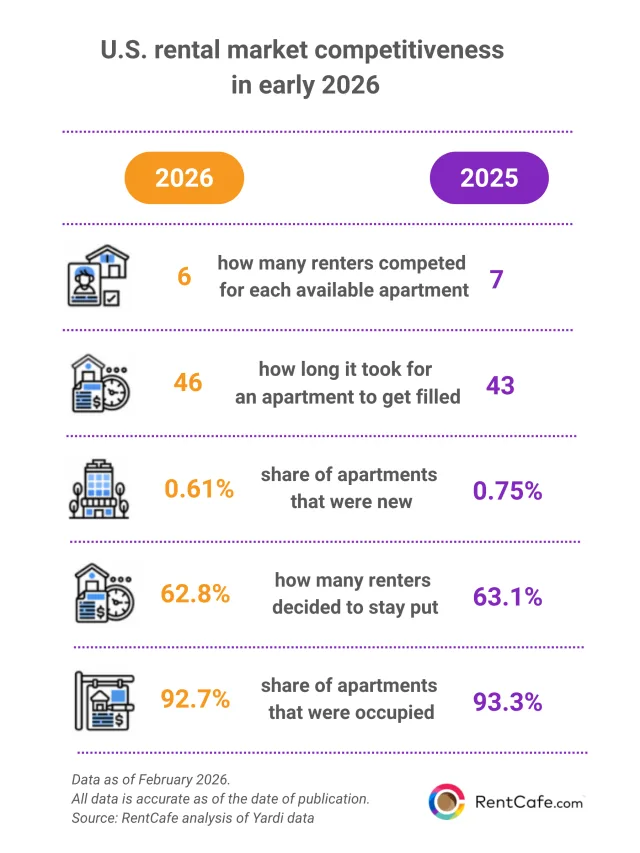
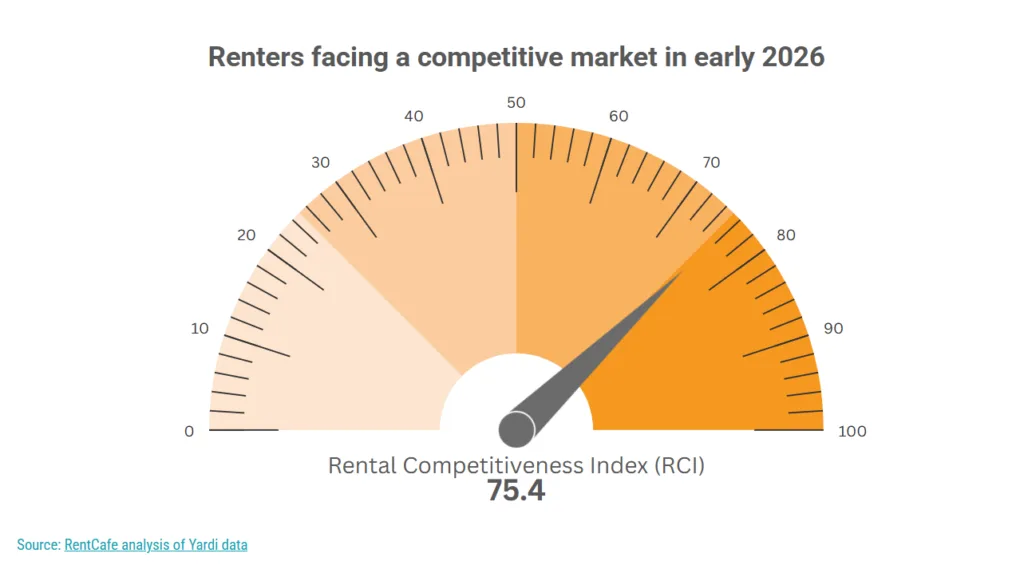
The US rental market has shown a modest cooling at the start of 2026, with the national Rental Competitiveness Index (RCI) easing to 75.4 from 75.7 a year prior. While this suggests slightly more breathing room for renters overall, the reality diverges sharply by region and market size. RentCafe reports that key cities in the Midwest and tech corridors are now outpacing the national trend, keeping rental competition intense for apartment seekers.
Chicago, San Francisco, and Atlanta Heat Up
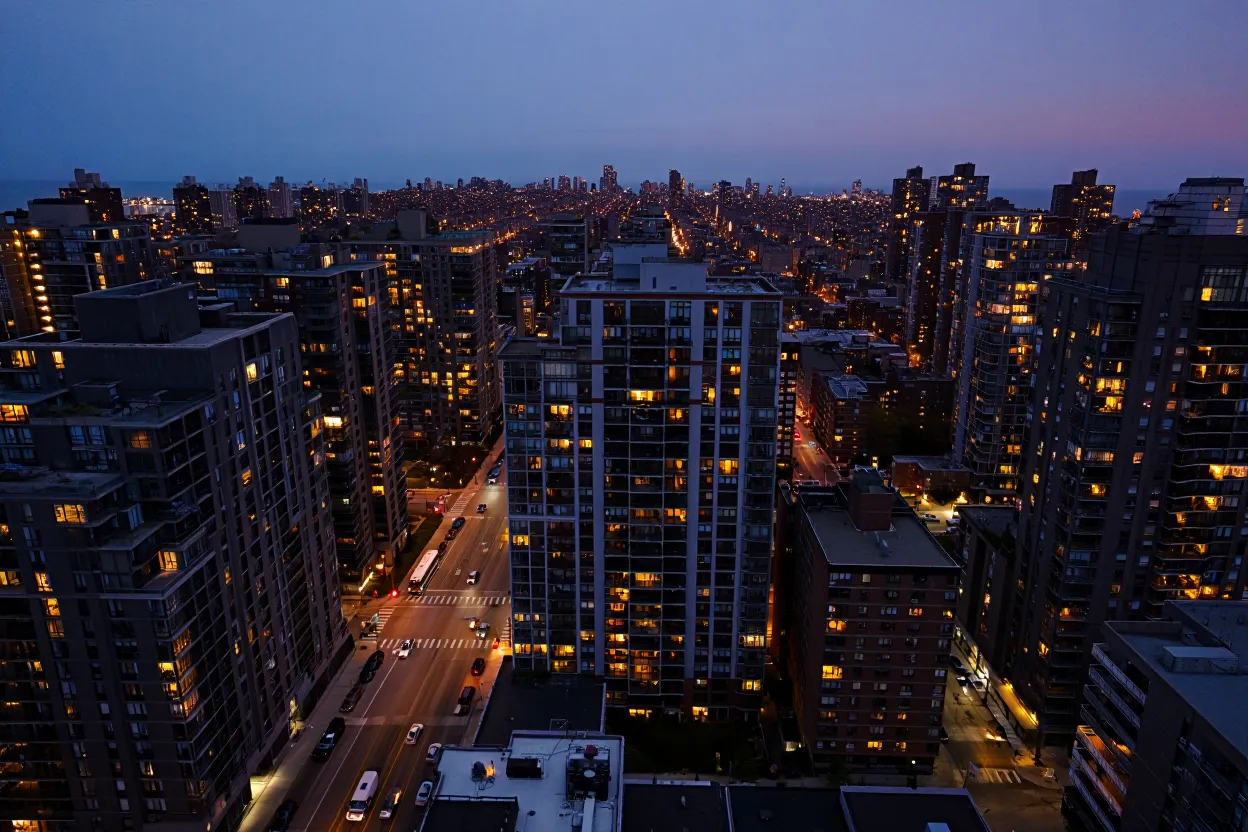
Chicago posted the most significant RCI increase among major metros, jumping 9.5 points to 88.8 as new apartment supply ground nearly to a halt. Today, about nine renters vie for every available unit in Chicago, now the second most competitive large market after Miami. This mirrors broader trends in major coastal and Sun Belt hubs where demand continues to outpace supply, keeping competition elevated even as conditions soften elsewhere. San Francisco saw its RCI climb to 77 amid strong demand from AI sector growth and shrinking new inventory, while Atlanta’s RCI rose to 75.9 as apartment construction slowed to its lowest since the pandemic.
Get Smarter about what matters in CRE
Stay ahead of trends in commercial real estate with CRE Daily – the free newsletter delivering everything you need to start your day in just 5-minutes
Small Markets Intensify Rental Pressure
Rental competition isn’t just a big city problem. Wichita, KS now leads all small markets with an RCI of 91, driven by a 14.6-point year-over-year gain and near standstill in new supply. Amarillo and El Paso, TX also saw double-digit gains, supported by robust local demand, limited new inventory, and high lease renewal rates. These trends leave even smaller cities with tight vacancy and swift listing turnarounds.
Why the Midwest Stands Out
The Midwest claims the highest regional competitiveness in the nation, with an average RCI of 81.2 and low new construction. Cities like Chicago, Minneapolis suburbs, and Lafayette, IN, now dominate both large and small market rankings. Affordable rents and limited construction keep supply tight, while high renewal rates ensure vacancies remain scarce. This pattern is mirrored in lease renewal rates, with Midwest renters increasingly staying put rather than risking a tough search for new units.
What’s Ahead for Renters
While national rental competition trends suggest minor relief, many key regions—including tech hubs and affordable Midwest cities—show no signs of easing pressure soon. Continued supply constraints and high demand mean apartment searches will remain challenging for renters in 2026, especially where new inventory is slow to arrive and lease renewal rates remain elevated. The persistence of fierce rental competition across markets makes preparation and quick action essential for apartment hunters.