




- 542 live-work-play developments opened in the US from 2016–2025, with 69 more set for 2026.
- New York leads with 119 LWP projects; coworking space in 14% of these buildings.
- Coworking in LWP buildings increased 60% in top cities since 2022, outpacing national flex office growth.
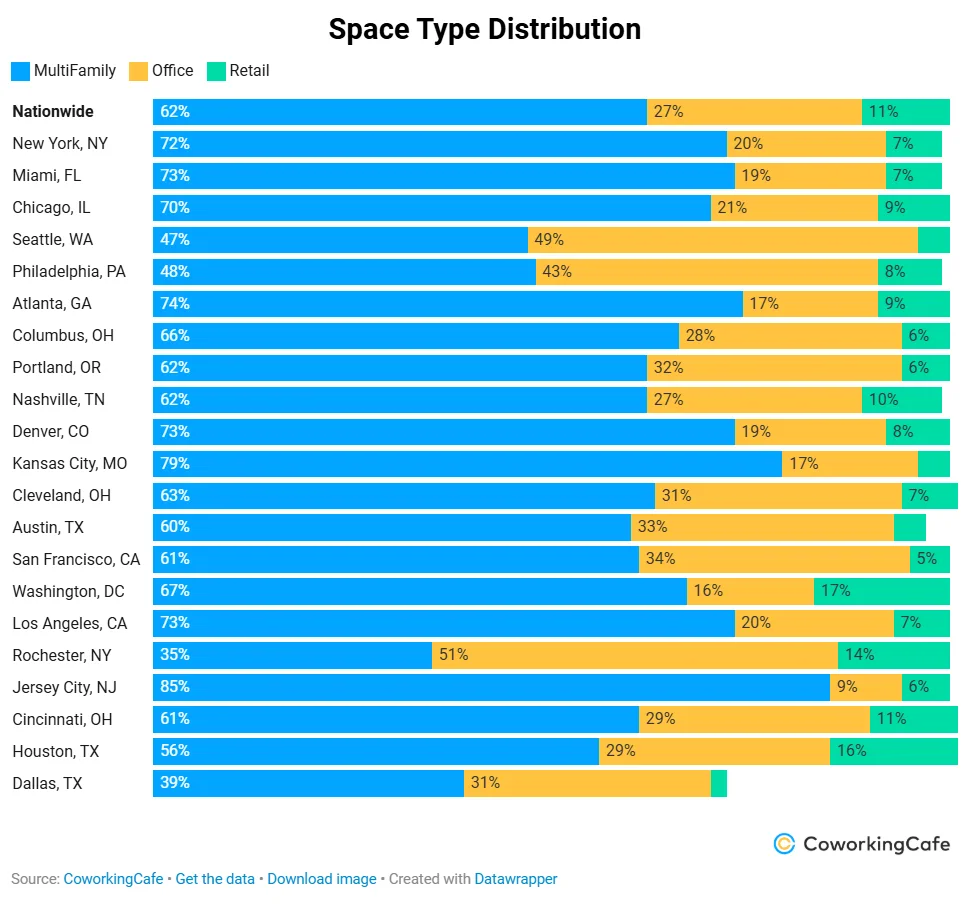
- Residential space accounts for 62% of LWP square footage, with office at 27% and retail at 11%.
Live-Work Trends Expand Nationwide
According to CoworkingCafe, live-work-play developments are gaining traction across major US cities. They combine residential, office, and retail space under one roof. New data shows 542 projects opened nationwide over the past decade. Another 69 projects are scheduled for delivery in 2026. Consumer demand for shorter commutes and flexible living drives this growth. These needs accelerated in dense cities like New York, Boston, and Washington, D.C.
Coworking Rises in Mixed-Use Projects
The proliferation of flexible office solutions is reshaping the live-work-play landscape. Since 2022, coworking space within these mixed-use buildings has grown by 60% in leading US cities, mirroring national flexible office trends. There are now 56 coworking venues in LWP developments, up from 35 four years ago. This growth responds to rising remote work and hybrid policies. Operators are also prioritizing efficiency and optimizing existing locations instead of rapid expansion. Coworking is especially pronounced in markets like San Francisco, where six out of seven LWP projects offer flex office options.
Get Smarter about what matters in CRE
Stay ahead of trends in commercial real estate with CRE Daily – the free newsletter delivering everything you need to start your day in just 5-minutes
City Highlights and Distribution Patterns
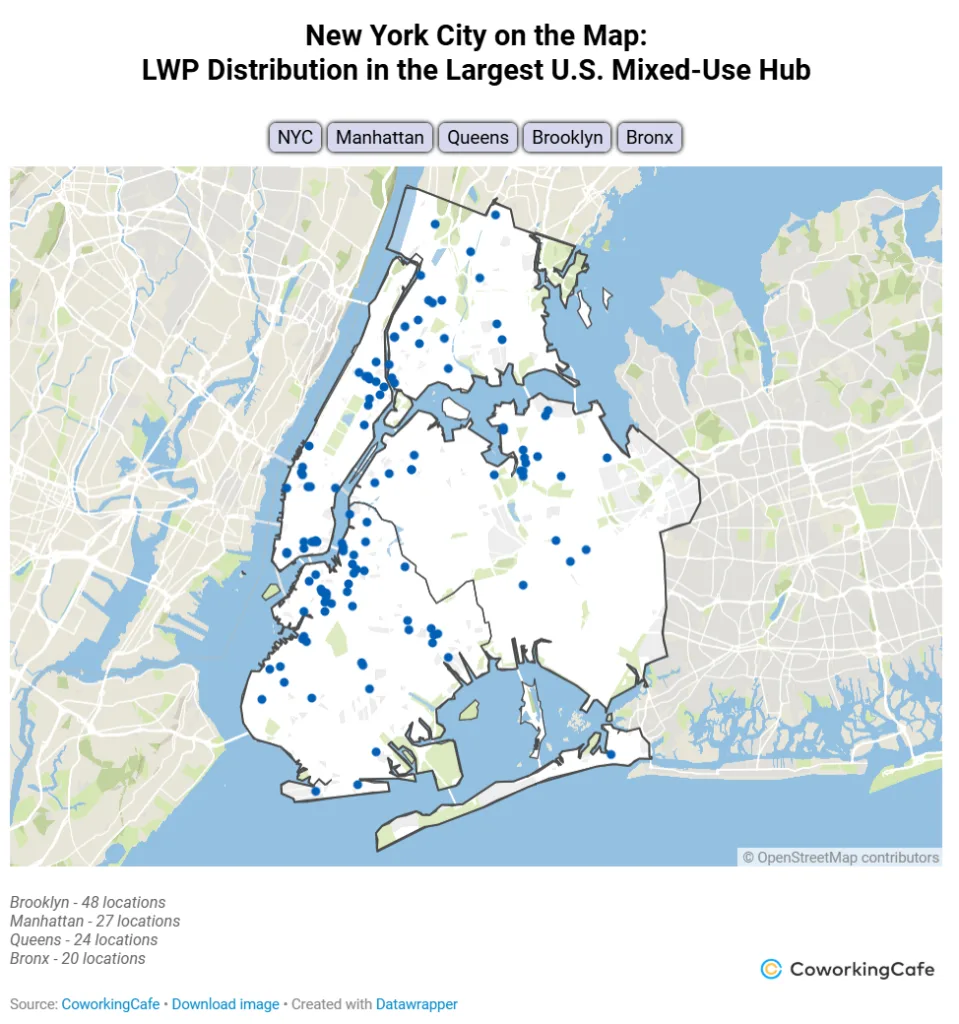
New York City leads the nation with 119 completed live-work-play developments. The city continues to add new projects each year, although growth has started to slow. Meanwhile, Miami and Chicago show strong and steady momentum. Seattle stands out for its high share of office space within mixed-use properties. Across the country, developers allocate space carefully. Residential makes up 62% of total square footage, followed by 27% office and 11% retail. Some cities break from national trends. In Rochester, New York, office space exceeds 50% of the total, and coworking has yet to appear. By contrast, Jersey City continues to expand coworking options, even though its office footprint remains relatively small.
What’s Next for Live-Work-Play
Expect continued growth in LWP construction, especially as employers offer flexible work options and seek premium, amenity-rich urban spaces. The next few years will likely see more coworking integrations, especially in cities where remote work is entrenched and office demand is changing. With an increasing emphasis on mixed-use quality and sustainability, live-work-play developments will remain central to new urban development strategies.