







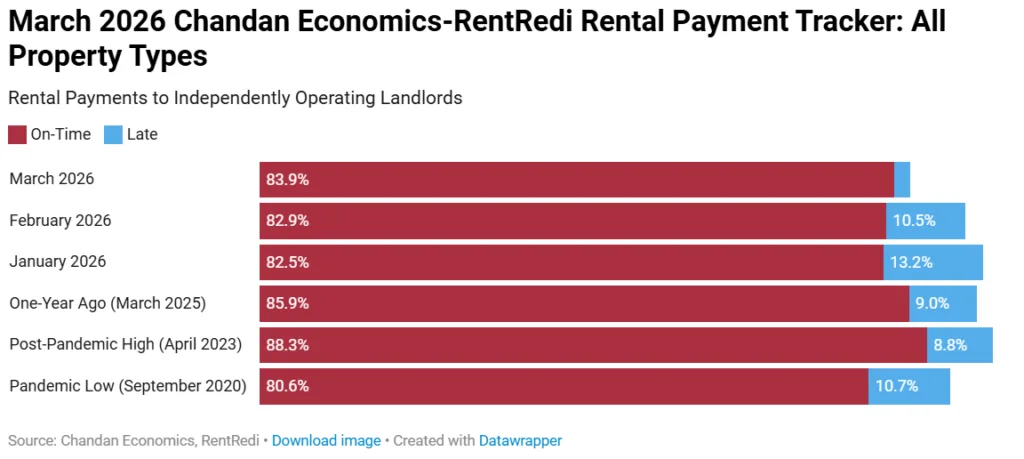
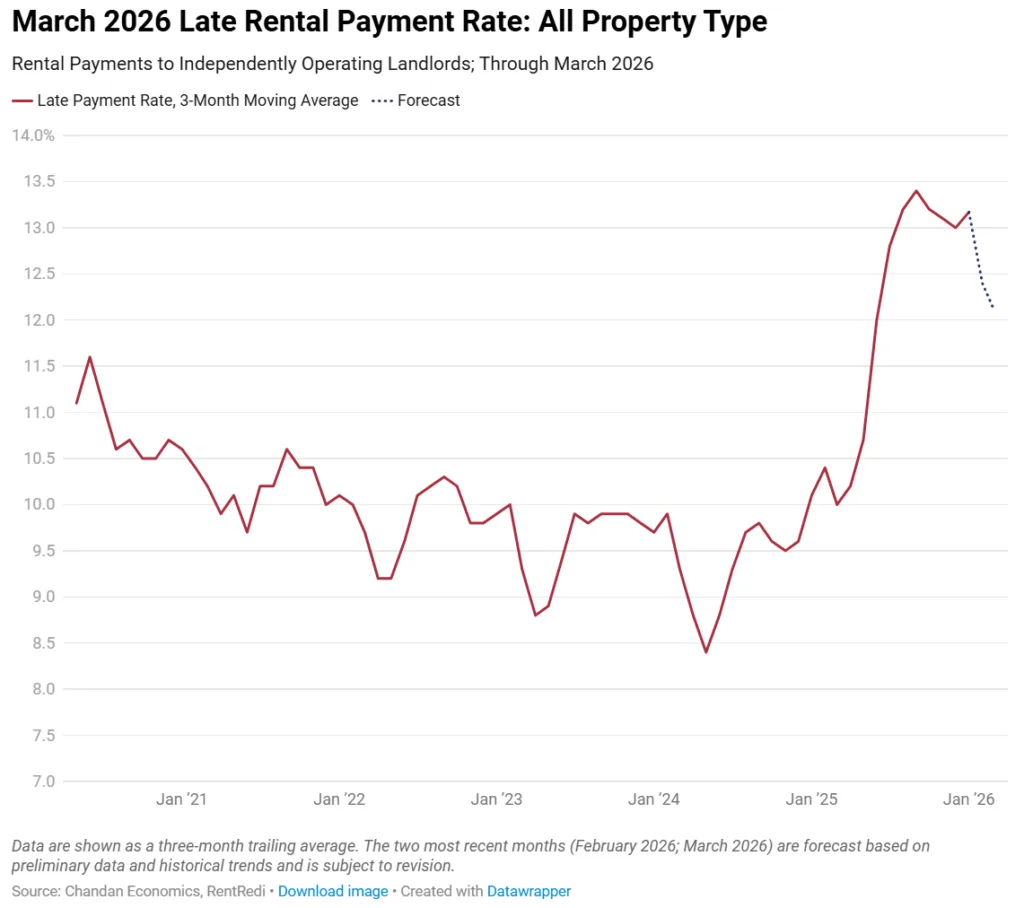
- On-time rental payments for independent landlords rose to 83.9% in March 2026, the fifth increase in six months.
- Full-payment rates climbed to 96.1%, a high not seen since mid-2025.
- Late-payment pressure continues to ease but remains above historical norms.
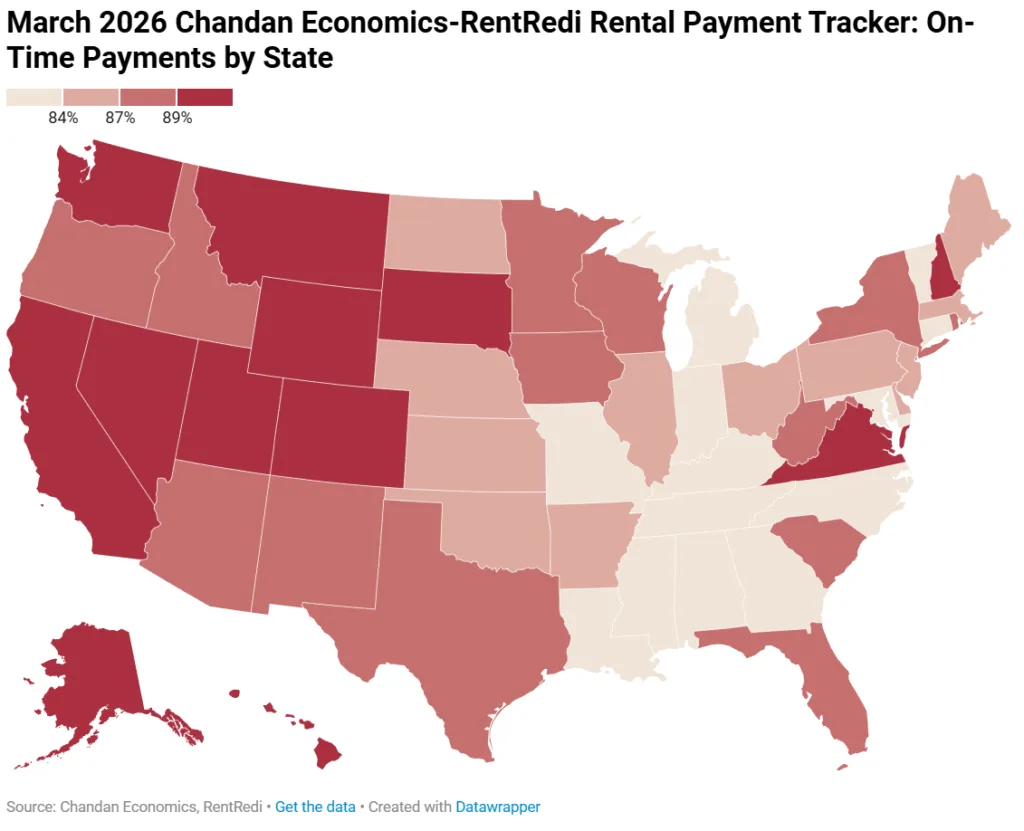
- Western and Mountain states outperformed other regions in on-time rental performance.
Consistent Improvement for Independent Rentals
Chandan Economics reports that rental performance among non-institutional landlords recovered further in March 2026. The on-time payment rate increased to 83.9%, marking the fifth rise in the past six months according to Chandan Economics’ latest report. This trend continues a steady rebound from the September 2025 low, signaling ongoing stabilization in the independent rental market.
While late payments remain a concern, full-payment rates are at their highest point in months, suggesting most late rents are ultimately resolved. The report underscores a resilient rent collection performance even as late-payment activity moderates slowly compared to historical standards.
Steady Recovery and Sector Resilience
Year-over-year, on-time rental payment rates are still lower than in March 2025. However, the pace of annual decline is narrowing, pointing to a sector gradually recovering from pressures seen last year. Late-payment rates, which peaked in September 2025 at 13.4%, have declined to 12.1% in March 2026 but remain above the long-term average threshold of 10%. This gradual improvement follows several months of stabilization in rent collections across the independent landlord market.
The full-payment rate, which includes on-time and late resolutions, was estimated at 96.1%. This level reflects the ongoing ability of tenants to catch up on missed payments over time, ensuring income realization for landlords stays relatively resilient. Cash flow timing, though, remains a critical challenge for independent landlords dependent on regular rent collections.
Trends by Property Type and Region
Performance varied across property types, with 2–4-family rentals achieving the highest on-time payment rate at 84.8%, followed by single-family (84.0%) and multifamily units (83.4%). All segments showed month-over-month improvement.
Western and Mountain states led the nation, with South Dakota (95.4%), New Hampshire (94.0%), and Utah (93.1%) among the top performers. In contrast, states like Tennessee (77.0%) and Mississippi (77.9%) saw the lowest on-time payment rates, highlighting persistent regional differences shaped by local economic factors and renter demographics.
Looking Ahead: Macroeconomic Risks
Rental performance for independent landlords will be influenced by broader economic trends as 2026 continues. Rising inflation and recent energy price increases introduce new risks, especially for renter households operating on tight budgets. While rental performance trends remain constructive, future stability will depend on income growth and the trajectory of inflation.
The Independent Landlord Rental Performance Report draws on data from more than 65,000 units tracked through RentRedi software. It offers key benchmarks for investors and policymakers who monitor the independent rental sector. The data shows a slow but steady recovery across the market. Most property types demonstrate resilience despite recent challenges. However, cash flow volatility remains a concern for many landlords. Macroeconomic headwinds also continue to pose risks.
Get Smarter about what matters in CRE
Stay ahead of trends in commercial real estate with CRE Daily – the free newsletter delivering everything you need to start your day in just 5-minutes