





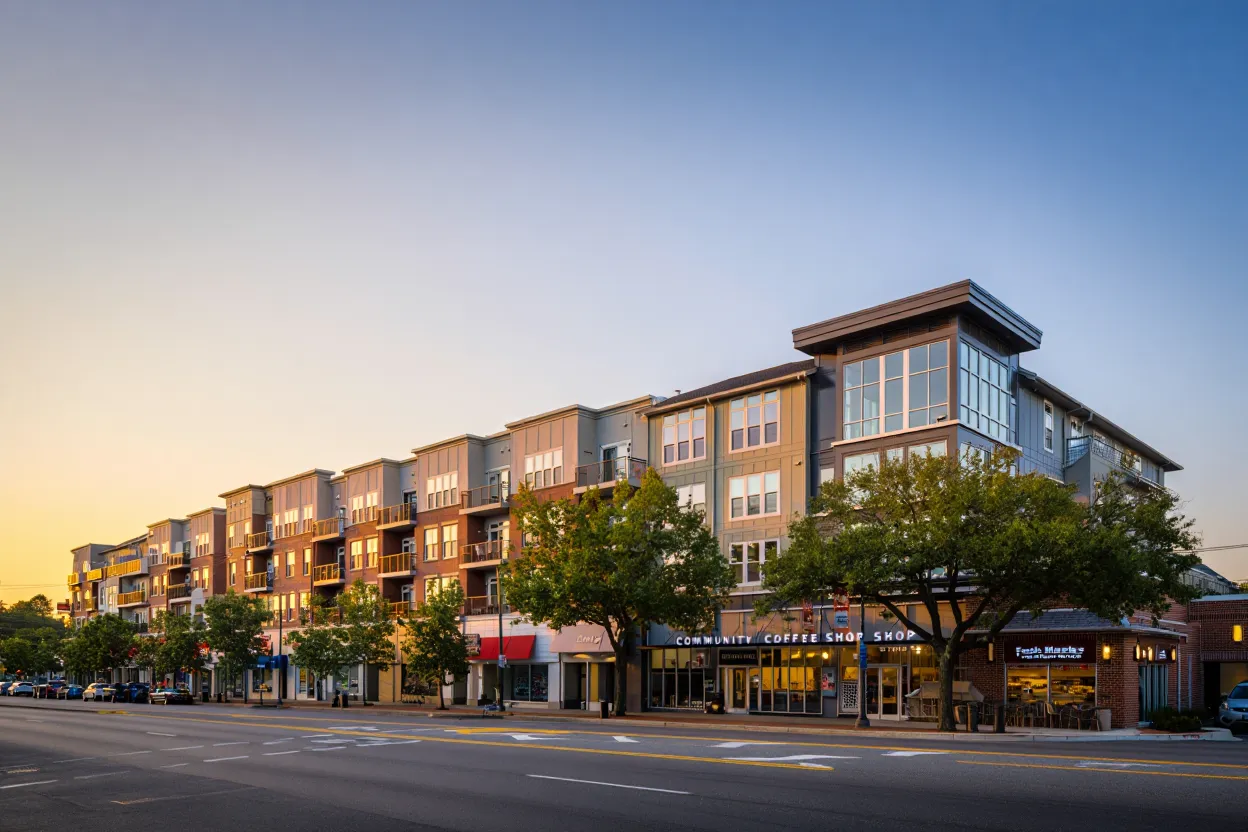
- By-right housing legislation would require at least 50% of commercial zones to allow multifamily and mixed-use by-right development.
- Alexandria and other Northern Virginia localities oppose the bills, citing concerns over loss of local control.
- The bills have advanced in the Virginia General Assembly with some key amendments and support from housing advocates.
- An effective date of July 1, 2027 is proposed, with a sunset in 2031.
Bill Momentum Continues
According to ALX Now, legislation enabling by-right housing in commercial zones is advancing in the Virginia General Assembly. However, Alexandria and other large Northern Virginia localities strongly oppose the measures.
HB 816 and SB 454 would require larger cities and towns to allow multifamily and mixed-use housing by right. The requirement would apply to at least half of all commercially zoned land. As a result, local governments would conduct fewer discretionary reviews and public hearings for these projects.
Local Pushback and Support
A broad coalition of local governments, including Alexandria, Arlington, Fairfax, and Loudoun counties, have testified against by-right housing, arguing it removes local tools for managing development impacts. The Virginia Association of Counties raised concerns about upzoning and the loss of negotiated proffers.
Supporters—including the Virginia Housing Alliance, regional chambers, and the Pew Charitable Trusts—argue that by-right housing would increase supply, support affordability, and help address high rents. The debate comes as Alexandria’s real estate market faces other pressures tied to shifting demand and development conditions. Alexandria has not publicly commented on its formal opposition.
Get Smarter about what matters in CRE
Stay ahead of trends in commercial real estate with CRE Daily – the free newsletter delivering everything you need to start your day in just 5-minutes
What’s Included and What’s Exempt
The by-right housing requirement applies only to cities or towns with 20,000+ residents and dense commercial corridors, excluding rural areas, heavy industrial zones, and historic districts. Developments in designated historic districts would still face review board approval. Other restrictions exempt environmentally sensitive and underdeveloped land.
What’s Next
If enacted, the by-right housing changes would take effect July 1, 2027, and sunset in 2031. Further legislative action is expected as other bills—such as removing rezoning for affordable housing on church properties—also move forward. The ongoing debate signals broader interest in reforming Virginia’s approach to housing supply, affordability, and local control.