






- Rent controls for most Los Angeles multifamily property tighten to a 1%-4% annual cap, down from the previous 3%-8% band.
- About 651,000 apartments—three-fourths of LA’s multifamily stock—will be impacted by the rent control change.
- Landlords and investors warn that new rules could suppress investment and worsen the housing shortage.
- Exemptions remain for single-family homes and apartments built after the late 1970s.
New Rules for Multifamily Housing
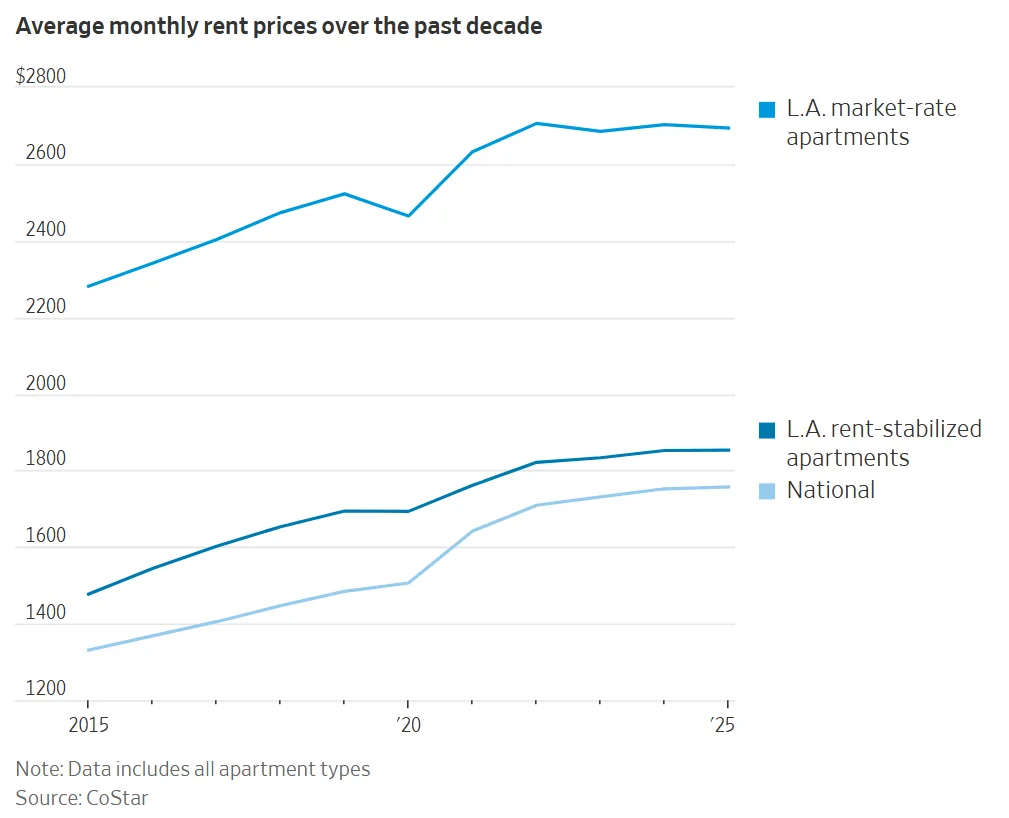
Los Angeles will implement stricter rent controls in early February, lowering the maximum annual rent increase for most multifamily apartments to between 1% and 4%, depending on inflation. The WSJ reports that this marks the first tightening of rent controls in over four decades, down from the longstanding 3% to 8% cap. The new limits aim to address affordability challenges as local rents continue to outpace the national average.
Investor Sentiment and Market Impact
The rent controls apply to approximately three-quarters of multifamily rental units in Los Angeles—or about 651,000 apartments—excluding single-family homes and newer constructions. Landlords and developers argue the restrictions will make it harder to maintain properties and disincentivize new investment, particularly as costs rise. Industry professionals note that investors have already started bypassing the Los Angeles market due to tougher regulations and a historically sluggish permitting pace compared to other US cities.
Policy Context and Political Response
The tightened rent controls come amid ongoing debate over how price caps affect long-term housing supply. Recent examples in places like St. Paul and policy positions by politicians such as Massachusetts Gov. Maura Healey illustrate wider concerns that strict controls suppress development. Despite industry pushback, tenant advocates and city leaders—including Mayor Karen Bass—see the move as a necessary response to affordability pressures and rising homelessness. The shift also underscores a growing national divide in how cities and states approach rent regulation, with policies diverging significantly across markets.
Looking Ahead
While exemptions remain for some property types, the ordinance adds new prohibitions on rent hikes tied to additional tenants. As Los Angeles moves forward with these controls, both landlords and tenants are assessing the likely long-term impacts on the region’s complex housing market. The effectiveness and repercussions of these rent controls will be closely watched by cities nationwide considering similar measures.
Get Smarter about what matters in CRE
Stay ahead of trends in commercial real estate with CRE Daily – the free newsletter delivering everything you need to start your day in just 5-minutes