









- REITs are increasing property transactions as valuation gaps narrow between public and private real estate markets.
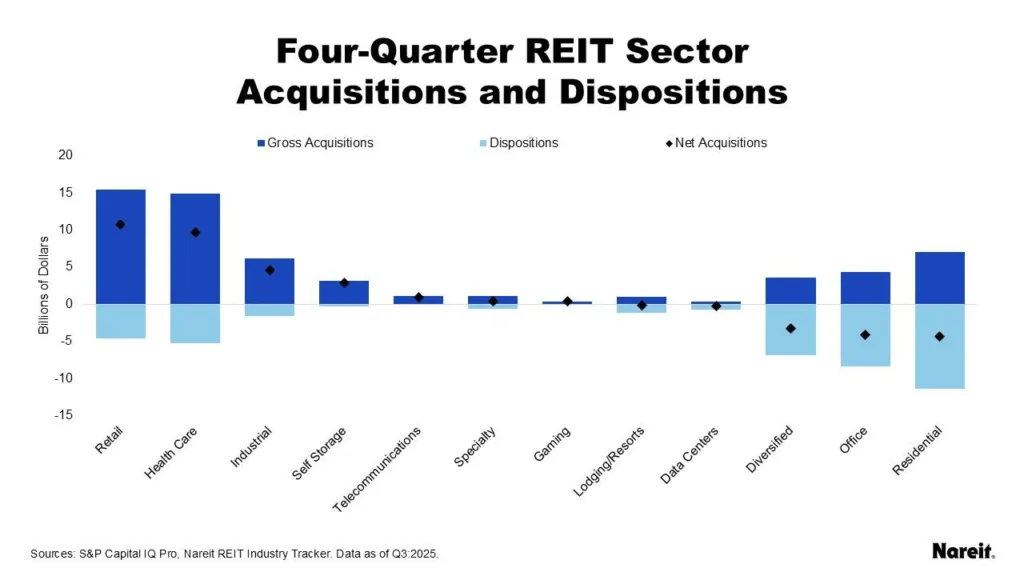
- Retail, healthcare, industrial, and self-storage REITs made the most purchases, while residential, office, and diversified REITs sold more than they bought.
- With strong balance sheets and access to low-cost capital, REITs are in a strong position to pursue growth.
REITs React to a Changing Market
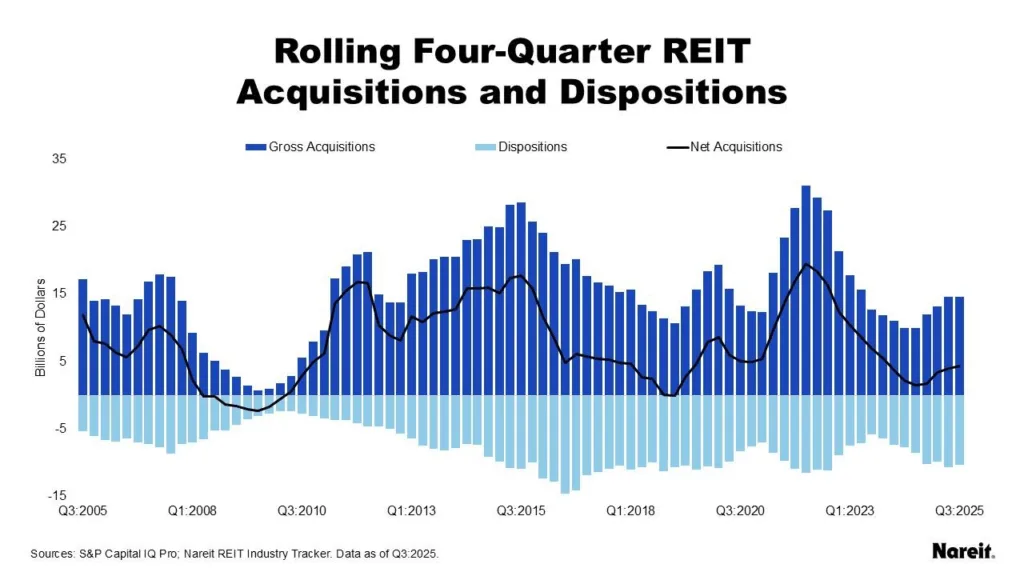
REITs adjust their buying and selling based on capital costs and how public and private values compare. When borrowing is expensive or prices differ too much, REITs slow down activity. But new data from Nareit shows that REITs are now making more deals as values start to align.
Although REITs usually act as net buyers, recent years saw slower deal-making due to market uncertainty. That trend is now reversing. Over the past year, REITs have increased net acquisitions across most property types.
Who’s Buying, Who’s Selling
REITs in the retail, healthcare, industrial, and self-storage sectors led the buying spree in the third quarter of 2025. Within retail, most purchases came from shopping centers and free-standing stores. At the same time, shopping centers made up over 60% of all retail sales.
Meanwhile, residential, office, and diversified REITs sold more than they bought. In the residential category, apartments made up most of the purchases, while manufactured homes made up half of the sales. This shift reflects how REITs are responding to evolving investor sentiment and housing supply trends, especially as new activity in the single-family rental space reshapes demand dynamics across the sector.
What’s Next for REITs
As public and private real estate values come closer together, the pace of transactions is expected to rise. REITs are ready to act. Their low debt levels and access to affordable capital give them an edge in this market cycle.
For investors, this shift signals a new phase. REITs are no longer holding back—they’re moving forward with plans for long-term, steady growth.
Why it Matters
REITs are built to move quickly when the market offers the right conditions. With valuations aligning and capital becoming more available, REITs are likely to drive the next wave of property deals as we head into 2026.
Get Smarter about what matters in CRE
Stay ahead of trends in commercial real estate with CRE Daily – the free newsletter delivering everything you need to start your day in just 5-minutes