
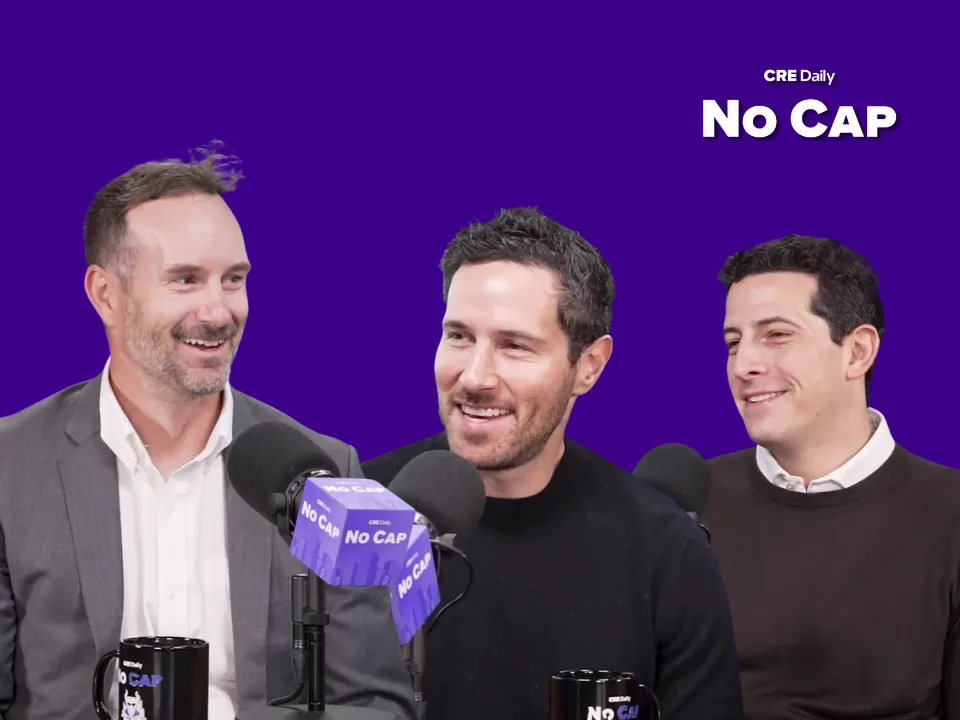
Season 5 of the No Cap podcast rolls off with a conversation with Colin Apple, Managing Director at Bridge Investment Group, one of the industry’s most active vertically integrated operators.
Colin works across Bridge’s investment strategy group, where he evaluates pricing, risk, capital flows and operational execution across the firm’s portfolios. He brings a data-driven perspective shaped by Bridge’s ground-level operating footprint, offering a clear view into where deals are actually getting done and why underwriting discipline matters more than ever.
Conversation Highlights
Alex: Why don’t you tell us what it is that you do day to day?
Colin Apple: My role sits at the intersection of strategy and underwriting. I look across our verticals, study how capital behaves, and make sure our underwriting reflects reality instead of wishful thinking. Bridge is an operator first, so we see real costs, real tenants and real execution risk. That changes how you price deals.
The discussion moved to the state of the market.
Jack: Everyone keeps saying the market is frozen. Are deals actually happening?
Colin: Deals are happening, but only when sellers accept today’s pricing. For two years many owners stayed anchored to 2021 valuations, but debt maturities and rising expenses are now forcing decisions. Pricing dispersion is especially visible in multifamily, where one market may be down 20 percent while another is down 40 or 50 percent depending on taxes, insurance or expense growth. Underwriting has to be hyper local.
I don’t feel like the market’s gonna give us anything for a while.
We asked about info on investor behavior.
Alex: What are the biggest mistakes investors are making right now?
Colin: They are underwriting based on hope. Many investors assume rates will fall quickly, expect expenses to normalize, and believe tenants will behave like they did before the pandemic. But hope is not a business plan. The operator premium has never been higher, and the winners in this cycle are the ones who have a real plan to generate NOI rather than relying on macro assumptions.
Jack: Bridge has a reputation for discipline. What does that mean in this environment?
Colin: Discipline means saying no far more often than yes. It means walking away when a deal only works if the macro environment solves your problems. We spend more time on stress cases than base cases, and if a deal still works when rates stay elevated or when expenses rise again, then you have something worth pursuing.
Alex: What are you seeing on pricing?
Colin: Pricing is inconsistent. High quality assets with strong tenants clear quickly, while properties with issues face a much tougher market. There are really two categories today: assets where operational execution creates value and assets that need a miracle. Bridge focuses on the first group.
The conversation turned to timing the cycle.
Jack: A lot of investors are waiting for the bottom. Should they?
Colin: You never know you hit bottom until months after it happens. The best vintages often come when headlines look the worst, and this cycle is no different. Waiting for perfect clarity usually costs more than buying a little early.
Alex: How is capital behaving? More cautious or more aggressive?
Colin: Both. Some capital wants certainty and some wants distress, but the real opportunities sit between those two approaches. Partners with operational experience are moving faster, because smart capital wants to back operators who can actually execute. That is where we see momentum.
Jack: What separates good operators from great ones in this cycle.
Colin: Speed and information. If you do not understand expenses weekly, you cannot manage NOI, and if you do not understand your tenant base, you cannot price risk. Everything is harder today — insurance, taxes, debt, renovations — and the firms that can control more of the outcome are the ones that outperform.
We’re underwriting very, very little market rent growth.
Alex: If you had one takeaway for investors, what would it be?
Colin: Underwrite the world as it is, not as you want it to be. If the deal still works, go buy it.
Watch the full episode on our YouTube Channel or your favorite podcast app.
Tune in weekly for new episodes of No Cap by CRE Daily!